Did the Roberts Court Just Draw a Line on Trumpโ€™s Tariffs?

A revealing segment on MSNOWโ€™s Alex Witt show unpacked the Supreme Courtโ€™s emphatic 6โ€“3 decision striking down Donald Trumpโ€™s tariff regime. While many court watchers expected the legal challenge to succeed, the real suspense centered on whether this particular Courtโ€”dominated by six conservatives, three of them Trump appointeesโ€”would side with the law or bend toward the former president. Critics have long accused the current majority of showing deference to Trump in key disputes, an accusation the justices themselves have publicly bristled at.

The 6โ€“3 ruling against Trumpโ€™s tariffs was decisive. On its face, it appeared to be a clear rebuke of executive overreach and a sign that even this Court has limits. Naturally, the conversation turned to whether the decision signals a broader willingness by the so-called Roberts Court to check Trumpโ€™s more aggressive assertions of presidential power going forward.

Guest Leah Litman offered a far more skeptical take. She cautioned viewers against interpreting the ruling as any meaningful shift in posture. In her view, nothing fundamental has changed. Litman argued that the Courtโ€™s conservative majority is willing to rule against Trump only when his brand of authoritarianism collides with interests that matter directly to themโ€”particularly economic interests. Put bluntly, she suggested the justices are far less inclined to tolerate executive overreach when it threatens financial stability or, more cynically, their own bottom lines.

Litman went further, predicting a similar outcome in the forthcoming case over Trumpโ€™s asserted authority to fire Federal Reserve Bank governors at will. If the Court sees an unchecked power grab as destabilizing to markets or the broader financial system, she implied, that is when it is most likely to step in. The legal merits may matter, but under her theory, the practical economic consequences carry equalโ€”if not greaterโ€”weight.

Whether Litmanโ€™s provocative framework proves accurate remains to be seen. As the Court prepares to weigh additional cases testing the limits of presidential authority, observers will be watching closely for patterns. If future rulings align with her prediction, the tariff decision may come to be seen not as a principled stand against authoritarianism, but as a narrow defense of institutional and economic self-interest.

The FBI Must Investigate Kavanaughโ€™s Debt

$upport via Cash App

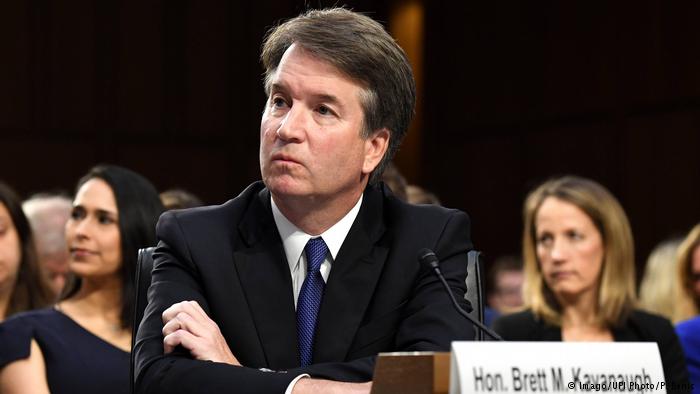
After the last minute maneuver by GOP Senator Jeff Flake of Arizona that led President Trump to order the FBI to look into the sexual misconduct allegations against Supreme Court nominee Brett Kavanaugh, a partisan divide has emerged as to what exactly the FBI is allowed to look into.

Naturally the Republicans, fearful that a full blown FBI probe into Kavanaughโ€™s background will dig up damaging info, are advocating a โ€œlimited scopeโ€ inquiry in which they want the FBI to look into Dr Christine Blasey Fordโ€™s allegations only. The GOP argument, presented today by White House Counselor Kellyanne Conway is that the FBI inquiry should not be a โ€œfishing expedition.โ€ Democrats on the other hand want a full blown FBI probe into all the sexual misconduct allegations made against Kavanaugh(4 so far), plus a look into whether he perjured himself during this and previous confirmation hearings.

One issue however that is strangely left out of the mix is the Kavanaugh family debt. According to a Yahoo News article, the Kavanaughs have racked up tens of thousands of credit card debt spanning all the 12 years preceeding 2017. According to the Yahoo News piece, there are conflicting explanations given by Kavanaugh and the Trump White House as to the origins of the Kavanaugh family debt.

Another very interesting tidbit from the Yahoo piece is that in 2017, a year before Trump nominated Kavanaugh for the U.S. Supreme Court, the credit card debt suddenly disappeared. Again, there are conflicting versions as to how the Kavanaugh family debt got cleared, with Kavanaugh saying one thing and the Trump White house saying something else. So there are conflicting stories from Kavanaugh and the Trump White House regarding both the origin and disappearance of his credit card debt.

Kavanaughโ€™s finances strangely never came up during his confirmation hearings. It goes without saying however that a judgeโ€™s finances are always an important line of inquiry especially as relates to recusals that may be necessitated by financial conflicts of interest.

Bottom line now that the FBI has a week to look into Kavanaughโ€™s background, Dems must insist that the feds also clear up discrepancies regarding the Kavanaugh family debt. Simply put, the FBI should find out what exactly led to the Kavanaugh family debt and what exactly cleared it up.

For those of you very happy with @Emolclauseโ€™s activism donโ€™t shy away from the โ€œtip jarโ€ below on your way out. You may also Cash App

Email author at admin@grassrootsdempolitics.com

Become an Octapharma Plasma donor. Make up to $200 in one week and help save lives too! Learn More