Elites Largely Escaping Consequences Of Enabling Epstein

As the fallout from the release of the Epstein Files continues to unfold, a familiar and deeply troubling pattern is coming into focus. In the United States, powerful elites who once minimized, dismissed, or obscured their ties to Jeffrey Epstein are largely skating past meaningful consequences, even as newly released emails shed light on just how close and sustained some of those associations were. Titles may be adjusted, statements may be issued, but real accountability remains elusive. Very few figures have truly relinquished power, prestige, or access as a result of what has been revealed.

MSNOWโ€™s Lisa Rubin captured this dynamic perfectly in her recent segment, using the Paul Weiss situation as a textbook example of cosmetic accountability masquerading as reform. Rubin rightly pointed out the absurdity of portraying Alex Karpโ€™s removal as chairman as a serious sanction while the firm simultaneously retains him as a partner in good standing. In any meaningful sense, this is not punishment at all. It preserves his status, income, and institutional legitimacy, while allowing the firm to claim it has โ€œtaken action.โ€ As Rubin emphasized, accountability that leaves power and privilege fundamentally untouched is not accountabilityโ€”itโ€™s reputation management.

What makes this moment especially jarring is how often these gestures are presented as sufficient in elite American circles. The message, implicit but unmistakable, is that association with Epstein may cost you a title, but not your standing. Not your access. Not your seat at the table. That pattern repeats across industries, from law to finance to politics, reinforcing the idea that consequences in the United States are calibrated not to wrongdoing, but to optics.

Adding to the unease is the manner in which the Epstein Files themselves have been released. Numerous emails detailing communications with Epstein on deeply disturbing topics have surfaced with the sendersโ€™ names conspicuously redacted. This stands in direct tension with the stated goals of transparency and has fueled the perception that the Department of Justice is selectively shielding certain powerful individuals. Whether intentional or not, the effect is the same: the public is left with the sense that there remains a protected class for whom full exposure, let alone accountability, is off-limits.

The contrast with Europe is striking. While not perfect and hardly immune to elite self-protection, several European governments have moved more decisively when Epstein-related connections came into view. In the United Kingdom and France, authorities have reopened or expanded investigations into citizens tied to Epsteinโ€™s network, with public figures stepping aside pending review rather than clinging to their roles. In other cases, individuals have issued unequivocal apologies and withdrawn from public or professional life altogether, acknowledging that proximity to Epsteinโ€”regardless of criminal liabilityโ€”raises serious ethical questions incompatible with positions of trust. This approach reflects a broader European norm: that the appearance of impropriety itself can warrant real consequences, not just symbolic ones.

That difference matters. Accountability is not only about legal culpability; it is about institutional integrity. When firms and governments act swiftly and decisively, they signal that power does not exempt anyone from scrutiny. When they stall, deflect, or offer half-measures, they send the opposite messageโ€”that elite networks will always protect their own.

Whether the accountability emerging in Europe will eventually pressure American institutions to follow suit remains an open question. But Lisa Rubin is undeniably right to call out the hollowness of moves like the one at Paul Weiss. If major firms in the United States want to be taken seriously in the post-Epstein era, they must move beyond cosmetic fixes and confront the uncomfortable truth that real accountability requires real sacrifice. Until that happens, the gap between rhetoric and reality will continue to grow, and public trust will continue to erode.

Moderate House Dems Shoot Down AOCโ€™s Intel Oversight Amendment

$upport via Cash App

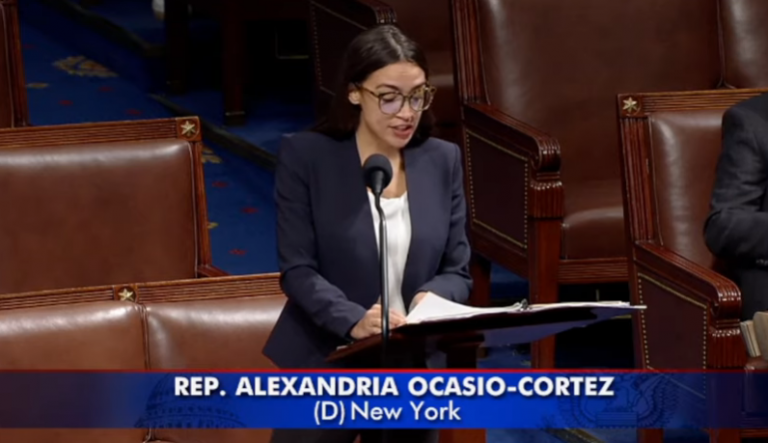
On 12/9/21 Rep Alexandria Ocasio-Cortez(D-NY) introduced an amendment(Amendment 148 to H.R. 5314โ€“Protect Our Democracy Act), that would have restored the oversight powers Congress always intended the Government Accountability Office(GAO) to have, including over our intelligence agencies. Our intelligence agencies, as everyone knows, are notoriously impervious to any Congressional oversight, and often hide behind a vague 1988 Department of Justice opinion to justify their need for secrecy. Rep Ocasio-Cortezโ€™s amendment would have taken away that cover, ensuring much-needed transparency from our intelligence agencies. Surprisingly, 23 Centrist Democrats voted with House Republicans to kill her amendment.

As Rep Ocasio-Cortez correctly pointed out on the House floor, given the kinds of abuses weโ€™ve witnessed during Trumpโ€™s presidency, it is only prudent that we restore GAOโ€™s oversight powers over all federal agencies, including our intelligence agencies. Any reasonable person would agree, that it is foolhardy to assume that former President Trump abused all other federal agencies for his selfish political interests, except our intelligence apparatus, the easiest ones to abuse given the secrecy with which they are allowed to operate.

Rep Ocasio-Cortez said on the House floor: โ€œSince itโ€™s creation in 1921, the Government Accountability Office(GAO) has had the purview to conduct oversight of all federal agencies with the goal of reducing waste, fraud and abuse, and holding accountable bad actors. However and unfortunately, most of our intelligence agencies today are not fully cooperative with the GAO, pointing to an outdated and vague 1988 Department of Justice opinion. Our amendment would allow the GAO to act as a check on this behavior, not creating new powers, but restoring the power Congress always intended the GAO to have. This amendment is welcomed by many in the intelligence community, who want to protect their important work and resources from abuse, particularly after the last presidency we just endured. We drafted this amendment in partnership with the community and Iโ€™m proud to have the support of Representative Adam Schiff who serves as the Chairman of the House Permanent Select Committee on Intelligence. In fact many of my colleagues have already taken a stand in support of this legislation because in 2010, the House passed a virtually identical amendment.โ€

The amendment failed with a final tally of 233 nays, 196 yeas, with 4 members not voting. Among the 233 nays were 23 Centrist Democrats who Yours Truly is compelled to name. The nay Dems included Reps Cynthia Axne(IA), Cheri Bustos(IL), Matt Cartwright(PA), Angie Craig(MN), Antonio Delgado(NY), Val Demings(FL), Jared Golden(ME), Josh Gottheimer(NJ), Chrissy Houlahan(PA), Conor Lamb(PA), Susie Lee(NV), Elaine Luria(VA), Tom Oโ€™Halleran(AZ), Chris Pappas(NH), Kurt Schrader(OR), Kim Schrier(WA), Terri Sewell(AL), Mikie Sherrill(NJ), Abigail Spanberger(VA), David Trone(MD), Filemon Vela(TX), Jennifer Wexton(VA), Susan Wild(PA).

Ever since the Patriot Act was enacted after the terrorist attacks of September 11 2001, there have been growing calls from civil libertarians and others, for there to be some checks on the almost absolute powers we granted our intelligence agencies after the 9/11 attacks. The reasoning behind this is pretty simpleโ€“power corrupts, absolute power corrupts absolutely. Fast forward to the Trump administration and the abuses we witnessed occurring across all federal agenciesโ€“(DOJ being used for the Big Lie, Military on Black Lives Matter protesters in DC, numerous abuses of DHS, โ€œfailureโ€ by our intel agencies to anticipate Jan 6th insurrection)โ€“ and the need to look into our intel agencies becomes an absolute necessity. Itโ€™s against this backdrop that Rep Ocasio-Cortez, with the support of many in the intel community, are pushing for more transparency. One would assume given these set of circumstances, that more oversight would be a no-brainer for Democrats, but apparently not.

Concerns about possible abuses of our intel agencies run the gamut, from the mundane warrantless snooping of our electronic communications (emails, texts, voicemails, etc), to much more serious allegations that if proven, constitute serious violations of our commitments under the United Nations Conventions Against Torture(CAT). These include allegations of 24/7 organized stalking, non-consensual for-profit human experimentation on people entered on terrorism watchlists by weapons manufacturers and others in Big Tech(remote neuromonitoring), militarized attacks on civilians(usually watchlisted) with directed energy weapons, manufactured terrorism cases, etc. These are serious human rights violations that can only come to light through proper oversight. It also bears pointing out that similar egregious abuses have in the past been attributed to our intel agencies, a recent good example being the non-consensual experimentation on U.S. civilians using radiation. President Clinton in 1995, did the just and moral thing by not only exposing this inhumane conduct, but also making whole the surviving victims. The same can be done today.

Bottom line folks, Rep Ocasio-Cortez deserves a lot of praise for pushing for reform on a topic most politicians, and quite frankly the mainstream media, have been terrified to venture into. One only hopes that she musters the courage to push on with it, despite the recent setback on the House floor. Simply put, time has come for our intel agencies to be subjected to some real oversight.

For those of you very happy with @Emolclauseโ€™s activism donโ€™t shy away from the โ€œtip jarโ€ below on your way out. You may also Cash App

Email author at admin@grassrootsdempolitics.com

Become an Octapharma Plasma donor. Make up to $200 in one week and help save lives too!ย Learn More