Did FBI Director Patel Lie Under Oath?

In a striking segment on MSNOWโ€™s Last Word with Lawrence Oโ€™Donnell, host Lawrence Oโ€™Donnell raised a provocative and consequential question: did FBI Director Kash Patel mislead Congress under oath during his exchange with Congressman Eric Swalwell about Donald Trumpโ€™s presence in the Jeffrey Epstein files? During that hearing, Swalwell pressed Patel directly on whether Trumpโ€™s name appeared in the Epstein material and sought clarity about the extent and significance of those references. Patel did not provide a numerical estimate, nor did he use the phrase โ€œvery few,โ€ but his answer was widely interpreted as downplaying the frequency and importance of Trumpโ€™s appearance in those records. He framed his response in a way that suggested there was nothing substantial or alarming tied to Trump in the context of the FBIโ€™s investigative findings.

Since that testimony, claims have circulated asserting that Trumpโ€™s name appears in the Epstein files far more extensively than Patelโ€™s response implied. Some reports and political commentators have cited extraordinarily large raw reference counts, arguing that Trumpโ€™s name appears hundreds of thousands or even more than a million times across various forms of Epstein-related material, including emails, contact directories, flight records, investigative notes, and digital indexing systems. Even accounting for duplication, automated references, and database artifacts, such figuresโ€”if accurateโ€”would appear difficult to reconcile with the general impression Patel conveyed during his testimony. The core issue is not whether Patel gave a precise number, because he did not, but whether his answer created a misleading impression that minimized the scale of Trumpโ€™s documented presence.

Whether that impression rises to the level of criminal conduct is a much more complex question. Federal law makes it a crime to knowingly provide false or materially misleading testimony to Congress, but the key word is โ€œknowingly.โ€ Prosecutors would have to prove that Patel was aware, at the time he testified, that his characterization was materially inconsistent with the actual scope of the records. That is a high bar. The Epstein files are massive, technically complex, and include raw, unfiltered material alongside analyzed investigative conclusions. It is entirely possible that Patel relied on summaries prepared by subordinates or focused specifically on references deemed relevant to criminal conduct rather than raw textual mentions. Under that interpretation, his testimony could be defended as reflecting his understanding of investigative significance rather than literal database frequency.

At the same time, Patelโ€™s role as FBI Director weakens any argument that he lacked access to critical information. As head of the bureau, he has the authority to receive detailed briefings on major investigative matters, especially one as high-profile and politically sensitive as Epsteinโ€™s network and its associated records. Critics argue that it strains credibility to believe that the FBI Director would be unaware of the general magnitude of references to a former president in such a consequential investigative archive. If evidence were to surface showing that Patel had been briefed specifically about the scope or frequency of Trump-related references before his testimony, it could support the argument that his answer was not merely cautious or incomplete, but intentionally misleading.

On the other hand, defenders of Patel would likely emphasize the distinction between raw data mentions and meaningful investigative findings. Large digital archives often contain inflated reference counts due to repetitive indexing, duplicate communications, or incidental references that carry no investigative weight. A personโ€™s name might appear thousands of times without indicating wrongdoing or even direct interaction. From that perspective, Patel could argue that his testimony reflected the FBIโ€™s substantive investigative conclusions, not superficial database metrics. Courts have historically been reluctant to criminalize testimony that can reasonably be interpreted as technically accurate or dependent on interpretation, particularly when the witness avoids making precise factual claims.

The political implications of this controversy are significant and could shape how the matter unfolds. If a future Democratic administration were to take office, there would likely be pressure from some quarters to investigate whether Patelโ€™s testimony crossed the legal line. Such an inquiry could take the form of a congressional referral, a Justice Department investigation, or the appointment of a special counsel. Any decision to prosecute would ultimately depend on whether investigators could uncover clear evidence of intentโ€”such as internal communications, briefing documents, or witness testimony showing that Patel knowingly conveyed a misleading impression. Without that level of proof, the matter would likely remain in the realm of political controversy rather than criminal prosecution.

At the same time, the broader political climate has changed dramatically in recent years. Actions that were once considered unthinkableโ€”such as investigating or prosecuting senior federal law enforcement officialsโ€”are now part of the modern political landscape. That reality cuts both ways. Any future administration pursuing such a case would face accusations of political retaliation, while declining to act could fuel claims of unequal accountability. Ultimately, the question of whether Patel misled Congress may hinge less on public debate over document counts and more on what evidence exists about his state of mind when he testified. Without clear proof that he knowingly created a false impression, the controversy may never evolve into a criminal caseโ€”but it will remain a potent flashpoint in the ongoing struggle over truth, accountability, and political power at the highest levels of government.

Another Epstein Files Release Deadline Passes

Please consider $upporting GDPolitics by scanning the QR code below or clicking on this link

A segment on MSNOWโ€™s The Last Word with Lawrence Oโ€™Donnell focused on yet another missed deadline for the release of the Epstein files under the Epstein Files Transparency Act. Oโ€™Donnell noted that Friday, 01/16/26, was the date by which Trumpโ€™s Department of Justice was required either to release the documents or explain to a federal court why it could not do so. Even as he laid out the requirement, Oโ€™Donnell expressed skepticism that the administration would comply.

That skepticism proved well founded. The DOJ did not release the Epstein files by the deadline, nor did it offer a straightforward justification for continued secrecy. Instead, it submitted a filing advancing a far more provocative claim: that the federal court itself lacks the authority to impose disclosure deadlines on the DOJ under the transparency law. In effect, the department argued that judicial oversight does not extend to enforcing Congressโ€™s mandate for public release.

The filing struck many observers as both evasive and revealing. The DOJ had no shortage of familiar excuses it could have relied upon. It could have requested additional time, citing the need to review millions of Epstein-related files it now claims to have โ€œdiscoveredโ€ years after Epsteinโ€™s deathโ€”an explanation that few in the public find credible, but one that would have followed the well-worn script of bureaucratic delay. Instead, the department chose to challenge the courtโ€™s authority outright, a move that signaled a deeper resistance to transparency rather than a temporary logistical problem.

That posture stripped away any remaining doubt about the administrationโ€™s intentions. From the beginning, critics warned that Trumpโ€™s DOJ would engage in procedural gamesmanshipโ€”offering symbolic compliance while ensuring that the most consequential material never sees the light of day. The latest filing suggests those warnings were prescient. By disputing the courtโ€™s power to impose deadlines, the DOJ is effectively asserting the right to delay disclosure indefinitely, regardless of statutory language, judicial orders, or public demand.

At this point, what once sounded like cynical speculation is hardening into an unavoidable conclusion. Despite sustained public outcry, congressional action, and repeated court-imposed deadlines, less than one percentโ€”one percentโ€”of the Epstein files have been released. That figure alone tells the story. At this pace, full disclosure is not merely delayed; it is effectively being denied. The administration appears content to manage optics rather than deliver transparency, releasing token material while the core of the record remains sealed. With each missed deadline, the promise of accountability fades further, leaving the public with a grim realization: the dream of a full Epstein files release may never be realized, and the cynics may have been right from the very beginning.

Less Than One Percent Of The Epstein Files Have Been Released Thus Far

Please consider $upporting GDPolitics by scanning the QR code below or clicking on this link

A recent segment on MSNBCโ€™s Weeknight featured Rep. Robert Garcia (D-CA), who joined the program to discuss his ongoing efforts to force the release of the Epstein files. What he revealed caught many viewers off guard. Despite the passage of the Epstein Transparency Act, Garcia said the Department of Justice has released less than one percent of the total body of material related to Jeffrey Epstein. For an audience that assumed the law had jump-started a meaningful disclosure process, the figure landed like a gut punch.

While few people believed the government had released anything close to half of the files, most assumed the number was at least significantly higher than one percent. Garcia clarified that even within that already minuscule fraction, extensive redactions further limit what the public can actually see. In other words, the amount of usable, unredacted information is effectively even smaller. The disclosure process, far from accelerating, appears to be stalled almost entirely, raising serious questions about whether the law is being honored in anything more than name.

The segment also revisited Attorney General Pam Bondiโ€™s recent appearance before the U.S. Senate, including pointed questioning from Sen. Sheldon Whitehouse. Bondiโ€™s posture during the hearing was notably defiant, offering little indication that the Justice Department feels compelled to move faster or provide fuller transparency. If that testimony is any guide, expectations for a voluntary release of the Epstein files remain exceedingly low, regardless of statutory requirements.

Garcia noted that House Democrats are now planning to call Bondi before the House Oversight Committee to explain why the DOJ continues to withhold the vast majority of the files despite the clear intent of the Epstein Transparency Act. That hearing could become a pivotal moment, not only in determining whether the law has any real enforcement power, but also in testing whether congressional oversight will be allowed to function at all. The looming question is whether Bondi will bring the same combative resistance to the Houseโ€”and whether House Republicans will once again enable stonewalling rather than demand answers the public has been waiting years to hear.

Is CJ Roberts The New Roger Taney?

Please consider $upporting GDPolitics by scanning the QR code below or clicking on this link

An interesting discussion unfolded on MSNOWโ€™s All In with Chris Hayes in a segment that was initially intended to examine whether the courts have held up against the threat of authoritarianism posed by Trump 2.0. What emerged instead was a sobering assessment of the judiciaryโ€™s uneven performanceโ€”and a striking indictment of the Supreme Courtโ€™s role in enabling, rather than constraining, presidential power.

There was broad agreement among the panelists that the lower federal courts have largely done their job. District courts and federal appellate courts have repeatedly pushed back against Trump-era policies that stretch or outright exceed constitutional authority, issuing rulings that reflect a continued commitment to legal norms and institutional guardrails. In that sense, the judiciary below the Supreme Court was seen as functioning as a genuine check on executive overreach. That consensus, however, collapsed the moment the conversation turned to the nationโ€™s highest court.

On the Supreme Court, the panel was unified in its criticism. Rather than reinforcing the limits imposed by the Constitution, the Court was described as an active enabler of the Trump administration, routinely undermining or reversing lower-court efforts to restrain him. The justices, in this telling, have not merely failed to defend democracy but have helped hollow it out, often by cloaking deeply political outcomes in the language of neutral legal principle.

The segment took a dramatic turn when NYU Law Professor Melissa Murray made a blunt and explosive claim: that Chief Justice John Roberts has now surpassed Roger Taney as the most damaging chief justice in American history. Taney, long regarded as the Courtโ€™s nadir, presided over the infamous Dred Scott decision of 1857, which declared that Black Americans could not be citizens and helped propel the nation toward civil war. To suggest that Roberts belongs in the same conversationโ€”let alone that he is worseโ€”was a jarring assertion, and Murray did not soften it.

Professor Murray argued that Roberts has authored at least four opinions that she described as โ€œthe absolute most corrosive for democracy.โ€ She pointed first to Rucho v. Common Cause, a decision that effectively blessed extreme partisan gerrymandering by declaring it a nonjusticiable political question. In doing so, the Court closed the federal courthouse doors to challenges against a practice that allows politicians to choose their voters, entrenching minority rule in state after state. She then cited Shelby County v. Holder, the 2013 ruling that gutted the Voting Rights Act by striking down its preclearance formula, a move that unleashed a wave of voter suppression laws across the country almost immediately. Murray also pointed to Trump v. United States, the presidential immunity case, which dramatically expanded the scope of executive immunity and signaled that a president may be functionally above the law when acting under the guise of official duties.

Although she did not explicitly name a fourth decision, the implication was hard to miss. Citizens United looms over any discussion of democratic corrosion, having opened the floodgates to unlimited, often opaque political spending and accelerating the transformation of American democracy into something approaching oligarchy. Taken together, these rulings form a throughline in which democratic participation is narrowed, accountability is weakened, and power is consolidated in the hands of the fewโ€”all under the stewardship of a chief justice who has repeatedly claimed to care deeply about the Courtโ€™s legitimacy.

Whether the argument that โ€œRoberts is worse than Taneyโ€ gains wider traction remains to be seen, but it is crucial to note that Professor Murray is far from alone in making it. Legal scholars and commentators have increasingly drawn parallels between Taneyโ€™s Court, which entrenched slavery and inequality, and a modern Court that has systematically undermined voting rights, empowered unchecked executive authority, and normalized vast concentrations of political power. What made the moment on All In so striking was not just the severity of the claim, but the growing sense that it no longer sounds fringe. Instead, it reflects a mounting recognition that the greatest threats to American democracy may now be coming not from lawless actors outside the system, but from those entrusted to interpret and preserve it.

Chief Justice Roberts Slammed As Biggest Enemy To Voting Rights Act

Please consider $upporting GDPolitics by scanning the QR code below or clicking on this link

In the October 19, 2025, edition of MSNBCโ€™s Velshi, legal commentator Elie Mystal delivered a striking critique, telling host Ali Velshi that U.S. Supreme Court Chief Justice John Roberts has, in many respects, become the most formidable obstacle to the enforcement of the landmark 1965 Voting Rights Act (VRA)โ€”and, by extension, a significant impediment to protecting the voting rights of communities of color.

Mystalโ€™s remarks were prompted by the high-profile redistricting case currently before the Supreme Court, Louisiana v. Calais. Experts warn that the Courtโ€™s ruling could fundamentally undermine the VRA, effectively allowing racially motivated redistricting and diluting the electoral power of Black and minority voters. The stakes are enormous: analysts suggest that, if the Court rules in favor of Louisianaโ€™s approach, Republicans could gain as many as 19 additional House seats in the 2026 elections alone.

The case raises critical questions under the VRAโ€™s Section 2, which prohibits voting practices that result in racial discrimination, and Section 5, which historically required jurisdictions with a documented history of voter suppression to obtain federal approval before changing voting laws. Louisiana v. Calais centers on whether the stateโ€™s proposed redistricting plan unfairly diminishes the influence of Black voters in certain congressional districts. Proponents of the challenge argue that the plan reflects legitimate political considerations, while opponents contend it is a transparent attempt to circumvent the VRA and dilute minority voting power.

This moment is reminiscent of a discussion I initiated back in 2018, when I criticized what I then termed the โ€œunjust Roberts Supreme Courtโ€ for systematically chipping away at the VRAโ€™s protections. At the time, such a stance was considered controversial. Today, with mainstream voices like Mystal echoing similar concerns, it appears those warnings have entered the broader public discourse.

As the Supreme Court deliberates Louisiana v. Calais, the implications extend far beyond a single state. The decision could redefine the legal contours of voting rights protections nationwide, setting a precedent that either reinforces or weakens decades of civil rights progress. Observers on both sides of the political spectrum will be watching closely, as the Courtโ€™s ruling could reshape congressional representation and influence the trajectory of American democracy for years to come.

Detention By U.S. Marine Raises Questions About Posse Comitatus Act

A segment on the 06/13/25 edition of CNNโ€™s Outfront w/Erin Burnett show featured a video showing a U.S. Marine detaining a man outside a federal courthouse in downtown Los Angeles. Youโ€™ll remember that the Trump administration recently sent U.S. Marines to downtown Los Angeles to deal with riots stemming from aggressive immigration practices of Immigration & Customs Enforcement (ICE)

Per Outfront host Erin Burnett, it was unclear at the time they aired this video, the circumstances that led to this manโ€™s detention by the Marine. The detention however, has naturally ignited a huge debate about the Posse Comitatus Act, which on its face, appears to prohibit any use of the military on U.S. soil for law enforcement purposes.

To be clear, this is a question that has percolated in legal circles for decades, especially as it relates to counterterrorism operations following the 9/11 attacks. This case in Los Angeles now presents a perfect opportunity for a Posse Comitatus lawsuit which hopefully, will result in the Supreme Court settling this burning legal question once and for all.

How Many Americans Are Wrongfully Caught Up In The Counterterrorism Dragnet? Congress Must Act!!

$upport via Cash App

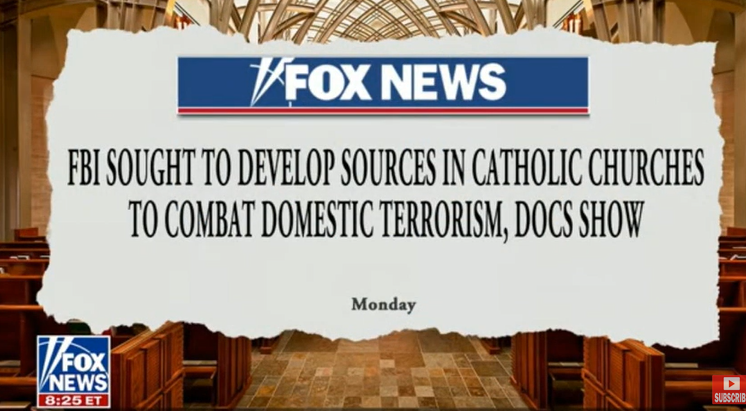
A segment on Fox and Friends Show(04/11/23) delved into a bombshell new report that the FBI launched a domestic terrorism investigation into Catholic Churches in Virginia, with an aim to root out โ€œradical traditionalist Catholic ideologyโ€. As expected, this, as was the case with the counterterrorism investigation into conservative parents protesting at their local school boards, has led to valid questions as to who else gets wrongfully caught up in these counterterrorism dragnets?

Fox and Friends host Ainsley Earhardt put it best when she posed this question(1:24): โ€œHow many other memos are out there? How many other investigations that we donโ€™t know about?โ€

The question Ainsley raises is one that has been raised since the Patriot Actโ€™s passage(2001), and reasonable people will agree that after more than two decades of unanswered questions, the national security establishment needs to be compelled to shed some light on this issue. Simply put, there is no longer any excuse for Congress looking the other way, when there is overwhelming evidence that there are indeed a lot of Americans caught up in the counterterrorism dragnet, even though they have nothing to do with terrorism. Abusing counterterrorism resources is in itself, a national security problemโ€“leads to loss of confidence from the public.

For those of you very happy with @Emolclauseโ€™s activism donโ€™t shy away from the โ€œtip jarโ€ below on your way out. You may also Cash App

Email author at admin@grassrootsdempolitics.com

Become an Octapharma Plasma donor. Make up to $200 in one week and help save lives too!ย Learn More

Moderate House Dems Shoot Down AOCโ€™s Intel Oversight Amendment

$upport via Cash App

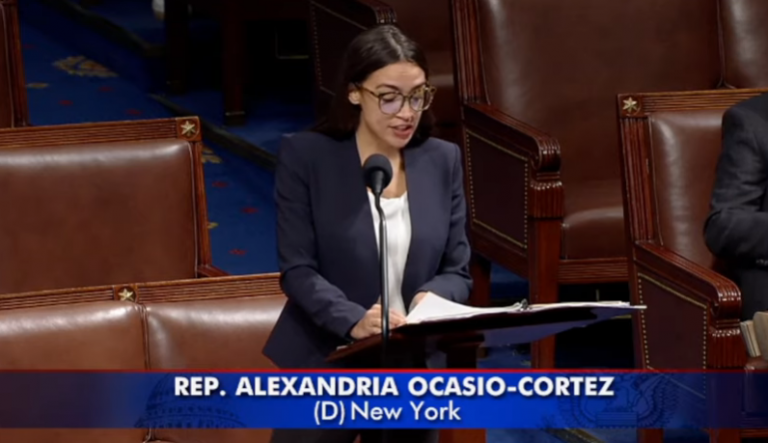
On 12/9/21 Rep Alexandria Ocasio-Cortez(D-NY) introduced an amendment(Amendment 148 to H.R. 5314โ€“Protect Our Democracy Act), that would have restored the oversight powers Congress always intended the Government Accountability Office(GAO) to have, including over our intelligence agencies. Our intelligence agencies, as everyone knows, are notoriously impervious to any Congressional oversight, and often hide behind a vague 1988 Department of Justice opinion to justify their need for secrecy. Rep Ocasio-Cortezโ€™s amendment would have taken away that cover, ensuring much-needed transparency from our intelligence agencies. Surprisingly, 23 Centrist Democrats voted with House Republicans to kill her amendment.

As Rep Ocasio-Cortez correctly pointed out on the House floor, given the kinds of abuses weโ€™ve witnessed during Trumpโ€™s presidency, it is only prudent that we restore GAOโ€™s oversight powers over all federal agencies, including our intelligence agencies. Any reasonable person would agree, that it is foolhardy to assume that former President Trump abused all other federal agencies for his selfish political interests, except our intelligence apparatus, the easiest ones to abuse given the secrecy with which they are allowed to operate.

Rep Ocasio-Cortez said on the House floor: โ€œSince itโ€™s creation in 1921, the Government Accountability Office(GAO) has had the purview to conduct oversight of all federal agencies with the goal of reducing waste, fraud and abuse, and holding accountable bad actors. However and unfortunately, most of our intelligence agencies today are not fully cooperative with the GAO, pointing to an outdated and vague 1988 Department of Justice opinion. Our amendment would allow the GAO to act as a check on this behavior, not creating new powers, but restoring the power Congress always intended the GAO to have. This amendment is welcomed by many in the intelligence community, who want to protect their important work and resources from abuse, particularly after the last presidency we just endured. We drafted this amendment in partnership with the community and Iโ€™m proud to have the support of Representative Adam Schiff who serves as the Chairman of the House Permanent Select Committee on Intelligence. In fact many of my colleagues have already taken a stand in support of this legislation because in 2010, the House passed a virtually identical amendment.โ€

The amendment failed with a final tally of 233 nays, 196 yeas, with 4 members not voting. Among the 233 nays were 23 Centrist Democrats who Yours Truly is compelled to name. The nay Dems included Reps Cynthia Axne(IA), Cheri Bustos(IL), Matt Cartwright(PA), Angie Craig(MN), Antonio Delgado(NY), Val Demings(FL), Jared Golden(ME), Josh Gottheimer(NJ), Chrissy Houlahan(PA), Conor Lamb(PA), Susie Lee(NV), Elaine Luria(VA), Tom Oโ€™Halleran(AZ), Chris Pappas(NH), Kurt Schrader(OR), Kim Schrier(WA), Terri Sewell(AL), Mikie Sherrill(NJ), Abigail Spanberger(VA), David Trone(MD), Filemon Vela(TX), Jennifer Wexton(VA), Susan Wild(PA).

Ever since the Patriot Act was enacted after the terrorist attacks of September 11 2001, there have been growing calls from civil libertarians and others, for there to be some checks on the almost absolute powers we granted our intelligence agencies after the 9/11 attacks. The reasoning behind this is pretty simpleโ€“power corrupts, absolute power corrupts absolutely. Fast forward to the Trump administration and the abuses we witnessed occurring across all federal agenciesโ€“(DOJ being used for the Big Lie, Military on Black Lives Matter protesters in DC, numerous abuses of DHS, โ€œfailureโ€ by our intel agencies to anticipate Jan 6th insurrection)โ€“ and the need to look into our intel agencies becomes an absolute necessity. Itโ€™s against this backdrop that Rep Ocasio-Cortez, with the support of many in the intel community, are pushing for more transparency. One would assume given these set of circumstances, that more oversight would be a no-brainer for Democrats, but apparently not.

Concerns about possible abuses of our intel agencies run the gamut, from the mundane warrantless snooping of our electronic communications (emails, texts, voicemails, etc), to much more serious allegations that if proven, constitute serious violations of our commitments under the United Nations Conventions Against Torture(CAT). These include allegations of 24/7 organized stalking, non-consensual for-profit human experimentation on people entered on terrorism watchlists by weapons manufacturers and others in Big Tech(remote neuromonitoring), militarized attacks on civilians(usually watchlisted) with directed energy weapons, manufactured terrorism cases, etc. These are serious human rights violations that can only come to light through proper oversight. It also bears pointing out that similar egregious abuses have in the past been attributed to our intel agencies, a recent good example being the non-consensual experimentation on U.S. civilians using radiation. President Clinton in 1995, did the just and moral thing by not only exposing this inhumane conduct, but also making whole the surviving victims. The same can be done today.

Bottom line folks, Rep Ocasio-Cortez deserves a lot of praise for pushing for reform on a topic most politicians, and quite frankly the mainstream media, have been terrified to venture into. One only hopes that she musters the courage to push on with it, despite the recent setback on the House floor. Simply put, time has come for our intel agencies to be subjected to some real oversight.

For those of you very happy with @Emolclauseโ€™s activism donโ€™t shy away from the โ€œtip jarโ€ below on your way out. You may also Cash App

Email author at admin@grassrootsdempolitics.com

Become an Octapharma Plasma donor. Make up to $200 in one week and help save lives too!ย Learn More