Pam Bondi Epstein Files Hearing: Attorney General Faces Congress Over Missing Epstein Records

Attorney General Pam Bondi is preparing for another high-stakes appearance before Congress as lawmakers intensify scrutiny of the Justice Departmentโ€™s handling of the still-controversial files connected to convicted sex trafficker Jeffrey Epstein. The hearing follows a bipartisan vote by the House Oversight Committee to subpoena Bondi to testify under oath about why key records connected to the Epstein investigation have not yet been fully released to the public. The subpoena passed by a 24โ€“19 vote, with several Republicans joining Democrats in demanding answers, reflecting growing frustration on Capitol Hill about the Department of Justiceโ€™s transparency in one of the most notorious criminal cases in modern American history. 

The controversy stems largely from the governmentโ€™s implementation of the Epstein Files Transparency Act, legislation passed almost unanimously by Congress in late 2025 requiring the Justice Department to release all records tied to the Epstein investigation in a searchable public database. The law was intended to finally shed light on Epsteinโ€™s extensive trafficking network and identify potential co-conspirators or associates mentioned in federal files. While the Justice Department has released millions of pages of documents since the law took effect, lawmakers and investigators say the disclosures remain incomplete, with thousands of records reportedly withheld, heavily redacted, or missing from the public database altogether. 

Bondi has already faced intense questioning from members of Congress over the issue, and her previous testimony quickly turned into one of the most combative hearings of the year. During that appearance, she repeatedly clashed with lawmakers and dismissed critics, at one point insulting members of Congress during heated exchanges over the departmentโ€™s handling of the files. The confrontational tone, combined with the Justice Departmentโ€™s refusal to answer certain questions about potential Epstein associates, fueled bipartisan criticism that the department was avoiding full transparency about the investigation and the extent of Epsteinโ€™s network. 

The political pressure intensified further after new reporting revealed that thousands of Epstein-related files had been held offline during the document release process, including FBI interview summaries and other investigative records. According to congressional investigators, more than 47,000 documents were temporarily withheld for review, raising additional questions about whether the Justice Department complied fully with the disclosure requirements mandated by federal law. Critics argue that the incomplete release of records undermines public confidence and leaves unanswered questions about who may have been involved in Epsteinโ€™s trafficking operation. 

Complicating matters even further, the Justice Department recently acknowledged that some records containing allegations involving Donald Trump had initially been withheld due to what officials described as a technical error during the document review process. The records include FBI interview notes from a woman who alleged that Epstein introduced her to Trump when she was a minor during the 1980s. The White House has strongly denied the allegations and dismissed them as unsupported claims, but the revelation that the documents were initially omitted has intensified accusations from lawmakers that the department mishandled the release of key evidence. 

Members of Congress from both parties now say Bondiโ€™s upcoming testimony will be critical in determining whether the Justice Department has complied with the law and whether additional subpoenas or investigative steps are necessary. Several lawmakers have argued that the American public deserves a full accounting of the Epstein files, including unredacted records identifying individuals who may have participated in or enabled Epsteinโ€™s trafficking network. Others have warned that continued delays or incomplete disclosures risk fueling public suspicion that powerful figures are being shielded from scrutiny.

The stakes surrounding Bondiโ€™s next appearance before Congress are therefore unusually high. In addition to answering questions about missing documents and disputed redactions, she will likely face detailed inquiries about the Justice Departmentโ€™s review process, the status of any remaining files, and whether additional releases are forthcoming. With bipartisan pressure mounting and the Epstein case continuing to capture public attention worldwide, the hearing is expected to become another defining moment in the ongoing effort to determine how much of the Epstein network has truly been exposedโ€”and how much may still remain hidden within the unreleased files.

America First No More? Trumpโ€™s Iran War Splits MAGA and Risks a Regional Firestorm

President Donald Trumpโ€™s decision in the early hours of 02/28/26 to launch military strikes against Iran marks a dramatic turning point in his presidency โ€” and a direct test of the โ€œAmerica Firstโ€ doctrine that helped propel him to power.

For nearly a decade, Trump has argued that prior presidents recklessly entangled the United States in costly, open-ended foreign wars. He relentlessly criticized the Iraq War and the long U.S. presence in Afghanistan, portraying them as strategic blunders that drained American treasure and cost thousands of American lives without delivering stability to the Middle East. That message resonated deeply with voters weary of interventionism. It became a core pillar of MAGA identity: no more endless wars.

Thatโ€™s why the move against Iran has triggered visible unease within parts of Trumpโ€™s own coalition. Many of his supporters took his anti-war rhetoric literally. The โ€œno more warsโ€ mantra wasnโ€™t just campaign messaging โ€” it was ideological. Now, those same voices are grappling with the reality of a new Middle Eastern conflict under a president who explicitly promised to avoid one.

The tension is especially notable given the presence of figures like Tulsi Gabbard in Trumpโ€™s orbit. Gabbard built much of her national profile opposing regime-change wars and warning specifically against U.S. conflict with Iran. Her longstanding public skepticism toward intervention raises obvious questions: Was she fully on board with this decision? Did she counsel restraint? And more broadly, how unified is the administration internally as this conflict unfolds?

Historically, even presidents viewed as hawkish have stopped short of full-scale war with Iran. Leaders from both parties understood the risks: Iran is not Iraq. It has significant missile capabilities, a network of regional proxy forces, influence in Iraq and Syria, and the ability to threaten shipping through the Strait of Hormuz โ€” a chokepoint through which a substantial portion of the worldโ€™s oil supply passes. Any sustained conflict risks spiking global energy prices, destabilizing neighboring countries, and drawing in regional actors.

Another unavoidable dimension is Israel. Iran and Israel have been engaged in a shadow war for years โ€” through cyber operations, proxy forces, and targeted strikes. If U.S. military action is perceived as directly advancing Israelโ€™s security agenda, critics โ€” including some within the MAGA base โ€” will ask whether America is fighting its own war of necessity or stepping into Israelโ€™s conflict with Tehran. That perception alone could deepen domestic divisions.

War with Iran is also uniquely complex because of asymmetry. Tehran does not need to defeat the United States conventionally. It can retaliate indirectly โ€” through militia attacks on U.S. personnel in Iraq or Syria, missile strikes on regional bases, cyberattacks, or disruption of maritime traffic. Even limited American casualties could dramatically shift public opinion. Trump has long been sensitive to domestic political backlash. If U.S. troop deaths mount, would he escalate to restore deterrence โ€” or pivot quickly toward de-escalation to preserve his political coalition?

Previous administrations avoided full war with Iran precisely because once kinetic conflict begins, control becomes elusive. Retaliation invites counter-retaliation. Regional allies get involved. Oil markets react. Global powers reposition. What begins as a โ€œlimited strikeโ€ can evolve into a prolonged regional confrontation with no clear exit ramp.

The central political irony is stark: the president who campaigned against endless wars now faces the prospect of managing one. Whether this becomes a short, contained operation or the beginning of a drawn-out conflict will define not just Trumpโ€™s second term, but the durability of the America First movement itself.

If American casualties rise or the conflict expands, the internal MAGA divide may become impossible to ignore. And the question many supporters are now asking โ€” quietly or publicly โ€” will grow louder: Is this what America First was supposed to mean?

Did FBI Director Patel Lie Under Oath?

In a striking segment on MSNOWโ€™s Last Word with Lawrence Oโ€™Donnell, host Lawrence Oโ€™Donnell raised a provocative and consequential question: did FBI Director Kash Patel mislead Congress under oath during his exchange with Congressman Eric Swalwell about Donald Trumpโ€™s presence in the Jeffrey Epstein files? During that hearing, Swalwell pressed Patel directly on whether Trumpโ€™s name appeared in the Epstein material and sought clarity about the extent and significance of those references. Patel did not provide a numerical estimate, nor did he use the phrase โ€œvery few,โ€ but his answer was widely interpreted as downplaying the frequency and importance of Trumpโ€™s appearance in those records. He framed his response in a way that suggested there was nothing substantial or alarming tied to Trump in the context of the FBIโ€™s investigative findings.

Since that testimony, claims have circulated asserting that Trumpโ€™s name appears in the Epstein files far more extensively than Patelโ€™s response implied. Some reports and political commentators have cited extraordinarily large raw reference counts, arguing that Trumpโ€™s name appears hundreds of thousands or even more than a million times across various forms of Epstein-related material, including emails, contact directories, flight records, investigative notes, and digital indexing systems. Even accounting for duplication, automated references, and database artifacts, such figuresโ€”if accurateโ€”would appear difficult to reconcile with the general impression Patel conveyed during his testimony. The core issue is not whether Patel gave a precise number, because he did not, but whether his answer created a misleading impression that minimized the scale of Trumpโ€™s documented presence.

Whether that impression rises to the level of criminal conduct is a much more complex question. Federal law makes it a crime to knowingly provide false or materially misleading testimony to Congress, but the key word is โ€œknowingly.โ€ Prosecutors would have to prove that Patel was aware, at the time he testified, that his characterization was materially inconsistent with the actual scope of the records. That is a high bar. The Epstein files are massive, technically complex, and include raw, unfiltered material alongside analyzed investigative conclusions. It is entirely possible that Patel relied on summaries prepared by subordinates or focused specifically on references deemed relevant to criminal conduct rather than raw textual mentions. Under that interpretation, his testimony could be defended as reflecting his understanding of investigative significance rather than literal database frequency.

At the same time, Patelโ€™s role as FBI Director weakens any argument that he lacked access to critical information. As head of the bureau, he has the authority to receive detailed briefings on major investigative matters, especially one as high-profile and politically sensitive as Epsteinโ€™s network and its associated records. Critics argue that it strains credibility to believe that the FBI Director would be unaware of the general magnitude of references to a former president in such a consequential investigative archive. If evidence were to surface showing that Patel had been briefed specifically about the scope or frequency of Trump-related references before his testimony, it could support the argument that his answer was not merely cautious or incomplete, but intentionally misleading.

On the other hand, defenders of Patel would likely emphasize the distinction between raw data mentions and meaningful investigative findings. Large digital archives often contain inflated reference counts due to repetitive indexing, duplicate communications, or incidental references that carry no investigative weight. A personโ€™s name might appear thousands of times without indicating wrongdoing or even direct interaction. From that perspective, Patel could argue that his testimony reflected the FBIโ€™s substantive investigative conclusions, not superficial database metrics. Courts have historically been reluctant to criminalize testimony that can reasonably be interpreted as technically accurate or dependent on interpretation, particularly when the witness avoids making precise factual claims.

The political implications of this controversy are significant and could shape how the matter unfolds. If a future Democratic administration were to take office, there would likely be pressure from some quarters to investigate whether Patelโ€™s testimony crossed the legal line. Such an inquiry could take the form of a congressional referral, a Justice Department investigation, or the appointment of a special counsel. Any decision to prosecute would ultimately depend on whether investigators could uncover clear evidence of intentโ€”such as internal communications, briefing documents, or witness testimony showing that Patel knowingly conveyed a misleading impression. Without that level of proof, the matter would likely remain in the realm of political controversy rather than criminal prosecution.

At the same time, the broader political climate has changed dramatically in recent years. Actions that were once considered unthinkableโ€”such as investigating or prosecuting senior federal law enforcement officialsโ€”are now part of the modern political landscape. That reality cuts both ways. Any future administration pursuing such a case would face accusations of political retaliation, while declining to act could fuel claims of unequal accountability. Ultimately, the question of whether Patel misled Congress may hinge less on public debate over document counts and more on what evidence exists about his state of mind when he testified. Without clear proof that he knowingly created a false impression, the controversy may never evolve into a criminal caseโ€”but it will remain a potent flashpoint in the ongoing struggle over truth, accountability, and political power at the highest levels of government.

Another Epstein Files Release Deadline Passes

Please consider $upporting GDPolitics by scanning the QR code below or clicking on this link

A segment on MSNOWโ€™s The Last Word with Lawrence Oโ€™Donnell focused on yet another missed deadline for the release of the Epstein files under the Epstein Files Transparency Act. Oโ€™Donnell noted that Friday, 01/16/26, was the date by which Trumpโ€™s Department of Justice was required either to release the documents or explain to a federal court why it could not do so. Even as he laid out the requirement, Oโ€™Donnell expressed skepticism that the administration would comply.

That skepticism proved well founded. The DOJ did not release the Epstein files by the deadline, nor did it offer a straightforward justification for continued secrecy. Instead, it submitted a filing advancing a far more provocative claim: that the federal court itself lacks the authority to impose disclosure deadlines on the DOJ under the transparency law. In effect, the department argued that judicial oversight does not extend to enforcing Congressโ€™s mandate for public release.

The filing struck many observers as both evasive and revealing. The DOJ had no shortage of familiar excuses it could have relied upon. It could have requested additional time, citing the need to review millions of Epstein-related files it now claims to have โ€œdiscoveredโ€ years after Epsteinโ€™s deathโ€”an explanation that few in the public find credible, but one that would have followed the well-worn script of bureaucratic delay. Instead, the department chose to challenge the courtโ€™s authority outright, a move that signaled a deeper resistance to transparency rather than a temporary logistical problem.

That posture stripped away any remaining doubt about the administrationโ€™s intentions. From the beginning, critics warned that Trumpโ€™s DOJ would engage in procedural gamesmanshipโ€”offering symbolic compliance while ensuring that the most consequential material never sees the light of day. The latest filing suggests those warnings were prescient. By disputing the courtโ€™s power to impose deadlines, the DOJ is effectively asserting the right to delay disclosure indefinitely, regardless of statutory language, judicial orders, or public demand.

At this point, what once sounded like cynical speculation is hardening into an unavoidable conclusion. Despite sustained public outcry, congressional action, and repeated court-imposed deadlines, less than one percentโ€”one percentโ€”of the Epstein files have been released. That figure alone tells the story. At this pace, full disclosure is not merely delayed; it is effectively being denied. The administration appears content to manage optics rather than deliver transparency, releasing token material while the core of the record remains sealed. With each missed deadline, the promise of accountability fades further, leaving the public with a grim realization: the dream of a full Epstein files release may never be realized, and the cynics may have been right from the very beginning.

Trump Adminโ€™s Troubling Art Of The Label

Please consider $upporting GDPolitics by scanning the QR code below or clicking on this link

An illuminating segment on MSNOWโ€™s Weekend Primetime examined how the Trump administration has refined what can only be described as the art of the labelโ€”an exercise in branding human beings as threats and then using that label alone to justify the application of overwhelming military force. Host James Sample walked viewers through how this practice operates in real time: individuals or groups are branded with ominous-sounding designations, and those designations, largely untested and unchallenged, become sufficient grounds for detention, deportation, or death. The alarming part is not merely the labeling itself, but how seamlessly these hollow classifications are converted into acts of state violence, often without any discernible legal foundation or meaningful oversight.

For a country that endlessly invokes the rule of law and treats โ€œdue processโ€ as a sacred principle, it is chilling to watch how easily government officials can, on little more than assertion, affix a label to a person and render that individual a legitimate military target. Once the label is applied, the usual safeguardsโ€”evidence, hearings, accountabilityโ€”simply vanish. Even more disturbing is the near-total absence of resistance from Congress or sustained scrutiny from the media, allowing the executive branch to operate as judge, jury, and executioner based on nothing more than its own say-so.

Sample illustrated how this tactic has evolved and expanded. It began, he explained, with migrants being labeled as members of the dangerous gang Tren de Aragua, a claim often unsupported by evidence, and then using that unvetted designation to justify sending them to CECOT, where they were subjected to brutal conditions and torture. The label alone did the work; no adjudication was required, no proof demanded. From there, the administration escalated, branding people aboard boats in the Caribbean as โ€œnarcoterroristsโ€ and then using that designation to justify blowing the vessels out of the water, killing those on board. Beyond the invocation of the narcoterrorism label itself, the administration offered little to persuade the public that the people killed actually met that definition.

According to Sample, the most recent and perhaps most dangerous iteration of this practice has emerged in Africa, where the administration has labeled certain regions in Nigeria and Somalia as ISIS-controlled areas and then relied solely on that characterization to carry out military strikes. In Nigeria, one such attack reportedly occurred on Christmas Day, underscoring the moral numbness that accompanies this kind of empty labeling. When entire regions can be reduced to a single wordโ€”โ€œISISโ€โ€”and that word becomes a license to kill, the line between lawful military action and lawless violence all but disappears.

At some point, Congress must intervene and reclaim its constitutionally mandated role. That intervention should begin with demanding answers about these labels: how they are defined, what evidence supports them, and what legal reasoning is used to transform them into justifications for lethal force. The military lawyers who sign off on these actions should be required to testify publicly and explain their rationale to the American people. Only sustained oversight and transparency can halt the dangerous slide toward governance by label, where words replace law and accountability is an afterthought. One can only hope Congress acts before more lives are lost to this reckless and hollow exercise of power.

Three Questions Alex Acosta Must Answer Re Epstein

MSNBCโ€™s Legal Analyst Lisa Rubin appeared on the 09/19/25 edition of Deadline White House show where she made a compelling argument as to how Congress can and should go about getting Jeffrey Epstein-related information from former U.S. Attorney Alex Acosta.

Rubin said that there are a bunch of Epstein-related documents that Acosta either saw, or was involved in creating. This, she argued, meant the said documents were either currently in the possession of the Department of Justice, or even by Acosta himself.

The first question Congress needs to ask Acosta is about the 60-count federal indictment drafted by prosecutor Ann Marie Villafaรฑa in 2007. DOJ definitely has this document, and the allegations therein, may shed a lot of light as to Epsteinโ€™s illicit operation, and potentially, the actions of his his co-conspirators, most of who were later granted immunity.

The second question regards the lengthy prosecution memo that aforementioned Villafaรฑa wrote regarding the federal case re Epstein. Rubin says this can shed a lot of light as to the evidence the feds had against Epstein to support the 60-count indictment

Finally, Rubin says Congress should ask Acosta about his own interview transcript from the office of professional responsibility investigation that was conducted at DOJ in 2020. That was an investigation started at the instigation of Republican Senator Ben Sasse. Rubin argues that Acosta must have that transcript in his possession because he and his lawyers were given an opportunity to review it and suggest any corrections.

Long story short, the lingering questions about Jeffrey Epstein and his child sex trafficking operation must be answered, and key players like Acosta must not be allowed to come before Congress and just gaslight the public. These crucial documents are currently in the possession of the DOJ and/or Acosta, and the public deserves to see them.

An alternative route would be to have Ann Marie Villafaรฑa testify before Congress. Who knows, she might have โ€œkept receiptsโ€.

DOGE Accused Of Amassing Massive Data For Political Dosiers

Bombshell report on the 04/30/25 edition of the Rachel Maddow Show (citing the NY times) says that the Department of Government Efficiency (DOGE) is amassing massive amounts of people’s private data from various government agencies in an effort to create a central database that could potentially be used/abused to create “dossiers” of political opponents of President Trump.

Yours Truly captured part of Maddow’s commentary in the tweet below (X below if you like๐Ÿ™„๐Ÿ˜‚).

NY Times’ Julia Angwin told host Maddow that this [dossier politics] is very common in authoritarian countries, especially China. She specifically said: “China is sort of the example that does this. They have these master files that they have on every citizen, everything that they’ve ever done, it’s called social credit score, and they use it to punish dissent.”

Importantly, and quite scaringly, Angwin says compared to other Western nations, America’s privacy laws are the worst equipped to dealing with the dangers of such a centralized database. She adds that our system was designed based on this notion that government officials will always be acting in good faith, and thus tread carefully re the private data of citizens.

If this reporting holds up, it looks like America is gearing up for the biggest civil liberties fight of her 400 year existence. I hate to be a Debbie Downer here, but given since the passage of the Patriot Act right after 09/11, we’ve witnessed increasing encroachments to our civil liberties, and privacy in particular. 

I’ve said it before, and I’ll say it again, advances in technology have for all intents and purposes, rendered the 4thamendment moot. Consequently, there’s no privacy to defend. Congress has had numerous opportunities to deal with the problem, but abdicated at every turn. Too late to solve the problem now.๐Ÿคท. 

I’ve been quite consistent about this issue. This was me ranting and raving about very issue way back in 2019๐Ÿ˜ณ๐Ÿ‘‡When some big time MSMer starts bandwagoning over the issue, make sure to remind them that Yours Truly was already crying about this in 2019โ€ฆwhen MSM thought it was just another โ€œconspiracy theoryโ€.๐Ÿ™„

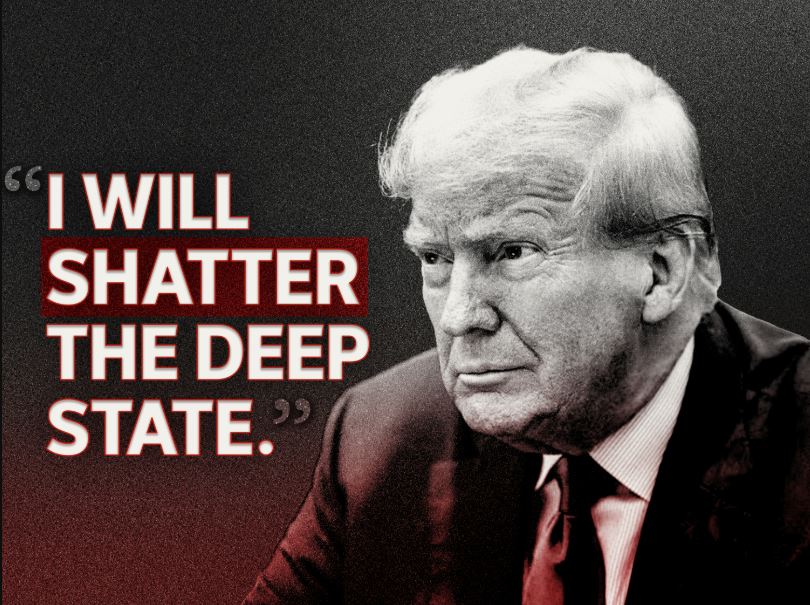
President-Elect Trump Promises Massive Crackdown On The Deep State

Support via CashApp๐Ÿ‘‡

In one of his post election posts on X, President-Elect Donald Trump promised to “dismantle the Deep State.” This as you know, was a central theme of his presidential campaign so it should come as no surprise to anyone. The question now is whether he will actually deliver on this seemingly tall order that may play well on the campaign trail, but prove very difficult in terms of actually pulling it off.

https://twitter.com/elonmusk/status/1854765949582299508?t=PsN08HAds0I2dmwxljVlmg&s=19

Different people have different notions as to what the Deep State actually means, or whether it even exists, but the general consensus is that they are powerful but unelected bureaucrats, who control the levers of power behind the scenes, and span different administrations (both Democrat and Republican)–essentially a permanent unelected ruling class, who ruthlessly protect their power from “outsiders”–ambitious people they don’t approve of/like. They use the instruments of government(the ABC agencies we shall not name) to crush their perceived enemies.

Trump has cast himself as one of those outsiders, and he points to his endless criminal prosecutions as proof of the Deep State coming after him. He has repeatedly singled out the FBI as one of the key instruments of the Deep State that he wants hollowed out.

Whether or not the FBI has become an instrument of the Deep State as Trump alleges, is a question Yours Truly chooses to sidestep for now–way above my pay grade. What Yours Truly finds very encouraging about Trump’s proclamation however, is that during his 4 years, maybe, just maybe, we may achieve something I have begged and prayed for for quite a long time now, and that is, a Church-type Committee to look into the abuses of our intelligence agencies.

The last time we did an audit of our intelligence agencies was way back in the 1960s so reasonable people will agree that a fresh audit is way past due. A lot of “dirt” was uncovered in the previous audit (cointelpro being the main one) so smart money is that 70 years after that, there are bound to be some let’s just say, “interesting” new programs to be “unearthed”. I for one, would keep my eyes open for the notorious Targeted Individual program, which our intelligence agencies have categorically dismissed as a conspiracy theory. A Church-type committee would be the perfect venue to get to the bottom of this supposed “conspiracy theory”.

Yours Truly has long advocated for the enactment of a new Church-type commission to investigate the abuses of power by our intelligence agencies. Though President-Elect Trump doesn’t outrightly call for the creation of such a commission, reasonable people will agree that his recent post on X is the most serious attempt yet by a modern American president to rein in our out of control intel agencies, and for that, he deserves a lot of praise. Whether he will keep his promise is a different matter altogether.

President-Elect Trump is known to desire things/issues that cast him aside from other American presidents in terms of greatness. Well, 70 years later, historians are still talking about the historic Church Committee hearings, and the administration that was in charge then. If Trump pushes for a new Church-type committee during his four years, historians will also be talking favorably about his administration 100 years from now, especially if a lot of illegal government activity is uncovered.

President-Elect Trump should also know that a much overdue audit of our intelligence agencies is an issue that enjoys tremendous bipartisan support despite the media’s depiction of it as a partisan MAGA issue.

CIA Accused Of Coverup In Havana Syndrome Probe

$upport via Cash App

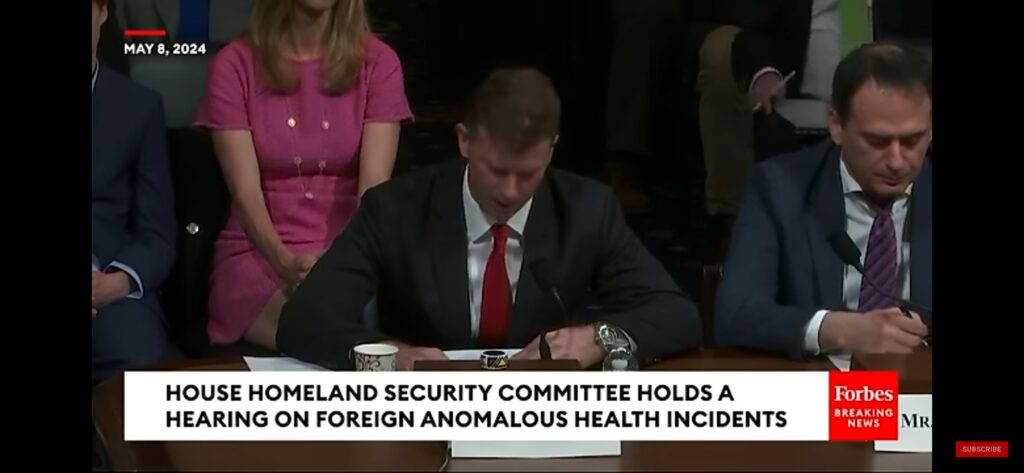
Bombshell testimony at a House Homeland Security Committee hearing (05/08/24) regarding Havana Syndrome, opened up new leads for investigators to follow up on. The unmistakable message from all the three witnesses however, all of whom have deep experience/ties to the U.S. intel community, was that U.S. intel agencies, and the CIA in particular, were not leveling with the American public as to the cause of these ailments. More importantly, that the continued coverup threatens our national security because it provides an incentive for Russia and our other adversaries to ramp up the attacks.

The expert witnesses at the 05/08/24 hearing were Retired Army Lt. Colonel Gregory Edgreen (led DIA’s probe into havana syndrome), leading National Security Attorney Mark Zaid and award-winning journalist currently working for The Insider, Christo Grozev

We are not going to focus here on the technical/scientific issues surrounding havana syndrome but rather, the bombshell coverup allegations made by all the three expert witnesses. Reasonable people will agree that this by itself–a national security compromising coverup–should be sufficient cause for President Biden to do some “housecleaning” at the top echelons of our intel agencies.

Lt. Col Edgreen began by putting out some important context, and that is, the U.S. government has a long history of slowly responding to emergent national security threats, adding that the lax havana syndrome response “is nothing new”.

Edgreen(10:16): “As a country, we have been here before. Most people think this all started in Havana in 2016, the wildly reported Havana Syndrome…but before Havana Syndrome, there was the Moscow Syndrome. Soviet intelligence bathed the U.S. Embassy in Moscow with microwave transmissions. The health effects were similar to what we see today. There are many examples of syndromes and ailments from Americans injured in the line of duty, that the government did not recognize for many years, which were eventually proven. Agent Orange used in Vietnam, the Gulf War Syndrome, Burn Pits during the forever wars in Iraq and Afghanistan. In all of these examples, America took too long to acknowledge these injuries, and our service members languished without care. Havana Syndrome is no different. The gaslighting of AHI survivors continues to this day, as history repeats itself.”

Regarding documented reports of CIA officers being harassed overseas. Lt. Col Edgreen said(13:26): “There were reports of CIA incidents which included harassment, room intrusions, houses being defiled, tossed, pets poisoned, assaults on our personnel, and diplomats being drugged, doxxing, families harassed and attacked via directed energy, a red line to many because of the debilitating nature of these weapons…” Notice that these are the exact same complaints raised by targeted individuals in the United States, only to be summarily dismissed by the mainstream media as some form of “mass paranoia”.

Regarding the coverup, Lt Col Edgreen said(15:50): “I think the bar for AHI attribution was set so high because we do not, as a country and a government, want to face some very hard truths: Can we secure America? Are these massive counterintelligence failures? Can we protect our people on American soil? Is this an act of war?” Edgreen added, “It’s time to take action. This is a nonpartisan issue which has spanned several administrations. Let’s start to get this right with executive and legislative action…most importantly, pressure the government to fight back.”

Award-winning Journalist Christo Grozev testified that he had initially relied on information from U.S. government officials in his Havana Syndrome reporting, but was approached by an intel official in Europe, and advised to seek independent sources–Exhibit A as to a coverup, and a sad state of affairs indeed.

Attorney Mark Zaid testified(27:00): “A recent investigation by 60 Minutes, Der Spiegel and The Insider identified potential credible links between AHIs and alleged Russian operatives for military unit 29155. This included activities within the United States. What was the government’s response? CIA doubled down that there’s nothing to see, and that it knew of, and had already ruled out the same evidence. That is blatant falsehood that has infuriated many serving members of the intelligence community because so much of the evidence, to the contrary, is available to them in reports, briefings and cable traffic. Of course, this evidence is classified.”

Zaid added that regular law enforcement officials should be allowed to pursue investigations into Havana Syndrome rather than maintaining the status quo, where the CIA hogs such probes.

During the question and answer session, Christo Grozev said(29:59): “One of the most disturbing denials that I’ve seen in some of the publications leading up to our findings being published, was an attempt to create the impression that no technology would allow this impact on the human brain. That is provably untrue…There is sufficient evidence that it’s possible.” Grozev added that a Russian intelligence official told him that the Russians were doing this because America has been doing it to their intel officials as far back as the 80s. So this idea that AHIs are some mysterious occurrences requiring “new research” is highly questionable.

The biggest bombshell during the question and answer session came from Attorney Mark Zaid, when he was asked whether he believed the government was blocking some information. Zaid responded(37:44): “Information is absolutely being blocked from one agency to the other, particularly at the CIA. I mean, that’s who we’re going to point to the most, of information that the CIA has, that its sister intelligence agencies it hasn’t been shared with, and I can identify a number of specific classified documents in a proper setting.”

Bottom line folks, there’s no way to sugar coat this. Three esteemed expert witnesses testified in Congress on 05/08/24 that our intel agencies, and the CIA in particular, are not only engaged in a coverup when it comes to Havana Syndrome, but that the coverup threatens our national security because it provides an incentive for further such attacks. Heads must roll!!

For those of you very happy with @Emolclauseโ€™s activism donโ€™t shy away from the โ€œtip jarโ€ below on your way out. You may also Cash App

Email author at admin@grassrootsdempolitics.com

Become an Octapharma Plasma donor. Make up to $200 in one week and help save lives too! Learn More

Russia Behind GOP’s Opposition To Ukraine Funding

$upport viaย Cash App

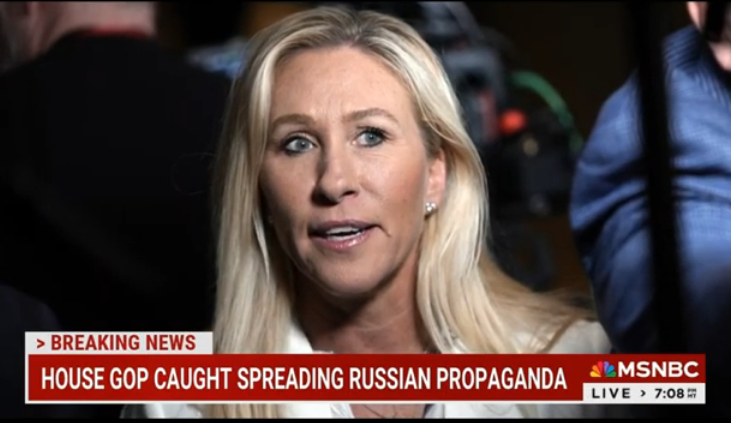
Rep Marjorie Taylor-Greene(R-GA), the loudest opponent to Ukraine funding

A bombshell segment on Alex Wagner Tonight show (04/17/24), citing a Washington Post piece, confirmed what we’ve suspected all along, and that is, Putin’s Russia is behind the Republican Party’s opposition to efforts by Congress to provide funding for Ukraine, as it defends itself against a Russian invasion. The bombshell report essentially says that Rep Marjorie Taylor-Greene(R-GA), aptly nicknamed “Moscow Marge”, and other congressional Republicans currently opposed to Ukraine funding, are either willing or unwilling participants in Vladimir Putins propaganda campaign–a sad state of affairs indeed.

Host Alex Wagner(5:43): “…Ukraine and the vote for Ukraine funding has become a leverage point for Russia. The Washington Post has some explosive reporting…on newly revealed documents from inside Vladimir Putin’s government, documents which show how Russia is seeking to subvert western support for Ukraine and disrupt the domestic politics of the United States and European countries through propaganda campaigns and supporting isolationist and extremist policies. Russia is formenting division over Ukraine because it wants to weaken America’s role in the world. In particular, one Russian policy expert cited in one of these documents, specifically calls on Russia to continue to facilitate the coming to power of isolationist right-wing forces in America.”

Host Wagner then got very specific, adding, “Russia very much wants the Marjorie Taylor Greene’s to continue doing exactly what they are doing, because it serves Russia’s interests.”

Bottom line folks, host Alex Wagner and the Washington Post are absolutely correct. Trump GOP’s opposition to Ukraine funding is not rooted in some legitimate conservative ideology as they would like the public to believe. Instead, it is a shameless assist to Russia’s strongman Vladimir Putin, who they are banking on to help them win Congress and possibly the White House in 2024. You read that right, a win for Trump in 2024 is a win for Vladimir Putin.

For those of you very happy withย @Emolclauseโ€™s activism donโ€™t shy away from the โ€œtip jarโ€ below on your way out. You may also Cash App

Email author at admin@grassrootsdempolitics.com

Become an Octapharma Plasma donor. Make up to $200 in one week and help save lives too!ย Learn More