Did FBI Director Patel Lie Under Oath?

In a striking segment on MSNOWโ€™s Last Word with Lawrence Oโ€™Donnell, host Lawrence Oโ€™Donnell raised a provocative and consequential question: did FBI Director Kash Patel mislead Congress under oath during his exchange with Congressman Eric Swalwell about Donald Trumpโ€™s presence in the Jeffrey Epstein files? During that hearing, Swalwell pressed Patel directly on whether Trumpโ€™s name appeared in the Epstein material and sought clarity about the extent and significance of those references. Patel did not provide a numerical estimate, nor did he use the phrase โ€œvery few,โ€ but his answer was widely interpreted as downplaying the frequency and importance of Trumpโ€™s appearance in those records. He framed his response in a way that suggested there was nothing substantial or alarming tied to Trump in the context of the FBIโ€™s investigative findings.

Since that testimony, claims have circulated asserting that Trumpโ€™s name appears in the Epstein files far more extensively than Patelโ€™s response implied. Some reports and political commentators have cited extraordinarily large raw reference counts, arguing that Trumpโ€™s name appears hundreds of thousands or even more than a million times across various forms of Epstein-related material, including emails, contact directories, flight records, investigative notes, and digital indexing systems. Even accounting for duplication, automated references, and database artifacts, such figuresโ€”if accurateโ€”would appear difficult to reconcile with the general impression Patel conveyed during his testimony. The core issue is not whether Patel gave a precise number, because he did not, but whether his answer created a misleading impression that minimized the scale of Trumpโ€™s documented presence.

Whether that impression rises to the level of criminal conduct is a much more complex question. Federal law makes it a crime to knowingly provide false or materially misleading testimony to Congress, but the key word is โ€œknowingly.โ€ Prosecutors would have to prove that Patel was aware, at the time he testified, that his characterization was materially inconsistent with the actual scope of the records. That is a high bar. The Epstein files are massive, technically complex, and include raw, unfiltered material alongside analyzed investigative conclusions. It is entirely possible that Patel relied on summaries prepared by subordinates or focused specifically on references deemed relevant to criminal conduct rather than raw textual mentions. Under that interpretation, his testimony could be defended as reflecting his understanding of investigative significance rather than literal database frequency.

At the same time, Patelโ€™s role as FBI Director weakens any argument that he lacked access to critical information. As head of the bureau, he has the authority to receive detailed briefings on major investigative matters, especially one as high-profile and politically sensitive as Epsteinโ€™s network and its associated records. Critics argue that it strains credibility to believe that the FBI Director would be unaware of the general magnitude of references to a former president in such a consequential investigative archive. If evidence were to surface showing that Patel had been briefed specifically about the scope or frequency of Trump-related references before his testimony, it could support the argument that his answer was not merely cautious or incomplete, but intentionally misleading.

On the other hand, defenders of Patel would likely emphasize the distinction between raw data mentions and meaningful investigative findings. Large digital archives often contain inflated reference counts due to repetitive indexing, duplicate communications, or incidental references that carry no investigative weight. A personโ€™s name might appear thousands of times without indicating wrongdoing or even direct interaction. From that perspective, Patel could argue that his testimony reflected the FBIโ€™s substantive investigative conclusions, not superficial database metrics. Courts have historically been reluctant to criminalize testimony that can reasonably be interpreted as technically accurate or dependent on interpretation, particularly when the witness avoids making precise factual claims.

The political implications of this controversy are significant and could shape how the matter unfolds. If a future Democratic administration were to take office, there would likely be pressure from some quarters to investigate whether Patelโ€™s testimony crossed the legal line. Such an inquiry could take the form of a congressional referral, a Justice Department investigation, or the appointment of a special counsel. Any decision to prosecute would ultimately depend on whether investigators could uncover clear evidence of intentโ€”such as internal communications, briefing documents, or witness testimony showing that Patel knowingly conveyed a misleading impression. Without that level of proof, the matter would likely remain in the realm of political controversy rather than criminal prosecution.

At the same time, the broader political climate has changed dramatically in recent years. Actions that were once considered unthinkableโ€”such as investigating or prosecuting senior federal law enforcement officialsโ€”are now part of the modern political landscape. That reality cuts both ways. Any future administration pursuing such a case would face accusations of political retaliation, while declining to act could fuel claims of unequal accountability. Ultimately, the question of whether Patel misled Congress may hinge less on public debate over document counts and more on what evidence exists about his state of mind when he testified. Without clear proof that he knowingly created a false impression, the controversy may never evolve into a criminal caseโ€”but it will remain a potent flashpoint in the ongoing struggle over truth, accountability, and political power at the highest levels of government.


Longtime Pentecostal Preacher Accused Of Child Sexual Abuse

Please consider $upporting GDPolitics by scanning the QR code below or clicking on this link

As the nation continues to reckon with the disturbing legacy of the Jeffrey Epstein case โ€” where power, influence, and fear kept abuse hidden for years โ€” a newly emergent story out of Missouri and Oklahoma reveals that the problem of predatory abuse hidden behind religious authority is deeply systemic and far broader than most Americans realize.

Over the past year, major investigative reporting has spotlighted veteran Pentecostal preacher Joseph Lyle โ€œJoeโ€ Campbell, a once-beloved childrenโ€™s pastor with decades of ministry across the South and Midwest. For more than 40 years, Campbell built a reputation as a charismatic faith leader, ministering to thousands of children in Assemblies of God congregations and, more recently, at Jim Bakkerโ€™s Morningside Church in Blue Eye, Missouri โ€” a ministry broadcast on national Christian television networks. 

Despite repeated allegations dating back to the 1970s and 1980s that he sexually abused young girls under his spiritual care, Campbell continued preaching for decades without criminal consequences. Multiple women have come forward publicly, including in major NBC News reporting, saying they were abused as children or teens by Campbell while he held youth and childrenโ€™s ministry positions. Many said they told church leaders and even civil authorities at the time, only to be dismissed, ignored, or told nothing could be done โ€” a chilling echo of the fear and silence surrounding Epsteinโ€™s victims. 

The turning point arrived in December 2025 when a multi-county grand jury in Oklahoma returned an indictment against Campbell, now 68 years old, on serious criminal charges: one count of first-degree rape and one count of lewd or indecent acts with a child under 16. These allegations stem from events tied to his ministry in Tulsa, Oklahoma in 1984, where prosecutors say he raped a girl believed to have been between 11 and 12 years old and sexually abused another 14-year-old while serving as a youth pastor. 

On December 17, 2025, U.S. Marshals arrested Campbell at a location in Elkland, Missouri and lodged him in the Greene County Jail in Springfield, Missouri, before his expected transfer to Oklahoma where the charges were filed.  While the stateโ€™s legal system has not yet publicly announced an official trial date as of now, the indictment makes clear that prosecutors intend to move forward โ€” and if convicted, Campbell faces up to life in prison. 

What makes this case especially disturbing is that the alleged abuse was first reported decades ago but was never prosecuted at the time. According to survivors and investigative reporting, church officials and some local authorities repeatedly failed to act on those early reports, allowing Campbell not only to stay in ministry but to grow his influence. This mirrors one of the central outrages in the Epstein saga โ€” that powerful or charismatic figures could evade accountability for years while their victims suffered in silence. 

One victim, Phaedra Creed, who appeared on NBC-affiliated segments discussing the case, said she and others were too afraid to come forward earlier because they feared not being believed or being physically harmed โ€” the same kinds of fears Epsteinโ€™s accusers long described. 

Now, as Campbell awaits his day in court, the larger questions hang over this case just as they did with Epstein: How many knew? Who enabled him? And why did it take so long for justice to begin? It is far too easy for prosecutors, church leaders, and law enforcement to treat Campbellโ€™s arrest as the end of an ugly chapter. But unless there is a transparent investigation into what church authorities, denominational leaders, and civil officials knew โ€” and when they knew it โ€” this will be another example of systemic betrayal rather than genuine accountability.

Campbell may be facing the possibility of a life sentence, but without uncovering the broader network of complicity that allowed him to evade consequences for decades, the real lesson of this case โ€” and its painful parallels with Epstein โ€” will be lost.

Proposed Epstein Strategy Session Rekindles Tarmac-gate Memories

An interesting segment on the 08/06/25 edition of MSNBCโ€™s All In with Chris Hayes (Velshi subbing) delved into the widely reported “strategy session” that was supposed to take place at Vice President JD Vance’s residence to deal with the Jeffrey Epstein scandal. The scandal has engulfed the Trump White House and is leading to accusations of a coverup.ย 

***All In Tweet***

The MSNBC segment aptly pointed out the hypocritical Republican reaction back in 2016, when then AG Loretta Lynch was spotted at an airport tarmac chatting with former President Bill Clinton. The DOJ was at that time investigating Hillary Clinton–then the Democratic presidential candidate–over her email server. Many Republicans were very outraged by that meeting, accusing Bill Clinton and Lynch of conspiring to bury the email server probe. The firestorm surrounding the tarmac meeting almost led to AG Lynch’s resignation.

It is therefore quite interesting how the same Republican party which pushed for Lynch’s resignation sighting DOJ independence, is now very comfortable with the prospect of current AG Pam Bondi sitting down with Trump admin officials for a “strategy session” regarding the Epstein scandal which implicates President Trump. 

What happened to their clamour for DOJ independence? It is a very hypocritical stance, and MSNBC’s All In crew deserves major kudos for calling it out

NYTโ€™s Maggie Haberman Ensnared In Feud Over Trump Inaugural Funds

$upport via Cash App

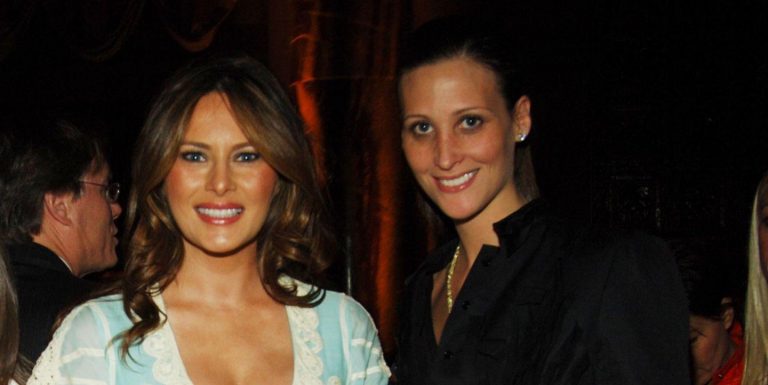
Melania Trump with Stephanie Winston Wolkoff

In case you missed it, the Trump inaugural saga has taken a new, and very interesting twist lately, with now Twitter-active Stephanie Winston Wolkoff taking a direct shot at Maggie Haberman and Ken Vogel of the New York Times(NYT), as being part of the plot to throw her under the bus.

Youโ€™ll remember that after the bombshell revelation that a staggering $40 million of Trumpโ€™s inaugural funds had mysteriously disappeared, there was an effort by Trumpโ€™s allies to pin the blame on then First Lady Melania Trumpโ€™s Senior Advisor Stephanie Winston Wolkoff. Stephanie Wolkoff talked about this effort to throw her under the bus at an appearance on MSNBCโ€™s Rachel Maddow show on September 1, 2020.

In the interview, a visibly upset Stephanie Wolkoff told host Maddow, that then First Lady Melania Trump basically told her she had to be the fall person for the Trump inaugural scandal. Wolkoff specifically said, โ€œMelania and the [Trump]White House had accused me of criminal activity, then publicly shamed and fired me, and made me their scapegoat. At that moment in time, thatโ€™s when I pressed record. She was no longer my friend, and she was willing to let them take me down, and she told me herself, that this is the way it has to be. She was advised by the attorneys at the White House that there was no other choice because there was a possible investigation into the presidential inauguration committeeโ€ฆ.At first I really did think maybe she would come to my aid? Maybe she would tell the truth? She turned her back, she did. She folded like a deck of cards., and Iโ€™m shocked she did it.โ€

This 05/23/2021 tweet however, shows that Stephanie Wolkoff is not only going after Trump and his allies in her effort to set the record straight regarding Trumpโ€™s inaugural, sheโ€™s also calling out NYTโ€™s Maggie Haberman and Ken Vogel, as being part of the plot to destroy her. This, if proven, could turn out to be a huge scandal unto itself, given the fact that many liberals still blame the New York Times for Trumpโ€™s ascension to the White House. Specifically, many liberals believe NYTโ€™s excessive coverage of the โ€œemail scandalโ€, weakened Hillary Clintonโ€™s campaign during the final stretch of the 2016 campaign.

Thereโ€™s no other way any reasonable person can interpret Stephanie Wolkoffโ€™s tweet other than NYTโ€™s Haberman and Vogel were doing Trumpโ€™s bidding when they wrote the referenced piece. This is especially so considering Wolkoffโ€™s invocation of โ€œSETUP. COVERUP. TAKEDOWNโ€ in her tweet. For the record, accusations of โ€œaccess journalismโ€ against then White House reporter for the New York Times, Maggie Haberman, persisted throughout Trumpโ€™s presidency. Stephanie Wolkoff is not the first person drawing that inference.

Bottom line folks, Yours Truly is not accusing Maggie Haberman or Ken Vogel of any wrongdoing. By all accounts, these are serious journalists, who exhibit a high level of professionalism(my personal opinion). What Yours Truly is simply pointing out, is what any reasonable person presented with Stephanie Wolkoffโ€™s recent tweet would conclude, and that is, Haberman and Vogel were in on the plot by Trumpโ€™s allies to throw her under the bus. It would be in everybodyโ€™s interest, especially Wolkoff who suffered greatly as a result of the Trump inaugural saga, if Haberman, Vogel or even the New York Times management, addressed this issue.

For those of you very happy with @Emolclauseโ€™s activism donโ€™t shy away from the โ€œtip jarโ€ below on your way out. You may also Cash App

Email author at admin@grassrootsdempolitics.com

Become an Octapharma Plasma donor. Make up to $200 in one week and help save lives too! Learn More