A Provocative Claim About Presidential Responsibility

In a striking segment on MSNOWโ€™s The Last Word, host Lawrence Oโ€™Donnell argued that Donald Trump is the only American president whose peacetime policies have resulted in more deaths than those occurring under his wartime actions. The claim immediately ignited fierce debate. Supporters of Trump dismissed it as hyperbolic political theater, while critics said it merely put numbers to what they see as the lethal consequences of policy choices.

To be precise, the argument is not that Trump personally โ€œkilledโ€ anyone, but that decisions made under his administration produced deadly outcomes. Oโ€™Donnellโ€™s central focus was the sweeping DOGE cuts, which he contends slashed critical foreign aid programs and humanitarian assistance. According to the segment, those reductions led to food shortages and medical supply disruptions in vulnerable regionsโ€”particularly in parts of sub-Saharan Africaโ€”contributing to starvation deaths, interruptions in HIV treatment, and preventable fatalities among infants and immunocompromised patients. The broader moral claim is straightforward: when the United States withdraws life-sustaining aid at scale, the consequences are measured in lives lost.

Oโ€™Donnellโ€™s case draws added force from history. For decades, humanitarian aid to Africa enjoyed bipartisan backing. Republican President George W. Bush, for example, earned praise for expanding anti-HIV/AIDS initiatives that saved millions of lives. By that standard, Oโ€™Donnell suggests the Trump-era retrenchment marked not just a policy shift but a break from a rare area of cross-party moral consensus.

A related point, not specifically raised by Oโ€™Donnell but relevant to the broader debate, is that the United States continues to provide substantial aid to strategic allies such as Israel. That reality complicates a blanket โ€œAmerica Firstโ€ defense of foreign aid reductions, since it suggests the issue is less about ending foreign assistance altogether and more about where and to whom it is directed.

Critics of Oโ€™Donnellโ€™s assertion counter that it stretches causation beyond responsible limits. Foreign aid systems are complex, involving NGOs, host governments, and multilateral institutions; attributing downstream deaths directly to a single administrationโ€™s budget decisions can oversimplify reality. They also argue that every president makes trade-offs and that fiscal restraint, even when painful, is not equivalent to intent to harm. Some pro-Trump voices further contend that global poverty, corruption, and logistical failuresโ€”rather than U.S. policy aloneโ€”bear primary responsibility for humanitarian crises. From this vantage point, labeling Trump as uniquely deadly in peacetime risks politicizing tragedy.

Yet supporters of Oโ€™Donnellโ€™s framing respond that intent is not the only moral metricโ€”foreseeability matters. If experts warned that cutting HIV medication pipelines or food assistance would predictably result in deaths, and those warnings were ignored, responsibility cannot be shrugged off as indirect. They also fold in the administrationโ€™s handling of COVID-19, arguing that inconsistent messaging, resistance to mitigation strategies, and delayed responses contributed to avoidable American deaths. When those domestic losses are considered alongside alleged foreign aid consequences, the cumulative toll becomes central to the debate.

Ultimately, Oโ€™Donnellโ€™s claim sounds bombastic at first hearing. Comparing peacetime and wartime death tolls is inherently fraught, and presidential accountability for global mortality is complex. Still, given the scale of reported COVID fatalities and credible estimates that reductions in humanitarian aid can translate into hundreds of thousands of preventable deaths, it is not unreasonable to argue that Trump-era policies may have produced an extraordinary peacetime human cost. One can dispute the framing, question the arithmetic, and challenge the causationโ€”but it is no longer far-fetched to make the claim.

Kushner Nixed National Testing Strategy Because he Thought Covid-19 Would Only Ravage Dem States

$upport via Cash App

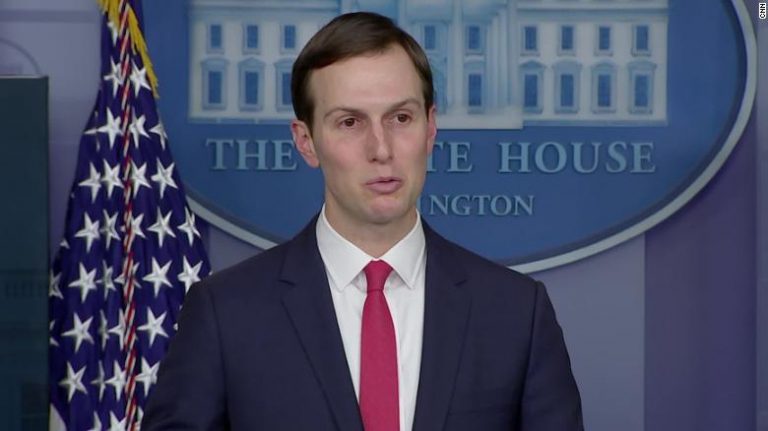
A troubling Vanity Fair report says that at the onset of the coronavirus pandemic, President Trumpโ€™s son-in-law Jared Kushner cobbled together a team which actually managed to come up with a decent national testing strategy for covid-19. Shockingly however, instead of the plan being rapidly deployed nationwide to curb the spread of the deadly virus, Kushner and some White House political operatives decided it would be politically advantageous for Trump, if they shelved the testing plan because the virus at that time was only ravaging blue/Democratic states like New York.

As unbelievable as this sounds, Kushner and the White House operatives believed it would be politically advantageous for Trump if they let people die in blue/Democratic states because they could turn around and blame Democratic Governors for incompetence in the run up to the November elections. The author of the Vanity Fair piece, Katherine Eban, told CNNโ€™s Erin Burnett;โ€œThere was a shared feeling which turned out to be spectacularly wrong, that the virus was receding, it was going to be under control, and at the time it was just the blue states where the virus was surging. So the idea was, why go through all the effort to surge up a national plan? It wasnโ€™t going to have political resonance, and if there was a political response that was needed, the blue state Governors could just be blamed..โ€

Youโ€™ll remember a recent Washington Post piece which said Trump, who had previously downplayed the seriousness of covid-19, even calling it a hoax at one point, changed his attitude towards the deadly virus only after senior White House officials presented him with data and maps showing that the virus is beginning to ravage โ€œour peopleโ€โ€“Trumpโ€™s base of rural White voters in Republican states.ย This means Trumpโ€™s bungled covid-19 response, which has led to more than 150,000 deaths so far and counting, is not only the result of a callous political decision by his son-in -law Kushner, but also the administrationโ€™s deep seated racism towards communities of color who Trump considers not โ€œour peopleโ€, and who data has consistently shown to disproportionately bear the brunt of covid-19, both in infection rates and deaths.ย A sad state of affairs indeed.

Bottom line folks, as it currently stands, the coronavirus pandemic is arguably one of the biggest crisis ever to befall the United States, especially if you consider the fact that it has claimed more than 150,000 lives in the U.S. in less than six months, led to levels of unemployment most of us have never witnessed in our lifetimes, dealt a severe blow to the U.S. economy leaving economic giants such as the airline industry teetering on the brink of collapse, changed the manner and format of our beloved professional sports leagues, just to mention but a few. Reasonable people will agree that given the seriousness of covid-19, the American public is totally justified in expecting that the Trump administration, without regard to partisan politics or race, will spare no resources, and do everything in itโ€™s power to fight the deadly coronavirus pandemic. Sadly, the Vanity Fair piece saying Kushner shelved a covid-19 national testing strategy for political reasons, and the Washington Post piece saying Trump has not been serious about the pandemic because itโ€™s not ravaging โ€œour peopleโ€, prove beyond any reasonable doubt that partisan politics and racism are guiding Trump administrationโ€™s covid-19 response. All Americans of good conscience must loudly rebuke this immoral and callous disregard for peopleโ€™s lives. We owe that to the families of the 150,000-plus people who have needlessly succumbed to covid-19.

For those of you very happy with @Emolclauseโ€™s activism donโ€™t shy away from the โ€œtip jarโ€ below on your way out. You may also Cash App

Email author at admin@grassrootsdempolitics.com

Become an Octapharma Plasma donor. Make up to $200 in one week and help save lives too! Learn More