A newly leaked membership list from Dialog, an invitation-only organization co-founded by billionaire investor Peter Thiel, has reignited one of America’s oldest fears: that the country isn’t really governed by elected officials, but by a small, interconnected network of elites operating behind closed doors. The leak itself appears to be genuine and has been independently reported by multiple outlets, including WIRED, which says internal records and membership directories were left exposed online and later verified. According to those reports, Dialog was founded in 2006 and hosts private, off-the-record retreats attended by leaders from politics, technology, finance, media, and academia. The organization has kept its membership secret for years, leading some to compare it to the Bilderberg Group—a long-rumored gathering of global elites that has fueled speculation and conspiracy theories for decades.
The names reportedly appearing on the leaked list span the political spectrum and include some of the most influential figures in the United States today. Among the politicians and public officials said to be involved are Ted Cruz, Cory Booker, Tulsi Gabbard, Jared Polis, Wes Moore, Julian Castro, Jim Himes, and Jared Kushner. The list also reportedly includes major figures from technology and media, such as Elon Musk, Ezra Klein, Joseph Gordon-Levitt, along with executives tied to artificial intelligence, venture capital, and Silicon Valley. The sheer breadth of the roster is what has captured the public imagination. Conservatives, liberals, celebrities, journalists, entrepreneurs, and government officials all appearing under the umbrella of the same secretive organization naturally raises eyebrows and invites questions about what exactly is happening behind closed doors.
For many Americans, this leak will seem to confirm their worst suspicions. How is it that politicians who publicly disagree on almost everything can belong to the same exclusive organization? Why are billionaires, intelligence officials, senators, governors, journalists, and tech executives all meeting in private? What exactly is discussed when cameras are off and the public isn’t invited? Those questions naturally fuel concerns about a so-called “deep state”—the belief that an invisible, bipartisan establishment exercises power regardless of who wins elections. To many skeptics, this is not merely a social club or networking group. It looks like evidence that the real centers of power exist outside democratic institutions and that elections merely determine who speaks for the public while a permanent elite class quietly shapes the country’s future.
And to be fair, the perception problem is real. When powerful people gather secretly, public trust suffers. When organizations refuse to disclose their members, people assume there is something to hide. And when ordinary citizens feel increasingly powerless while wealth and influence become concentrated among a tiny elite, stories like this do not emerge in a vacuum—they fit into an already existing narrative that the rules are different for those at the top. The Dialog leak is especially striking because it reportedly includes individuals from both left and right, establishment Democrats and conservatives alike. To skeptics, this looks less like democracy and more like an elite class protecting its own interests while political battles play out on television for everyone else.
But there is another side to this story, and it is important not to ignore it. Secretive does not necessarily mean sinister. History is full of private forums where influential people meet: business conferences, academic retreats, policy think tanks, and informal gatherings designed to encourage candid discussion. The annual Bilderberg meetings, for example, have long attracted conspiracy theories, yet no concrete evidence has ever emerged showing that they secretly govern the world. Likewise, being listed as a member of Dialog does not prove wrongdoing, corruption, or collusion. Some attendees may have joined only once. Others may disagree vehemently with Peter Thiel’s views. Still others may attend precisely because they want to engage with people outside their ideological bubble.
In fact, the leaked roster reportedly includes people who are political rivals or who have publicly criticized one another. That reality cuts against the notion that everyone involved shares a single agenda. It is entirely possible that the meetings are exactly what their organizers claim: a place where influential people exchange ideas and debate important issues away from the pressures of social media and public grandstanding. Even some of the conference topics that sound provocative—subjects reportedly involving artificial intelligence, geopolitics, “Build-a-Cult,” and the future of society—do not necessarily imply malicious intent. Conferences often use provocative titles to spark debate rather than endorse the ideas being discussed.
Still, there is a legitimate debate to be had. Should elected officials participate in secret organizations? Should journalists attend private gatherings alongside the very people they cover? Should intelligence officials, CEOs, and lawmakers be expected to disclose these affiliations to the public? Those are fair questions, and citizens have every right to ask them. Transparency has long been viewed as a cornerstone of democracy, and when influential figures operate in private, skepticism is inevitable.
The Dialog leak may not prove the existence of a shadow government or a hidden cabal directing America’s future. But it does reveal something undeniably true: a relatively small group of influential people has access to one another in ways ordinary citizens do not. Whether that represents healthy networking among leaders or an unhealthy concentration of power is a question Americans will continue debating long after the headlines fade. And perhaps that is the real significance of this leak—not that it proves the deep state exists, but that it exposes just how fragile public trust has become when powerful people operate behind closed doors, leaving millions to wonder who is really running the country.
Did Russia Funnel Money To TeamTrump Through The NRA?

$upport via Cash App
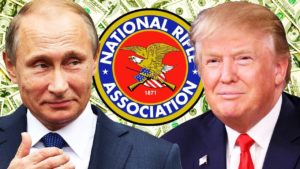
One of the biggest obstacles for Democrats, especially in the battle for control of State Legislatures has been the powerful gun lobby group National Rifle Association(NRA). Unlike other powerful lobby groups that influence both the Republican and the Democratic Party, the NRA literally has a stranglehold on the Republican party. NRA’s stranglehold on the GOP is so bad, even President Trump recently had to ask GOP Members of Congress not to be “afraid of” the gun lobby group when discussing sensible gun control proposals. Marion Hammer, a powerful NRA lobbyist in Florida for example is so feared by Florida State GOPers, that she’s dubbed “The Real Gov of Florida.” Such is the power the NRA wields over the GOP
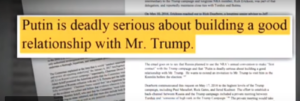
The troubling news therefore that the FBI is investigating the NRA as a possible vehicle for funnelling Russian money to help Trump in the 2016 elections should be of great concern to Democrats. New York Times Columnist Frank Bruni said on CNN’s Outfront with Erin Burnett that the NRA spent a whopping $30M to help Trump get elected, which is more than they spent the last two Presidential cycles combined. A Russian banker Alexander Torshin who has ties to Putin is an NRA life member and the key suspect in the alleged funnelling scheme. Torshin apparently wanted to create a “back channel” between the Trump Campaign and Russia and one of his associates reportedly told a Trump campaign staffer that “Putin is deadly serious about building a good relationship with Mr. Trump.
Under normal circumstances this would be just another questionable daliance between a powerful U.S. gun lobby group and a foreign financier. However against the backdrop of an ongoing Special Counsel investigation into U.S. election meddling by the Russians, this strange relationship between the NRA and the Putin-allied Russian financier has become a much more serious issue, one that Americans trust Mueller and Co. will get to the bottom of.
It also bears pointing out, as New York Times Columnist Frank Bruni did that Trump’s son Donald Trump Jr, is a major NRA supporter and activist. Trump Jr you’ll remember is already in the middle of a very questionable meeting with Russian lawyer Natalya Veselnitskaya at Trump Tower. Veselnitskaya has since confessed that she’s an informant for Putin’s Kremlin
Simply put, the NRA-Russia story is a major story that could affect the Dem political fortunes from here on out. According to CNN Political Correspondent Sara Murray, the NRA is privately, very concerned about the FBI’s investigation into its ties to the Russian Banker(vid at 14:00). Obviously we Dems have to be patient and allow the feds to conduct their investigation into the NRA but just like Trump used the ongoing Clinton email probe to hamstring her 2016 campaign, there is no reason why the DNC should not pummel NRA-allied GOP candidates over Russian money as we head to Midterms 2018, the perfect target being Sen Ted Cruz
For those of you very happy with @Emolclause’s activism don’t shy away from the “tip jar” below on your way out. You may also Cash App
Email author at admin@grassrootsdempolitics.com
Become an Octapharma Plasma donor. Make up to $200 in one week and help save lives too! Learn More