Trumpโ€™s Stimulus Checks: Promises Made, Promises Broken

A revealing segment on MSNOWโ€™s Weekend Primetime took a hard look at the sweeping stimulus payments President Trump pledged throughout 2025 โ€” payments that, nearly a year later, have yet to materialize. The promises were not vague talking points. They were specific dollar amounts, repeated publicly, and framed as imminent relief for Americans struggling with rising costs.

As laid out on the program by co-host Catherine Rampell, Trump promised a $2,000 payment to Americans supposedly funded by revenue generated from his new tariffs. The pitch was simple: foreign countries would โ€œpay,โ€ tariff revenue would surge, and American households would receive direct checks. Economists warned at the time that tariffs function as taxes on consumers, not foreign governments, but the political message was clear โ€” relief was coming. It never did.

Then came the much larger promise tied to the administrationโ€™s Department of Government Efficiency initiative โ€” commonly branded as DOGE. Trump claimed that cost-cutting measures would generate so much savings that roughly $5,000 could be returned to every American household. The math was always questionable, hinging on speculative savings projections rather than enacted, audited reductions. No such checks have been issued.

Another pledge involved replacing or offsetting Affordable Care Act subsidies with direct payments of roughly $1,000 to $2,000 per family. The idea was presented as a more flexible alternative that would put cash directly into Americansโ€™ pockets. But as with the other stimulus proposals, there is no evidence of payments being distributed, no legislative framework that funded them, and no administrative mechanism that ever processed them.

Even beyond what was discussed on air, there was the highly publicized $1,776 โ€œmilitary 1776 paymentโ€ โ€” a proposed one-time check for military families in honor of Americaโ€™s 250th anniversary. It was marketed as a patriotic Christmas 2025 gift to service members and their families. Yet there has been no confirmation of funds being appropriated or delivered. Like the others, it appears to have remained rhetorical.

Taken together, these promises would have amounted to roughly $8,000 or more for many households โ€” a substantial sum for families grappling with rent increases, grocery inflation, child care costs, and mounting credit card debt. For people budgeting around the expectation of relief, the absence of these payments is not an abstract political issue; itโ€™s a tangible financial blow.

This pattern feeds directly into a longstanding vulnerability for Trump: credibility. No one compelled these specific dollar figures. No emergency legislation forced rushed commitments. These were self-generated promises, delivered with confidence and repetition. When they evaporate without explanation, it reinforces an already entrenched perception that Trumpโ€™s word is elastic โ€” bold in announcement, unreliable in execution.

It also deepens the narrative that this is a โ€œbillionairesโ€™ clubโ€ administration โ€” a government staffed and advised by ultra-wealthy insiders whose policy experiments and grand promises often feel detached from the day-to-day pressures of working families. When promised stimulus checks fail to appear while tax and regulatory policies favor high earners and corporate interests, the contrast becomes politically combustible.

Heading into the 2026 midterms, that gap between promise and reality could become a defining issue. Voters can tolerate partisan combat and even ideological swings. What they tend to punish is perceived deception โ€” especially when it involves their own bank accounts. If Americans conclude that the much-touted stimulus windfall was never real to begin with, the political cost may not be theoretical. It could be measured at the ballot box.


USAID Funding Cuts Already Proving Lethal

Please consider $upporting GDPolitics by scanning the QR code below or clicking on this link

A recent segment on MSNBCโ€™s The Last Word with Lawrence Oโ€™Donnell sparked intense debate by suggesting that the Trump-era Department of Government Efficiency (DOGE)โ€”until recently led by Elon Musk before the agency was disbanded this monthโ€”has triggered devastating humanitarian consequences through its rapid cuts to USAID programs. The report cited estimatesโ€”hotly disputed by DOGE supporters and independent analysts alikeโ€”that hundreds of thousands of Africans, many of them children, could die or may already have died as a result of withdrawing funding from health and nutrition programs that had long relied on U.S. support. Whether these figures represent confirmed deaths, worst-case projections, or something in between has become central to the wider political and moral argument.

Critics of DOGE argue that even the lowest plausible estimates of harm would constitute a profound moral failure by the United States. They contend that the speed and scope of the cuts all but guaranteed instability in regions where U.S.-backed programs had become essential to basic survival. From this viewpoint, fixating on the precision of the numbers risks missing the larger point: that preventable sufferingโ€”even at a fraction of the projections mentioned on airโ€”would still be catastrophic and vastly outweigh any budgetary savings DOGE hoped to achieve.

Supporters of the cuts offer a very different narrative. They argue that the United States cannot indefinitely shoulder the burden of funding core public-health systems across developing nations while grappling with its own severe fiscal challenges. They also question the reliability of the projections referenced in cable-news segments, noting that models built on incomplete data often produce dramatic but speculative results. To them, MSNBCโ€™s framing is an example of worst-case scenarios being treated as established fact, while years of inefficiency, redundancy, and poor oversight within USAIDโ€™s global operations go unaddressed. Critics respond that this fiscal-responsibility argument is undermined by the Trump administrationโ€™s willingness to approve major financial packages elsewhereโ€”such as the recent $40-billion bailout for Argentinaโ€”which suggests that affordability may be less a constraint than political preference.

Overlaying all of this is an uncomfortable personal dimension involving Elon Musk himself. Born and raised in South Africa during the apartheid era, Muskโ€™s early life and the advantages associated with that system have long been scrutinized in discussions of race, privilege, and inequality. For many Africans, the symbolism of an African-born billionaireโ€”one whose family benefited from a racially stratified societyโ€”having overseen cuts that disproportionately harmed the continent is hard to ignore. Even though DOGE is now dissolved and Musk no longer holds that position, the optics remain deeply fraught, and skepticism among African observers is understandable.

Despite these tensions, nearly everyone agrees on one central point: USAID has indeed faced problems with waste, inefficiency, and poorly evaluated programming. But acknowledging these flaws does not require dismantling the lifesaving work that competent aid can deliver. With thoughtful reforms, stronger accountability, and better targeting of resources, the United States could address the systemโ€™s shortcomings without abandoning vulnerable populations who depend on these services. The real challenge lies in balancing fiscal discipline with global humanitarian leadershipโ€”while keeping the human consequences, not just the spreadsheets, at the center of the conversation.

Sen Joni Ernst Busted Again Talking About Cuts To Medicare, Medicaid, SS

$upport via Cash App

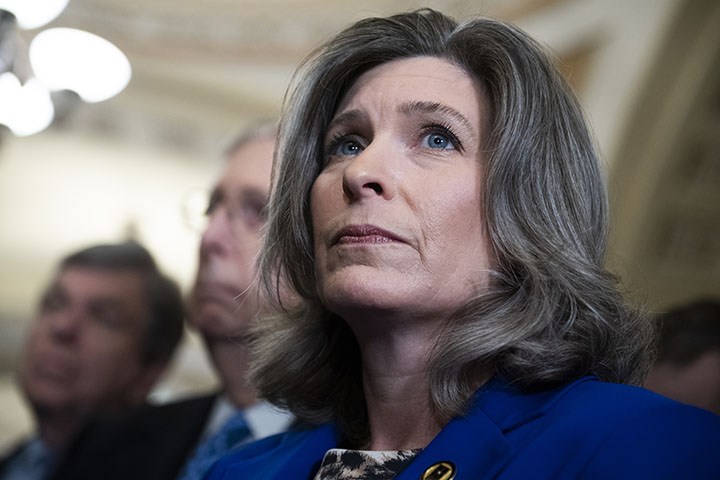
Sen Joni Ernst (R-Iowa)

An audio recording of Sen Joni Ernst(R-Iowa) telling a group of GOP donors that there needs to be โ€œchangesโ€(read cuts) to Medicare, Medicaid and Social Security has surfaced. Youโ€™ll remember that Sen Ernst made similar remarks at a town hall in September 2019 where she said Congress needs to meet behind closed doors to address these programsโ€“essentially gut Medicare, Medicaid and Social Security in secret.

In the latest audio, a person at the GOP event can be heard saying, โ€œEven without the additional spending weโ€™re already going bankruptโ€ฆthe biggest driver of that being entitlements. It is interesting hearing your classmate [Sen]David Perdue. Heโ€™s been pretty frank about the changes that need to happen with Medicare and Medicaid. Are you on the same page with him on that?

Sen Ernst responded, โ€œI think we [Republican Senators]all are because we all understand our non discretionary spending is growing like this. Everybody focuses on the discretionary spending because thatโ€™s what we have control over in Congress. The rest is on auto pilot and itโ€™s out of control. So we have to figure out ways to honor the commitments that have been made and make changes for the future.โ€

For the record Sen David Perdue(R-GA) has been very vocal about his desire to reign in Medicare, Medicaid and Social Security spending in an effort to address the ballooning federal deficit. Sen Joni Ernst has also flirted with this idea previously but unlike Sen Perdue, is afraid to say so in public. Why wonโ€™t Sen Joni Earnst, who is up for reelection in 2020, look Iowans in their eyes and tell them that she wants cuts to their Medicare, Medicaid and Social Security benefits?

Bottom line folks, Americans elect politicians and send them to Washington with the understanding that the said politicians will in turn look out for their interests. All national polls indicate that Medicare, Medicaid and Social Security remain very popular programs among Americans, including Iowans. Where, as here, Sen Joni Earnst appears hell bent on gutting such programs, she owes Iowans an explanationโ€“publicly. Simply put, Sen Ernst should tell Iowans in public, what she says all the time at private GOP gatherings and that is, she wants cuts to Medicare, Medicaid and Social Security programs. Iowans deserve a Senator who will level with them.

For those of you very happy with @Emolclauseโ€™s activism donโ€™t shy away from the โ€œtip jarโ€ below on your way out. You may also Cash App

Email author at admin@grassrootsdempolitics.com

Become an Octapharma Plasma donor. Make up to $200 in one week and help save lives too! Learn More