Minneapolis ICE Shooting Deepens the Trump Administration’s Credibility Crisis

The fatal shooting of a 37-year-old American woman in Minneapolis by an ICE agent has once again thrown a harsh spotlight on a problem that has increasingly defined Trump administration 2.0: a deepening credibility crisis. What began as a disturbing law-enforcement encounter quickly metastasized into something larger—another episode in which the public was asked to accept an official account that appeared to conflict with what many people could see with their own eyes.

This credibility gap did not emerge overnight. Over the past year, Americans have grown increasingly skeptical of information coming from the administration, including economic data once treated as authoritative, public-health guidance from HHS, representations made in court filings, and on-the-record statements from senior officials. Americans have always practiced a degree of “trust but verify” when it comes to government pronouncements, but the level of doubt now surrounding official statements is markedly different—more pervasive, more reflexive, and more corrosive.

In the Minneapolis case, video of the encounter circulated quickly on social media, allowing the public to assess the incident independently. To many observers, the footage appeared to show a verbal confrontation between the woman and ICE agents, followed by her attempt to leave the scene in her vehicle. Based on the available video, critics argued that the use of deadly force was unnecessary and disproportionate, raising immediate questions about judgment, training, and accountability.

Those questions intensified when DHS Secretary Kristi Noem addressed the incident publicly. Her description of events sharply diverged from what many believed the video showed. She claimed the woman had “run over” an ICE agent, sending him to the hospital, and went further by characterizing the incident as an act of domestic terrorism. These assertions were widely challenged and fueled accusations that the administration was misrepresenting the facts rather than awaiting a full investigation. President Trump later echoed the secretary’s account on social media, amplifying a narrative that many Americans had already begun to doubt.

While the president relied on information provided by his cabinet, the responsibility for accuracy rested squarely with the Department of Homeland Security. It is the job of senior officials to verify facts from agents on the ground before presenting a definitive account to the public—particularly in cases involving lethal force. When that process fails, the damage extends far beyond a single incident.

As a result, what might have remained a grave but contained use-of-force controversy instead became another data point in the administration’s broader credibility problem. MSNBC contributor Eddie Glaude captured this sentiment on Deadline: White House, noting that the administration now faces a public conditioned to doubt its word. Minnesota Governor Tim Walz echoed similar concerns, emphasizing the importance of transparency and factual accuracy as the situation unfolded.

If this were an isolated misstatement—an early briefing that later required correction—the public might have been more forgiving. But because the Minneapolis shooting followed a series of prior episodes in which official accounts were revised, contradicted, or quietly abandoned, skepticism hardened almost instantly. Each incident compounds the last, reinforcing a perception that truth is being shaped to fit political needs rather than facts.

In a democratic society, credibility is not a cosmetic asset; it is foundational. When government officials lose the public’s trust, even accurate statements are greeted with suspicion, and accountability becomes harder to achieve. The Minneapolis shooting underscores how urgently the Trump administration must confront this problem. Leveling with the public is not optional—it is essential to restoring confidence in institutions meant to serve, protect, and answer to the people.

Three Questions Alex Acosta Must Answer Re Epstein

MSNBC’s Legal Analyst Lisa Rubin appeared on the 09/19/25 edition of Deadline White House show where she made a compelling argument as to how Congress can and should go about getting Jeffrey Epstein-related information from former U.S. Attorney Alex Acosta.

Rubin said that there are a bunch of Epstein-related documents that Acosta either saw, or was involved in creating. This, she argued, meant the said documents were either currently in the possession of the Department of Justice, or even by Acosta himself.

The first question Congress needs to ask Acosta is about the 60-count federal indictment drafted by prosecutor Ann Marie Villafaña in 2007. DOJ definitely has this document, and the allegations therein, may shed a lot of light as to Epstein’s illicit operation, and potentially, the actions of his his co-conspirators, most of who were later granted immunity.

The second question regards the lengthy prosecution memo that aforementioned Villafaña wrote regarding the federal case re Epstein. Rubin says this can shed a lot of light as to the evidence the feds had against Epstein to support the 60-count indictment

Finally, Rubin says Congress should ask Acosta about his own interview transcript from the office of professional responsibility investigation that was conducted at DOJ in 2020. That was an investigation started at the instigation of Republican Senator Ben Sasse. Rubin argues that Acosta must have that transcript in his possession because he and his lawyers were given an opportunity to review it and suggest any corrections.

Long story short, the lingering questions about Jeffrey Epstein and his child sex trafficking operation must be answered, and key players like Acosta must not be allowed to come before Congress and just gaslight the public. These crucial documents are currently in the possession of the DOJ and/or Acosta, and the public deserves to see them.

An alternative route would be to have Ann Marie Villafaña testify before Congress. Who knows, she might have “kept receipts”.

New Questions About Trump And His Former Labor Secretary Alex Acosta

As the Jeffrey Epstein scandal continues to heat up, new questions are being raised about the infamous 2008 sweetheart plea deal he received from then U.S. Attorney Alex Acosta, who later joined the Trump administration as Labor Secretary in 2017

The running narrative thus far, has been that after details of the sweetheart plea deal started getting a lot of media coverage, the Trump administration was forced to cut ties with Acosta—he became a liability, if you will.

However according to Kristy Greenberg, herself a former federal prosecutor, President Trump might have known all along about Alex Acosta’s shady Epstein deal when he made him his labor secretary. As Greenberg further put it, “he [President Trump] didn’t seem to care.”

If Greenberg’s account holds up, it would reflect very poorly on the president as America’s moral leader. Republicans have for decades, put a premium on moral values, so it will be interesting to see how they navigate this Trump-Acosta relationship. 

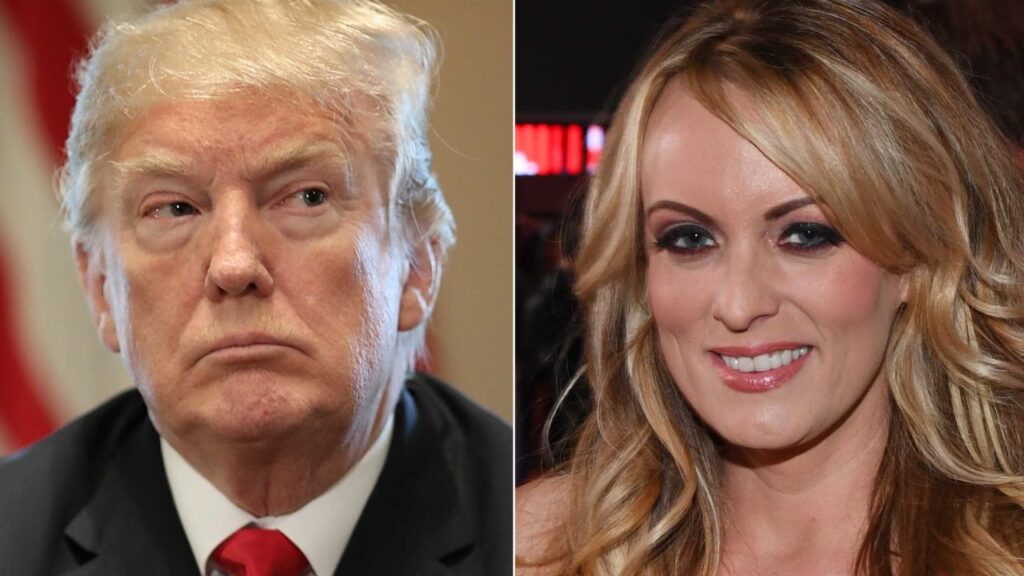
Maddow On Why The Trump-Stormy Daniels Affair Is A Big Deal

$upport via Cash App

Former Porn Star Stormy Daniels recently appeared to testify at former President Donald Trump’s hush money trial currently playing out in Manhattan, New York. As was expected, a lot of juicy details came out of her testimony, some previously known by the public, and others totally new. Trump’s supporters have predictably sought to downplay, even totally disregard Daniels’ testimony, but as MSNBC’s Rachel Maddow recently said on her colleague Nicolle Wallace’s show, we cannot/must not forget the fact that the person at the heart of this sordid affair, is someone who could potentially end up as U.S. president again. Put another way, this is, as Maddow would put it, “a big freaking deal”.

Maddow said(5:55): “The very big picture here is, we are thinking seriously as a country, about putting somebody back in the White House, who mounted a violent effort to overthrow the government the last time that he was voted out, who says that parts of the constitution should be terminated, who says he wants to put the U.S. military in American cities, he wants to build camps for tens of millons of people. That’s what we’re thinking about doing. There’s like this huge yikes factor when it comes to him.”

Maddow adds(6:43): “On top of the scariness about what he’s offering us as a political figure, on top of his likely criminal liability in his multiple criminal trials, we also then just get this yuck factor stuff[with the porn star].”

Maddow then lists the yucky stuff

  1. “She’s doing a porn company promotion at a golf tournament.”
  2. “His infant son is four months old.”
  3. “He has his bodyguard ask her if she’d like to have dinner, so she goes to his room. There is no dinner. He’s wearing satin pajamas. She says get dressed.”
  4. “He tells her I’ll get you under my reality competition TV show and I will help you cheat at it. I’ll give you advance notice on the challenges on the show, and that will help you.”
  5. “He tells her me and my wife don’t sleep in the same room.”
  6. “He asks her when she was last tested for sexually transmitted diseases.”
  7. “He tells her she reminds him of his daughter.”
  8. “She goes to the bathroom, she comes out of the bathroom, and he’s stripped down to his underpants.”
  9. “She tries to leave, and he steps between her and the door. She doesn’t want to do it. She says she doesn’t feel threatened but he says to her, I thought you were serious about what you wanted. If you ever want to get out of that trailer park…”
  10. “They have sex. She’s not into it. He does not wear a condom. That is particularly concerning to her, and he should know that it is because she has just explained to him about her work in the adult film industry.”
  11. “They meet several more times, he makes more sexual advances, they never have sex again, and ultimately it is only when he finally says no, I’m not putting you on my TV show, that she stops picking up his calls.”

Maddow then bottom lines it perfectly saying, “[President]Jimmy Carter almost lost in 1976 because he said he had committed lust in his heart, but this is who we are thinking about putting back in the White House right now, along with what he has threatened to do to the country, in part out of anger for the criminal liability that he has brought on himself by trying to cover up things like this, behavior like this, character like this.”