A Provocative Claim About Presidential Responsibility

In a striking segment on MSNOWโ€™s The Last Word, host Lawrence Oโ€™Donnell argued that Donald Trump is the only American president whose peacetime policies have resulted in more deaths than those occurring under his wartime actions. The claim immediately ignited fierce debate. Supporters of Trump dismissed it as hyperbolic political theater, while critics said it merely put numbers to what they see as the lethal consequences of policy choices.

To be precise, the argument is not that Trump personally โ€œkilledโ€ anyone, but that decisions made under his administration produced deadly outcomes. Oโ€™Donnellโ€™s central focus was the sweeping DOGE cuts, which he contends slashed critical foreign aid programs and humanitarian assistance. According to the segment, those reductions led to food shortages and medical supply disruptions in vulnerable regionsโ€”particularly in parts of sub-Saharan Africaโ€”contributing to starvation deaths, interruptions in HIV treatment, and preventable fatalities among infants and immunocompromised patients. The broader moral claim is straightforward: when the United States withdraws life-sustaining aid at scale, the consequences are measured in lives lost.

Oโ€™Donnellโ€™s case draws added force from history. For decades, humanitarian aid to Africa enjoyed bipartisan backing. Republican President George W. Bush, for example, earned praise for expanding anti-HIV/AIDS initiatives that saved millions of lives. By that standard, Oโ€™Donnell suggests the Trump-era retrenchment marked not just a policy shift but a break from a rare area of cross-party moral consensus.

A related point, not specifically raised by Oโ€™Donnell but relevant to the broader debate, is that the United States continues to provide substantial aid to strategic allies such as Israel. That reality complicates a blanket โ€œAmerica Firstโ€ defense of foreign aid reductions, since it suggests the issue is less about ending foreign assistance altogether and more about where and to whom it is directed.

Critics of Oโ€™Donnellโ€™s assertion counter that it stretches causation beyond responsible limits. Foreign aid systems are complex, involving NGOs, host governments, and multilateral institutions; attributing downstream deaths directly to a single administrationโ€™s budget decisions can oversimplify reality. They also argue that every president makes trade-offs and that fiscal restraint, even when painful, is not equivalent to intent to harm. Some pro-Trump voices further contend that global poverty, corruption, and logistical failuresโ€”rather than U.S. policy aloneโ€”bear primary responsibility for humanitarian crises. From this vantage point, labeling Trump as uniquely deadly in peacetime risks politicizing tragedy.

Yet supporters of Oโ€™Donnellโ€™s framing respond that intent is not the only moral metricโ€”foreseeability matters. If experts warned that cutting HIV medication pipelines or food assistance would predictably result in deaths, and those warnings were ignored, responsibility cannot be shrugged off as indirect. They also fold in the administrationโ€™s handling of COVID-19, arguing that inconsistent messaging, resistance to mitigation strategies, and delayed responses contributed to avoidable American deaths. When those domestic losses are considered alongside alleged foreign aid consequences, the cumulative toll becomes central to the debate.

Ultimately, Oโ€™Donnellโ€™s claim sounds bombastic at first hearing. Comparing peacetime and wartime death tolls is inherently fraught, and presidential accountability for global mortality is complex. Still, given the scale of reported COVID fatalities and credible estimates that reductions in humanitarian aid can translate into hundreds of thousands of preventable deaths, it is not unreasonable to argue that Trump-era policies may have produced an extraordinary peacetime human cost. One can dispute the framing, question the arithmetic, and challenge the causationโ€”but it is no longer far-fetched to make the claim.

How Long Will The U.S. Keep Boots On The Ground In Venezuela?

Please consider $upporting GDPolitics by scanning the QR code below or clicking on this link

Rep. Anna Paulina Luna (R-FL) appeared on MSNOW this weekend to discuss the rapidly unfolding developments surrounding the U.S. capture of Venezuelan President Nicolรกs Maduro. When pressed by one of the hosts on how long Americans should expect U.S. military boots to remain on the ground in Venezuela, Luna offered little beyond a hopeโ€”saying she โ€œhopesโ€ the deployment wonโ€™t last long. That answer may sound reassuring, but history gives us little reason to share her optimism.

Hope is not a strategy, especially when it comes to U.S. regime-change operations. If there is one consistent lesson from Americaโ€™s modern military interventions, it is that removing a leader is usually the easiest part. What followsโ€”stabilization, governance, security, and reconstructionโ€”is where things unravel, drag on, and become vastly more expensive in both blood and treasure. Libya and Iraq loom large as cautionary tales, and Venezuela shows every sign of following the same grim script.

Iraq is perhaps the clearest example of this delusion. Military planners and television pundits alike once spoke confidently of a war that would be over in days or weeks. And indeed, the initial invasion was swift and overwhelming, culminating in the rapid toppling of Saddam Hussein. But the fall of a dictator did not produce the democratic transformation Washington promised. Instead, the United States found itself mired in a prolonged occupation, battling insurgencies, sectarian violence, and political chaos that cost hundreds of thousands of lives and trillions of dollars. Libya followed a similar trajectory: regime change first, disorder and state collapse afterward.

There is little reason to believe Venezuela will be any different. Removing Maduro does not magically resolve deep political divisions, economic collapse, or regional instability. Those problems do not disappear when a strongman is captured; they intensify. The idea that U.S. forces can simply step in, flip a switch, and then quickly depart belongs more to fantasy than to serious strategic thinking. The smart money says that once boots are on the ground, they stayโ€”often far longer than anyone publicly admits at the outset.

This reality also collides head-on with โ€œAmerica Firstโ€ rhetoric. An unprovoked military incursion into Venezuela, paired with open threats toward other governments in the region, hardly aligns with a foreign policy supposedly focused on rebuilding at home. Every dollar spent sustaining an open-ended military presence abroad is a dollar not spent addressing Americaโ€™s own crumbling infrastructure, healthcare gaps, or economic inequality. And as history has shown, these ventures rarely remain bloodless. Casualties are not an unfortunate possibility; they are an almost inevitable outcome.

Americans should therefore be clear-eyed about what is unfolding. If past is prologue, the United States is not heading for a brief, tidy mission in Venezuela, but for a long and costly entanglement. Congress cannot simply defer to vague hopes or executive assurances. It has a constitutional obligation to demand accountability, debate the mission honestly, and decide whether this path truly serves the nationโ€™s interestsโ€”before yet another โ€œquick interventionโ€ turns into a generational tragedy.

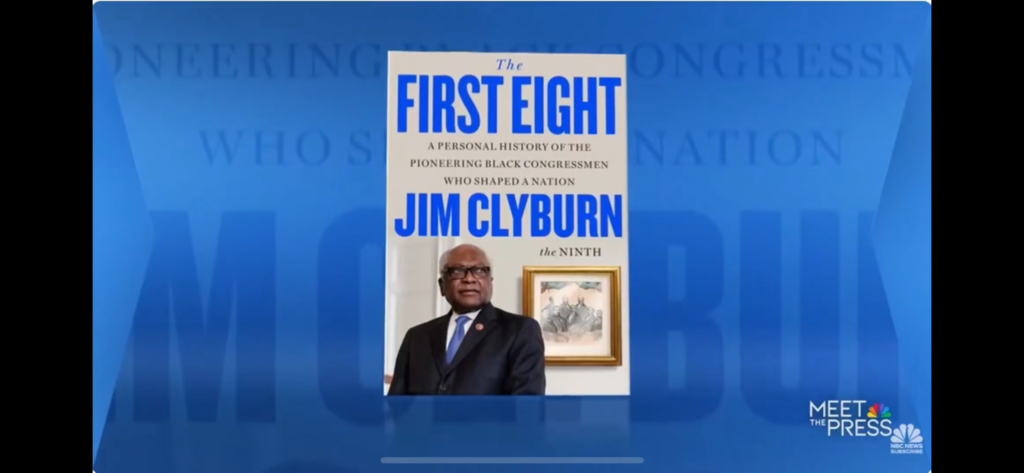
Rep Clyburnโ€™s New Book Looks At How SCOTUS Is Taking Us Back To Jim Crow Era


Please consider $upporting GDPolitics by scanning the QR code below or clicking on this link

An important new book by Rep. James Clyburn (D-SC), The First Eight, warns that disturbing signs suggest we may be sliding back toward a modern form of Jim Crow. In it, Clyburn examines the lives and careers of the first eight Black men to serve in Congress from South Carolina โ€” all elected in the period after the Civil War during Reconstruction. He recalls that after the last of those eight left Congress in 1897, there was no Black representation from South Carolina for 95 years, until Clyburn himself was elected in 1992.

Clyburn uses their stories not just to spotlight that lost legacy, but to warn that many of the same forces that disenfranchised Black voters at the turn of the 20th century are resurfacing today. He draws parallels between the backlash that ended Reconstruction โ€” Jim Crow laws, restrictive state constitutions, poll taxes, literacy tests, and violence โ€” and current efforts to redraw voting districts and suppress minority voting power. A key part of his argument is the role the Supreme Court played then and now. He notes that foundational decisions like the Slaughterhouse Cases narrowed the scope of the 14th Amendment almost immediately after its ratification, stripping federal protections from formerly enslaved people and allowing Southern states to impose discriminatory laws. That judicial retreat set the stage for later rulings such as Plessy v. Ferguson, which constitutionally sanctioned segregation and cemented the legal framework that enabled Black disenfranchisement for generations.

In particular, Clyburn argues that modern partisan and racial gerrymandering โ€” especially in his home state of South Carolina โ€” resembles the โ€œold Jim Crow power playโ€ that erased a century of Black political representation. He points to recent attempts by the State Legislature to redraw congressional districts in a way that moved tens of thousands of Black voters out of his district, a practice a federal court found to be an unconstitutional racial gerrymander. When the map was challenged, however, it was the current Supreme Court that stepped in and reversed the lower court, making it significantly harder for voting-rights advocates to block discriminatory district maps. To Clyburn, this echoes the pattern of the past: when state governments use race to manipulate electoral maps, and the Court either narrows protections or declines to intervene, the result is the same erosion of political power that once produced the 95-year gap between the eighth Black congressman from South Carolina and himself.

Clyburn does not merely retell history โ€” he warns that history is repeating. He argues the country is in the early stages of what he calls a โ€œThird Reconstruction,โ€ threatened by political forces determined to dilute or suppress the votes of people of color. In his view, the stakes are nothing less than the integrity of democracy itself: the story of those first eight Black congressmen is a reminder that gains in political power and representation can be undone โ€” and undone intentionally. The book emerges not just as history, but as a timely call-to-action to defend voting rights, safeguard fair representation, and resist any revival of Jim Crow-era disenfranchisement.

Clyburn closes with a telling reminder that the first eight Black congressmen from South Carolina were routinely assigned racist and belittling nicknames by their opponents โ€” a tactic meant to diminish their legitimacy, sow disrespect, and discourage those they represented. He notes that the weaponization of mockery and demeaning labels is not a relic of the past; it echoes loudly in todayโ€™s political climate, where leaders of color are again targeted with derisive nicknames designed to undercut their standing and weaken the communities they serve. For Clyburn, these parallels โ€” from state laws to Supreme Court decisions to symbolic attacks โ€” underscore his broader warning: the architecture of disenfranchisement is being rebuilt piece by piece, and the patterns of the past are reappearing in unmistakably familiar ways.

Can A Farmer Revolt Shape The Outcome Of The 2026 Midterms?

Please consider $upporting GDPolitics by scanning the QR code below or clicking on this link

President Trumpโ€™s latest tariffs have dealt a severe blow to Americaโ€™s farmersโ€”many of whom form the backbone of his political base. By making U.S. agricultural exports more expensive abroad, the tariffs have driven key trading partners, especially China, to look elsewhere for soybeans and beef. The result: a mounting glut of unsold American farm goods and growing resentment in rural communities that once rallied behind the โ€œAmerica Firstโ€ banner.

Nowhere is the impact clearer than in the soybean sector. For years, China was the single largest buyer of U.S. soybeans, accounting for over half of all American exports. But since the imposition of Trumpโ€™s tariffs, Beijing has turned almost entirely to Argentina and Brazil to fill its soybean needs. The shift has devastated U.S. growers across the Midwestโ€”states like Iowa, Illinois, and Missouri that voted overwhelmingly for Trump in 2020 and again in 2024.

What makes the situation even more striking is Argentinaโ€™s precarious economic state. The country teeters on the edge of financial collapse, yet President Javier Mileiโ€”a populist and self-proclaimed ally of Trumpโ€”has benefited from a quiet U.S.-backed economic rescue package. That move, intended to stabilize Argentinaโ€™s government, has inadvertently helped keep its agricultural exports flowingโ€”at the direct expense of American farmers.

โ€œThis feels like betrayal,โ€ said one Iowa soybean farmer interviewed by local media. โ€œWe were told America First. But right now, it looks like Argentina first.โ€

The same story is unfolding in the cattle industry. U.S. ranchers, already squeezed by high feed and fuel costs, now face declining demand from key international buyers. China and several Asian nations have ramped up imports of Argentine beef, taking advantage of lower prices and a favorable trade environment. For American ranchers, the optics of Washington bailing out a competitor while their own operations struggle are politically toxic.

As the 2026 midterms approach, this discontent threatens to boil over. Farmers who once viewed Trump as their champion are questioning whether his trade policiesโ€”and his personal alliancesโ€”reflect the economic nationalism he promised. In small-town coffee shops and agricultural forums across the Midwest, talk of a โ€œfarmer revoltโ€ is no longer unthinkable.

The irony, of course, is that the very communities that helped fuel Trumpโ€™s rise could now play a decisive role in blunting his political momentum. If the rural backlash takes root, it could reshape not just the midterms, but the broader balance of power in a Republican Party increasingly split between loyalty to Trump and frustration over his policies.

In short, Americaโ€™s farm country is waking up to a sobering realization: โ€œAmerica Firstโ€ may have sounded good on the campaign trailโ€”but the global farm economy tells a very different story.

Bombshell Intercept Report Exposes DHSโ€™ Mission Creep From Fighting Terrorism To Disinfo

$upport via Cash App

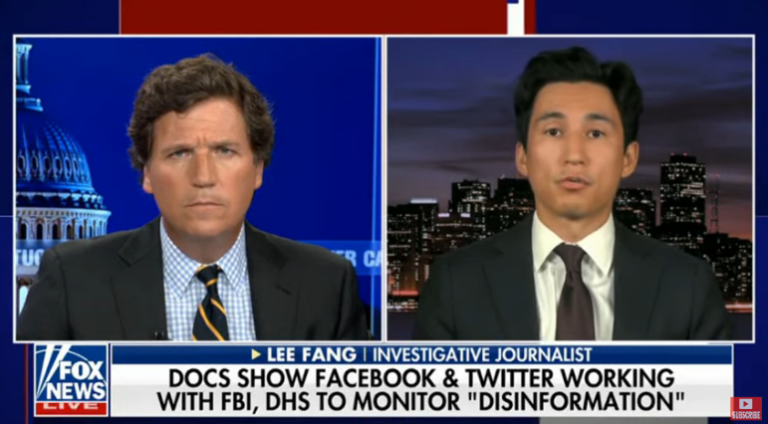
A very interesting segment on Fox Newsโ€™ Tucker Carlson show(10/31/22) featured a bombshell Pulitzer-worthy report by The Interceptโ€™s Lee Fang, which revealed that the Department of Homeland Security(DHS), has for five years now, been collaborating with Twitter, Facebook, and other social media companies, in determining whose speech needs to be suppressed. This of course flies in the face of the โ€œprivate companyโ€ defense usually used to justify questionable speech infringement practices by the social media giants.

More importantly, Lee Fangโ€™s bombshell also touched on the apparent โ€œmission creepโ€(his words) of DHS, where over the last five years, the powerful agency had unilaterally(without congressional approval) shifted from its stated focus of combating terrorism and terrorist groups like Al-Qaida, to combating disinformation online.

Asked whether the Biden administration was working with tech companies to censor people, Lee Fang responded (1:10): โ€œYeah, thatโ€™s right Tucker. We looked at really hundreds of documents that paint a vivid picture of the FBI, the DHS, closely collaborating with top social media platforms, Twitter and Facebook, to censor various forms of content under the banner of fighting disinformation, and the story shows a couple of things, one, it shows what you just mentioned, a very cozy relationship between the government and these tech giants. Thereโ€™s those monthly meetings that you just mentioned, but also, just very cozy emails and texts, not a very adversarial relationship. We looked at one text where a Microsoft executive texts Jen Easterly, the top disinfo director at DHS, appointed by[President]Biden, basically saying that the private sector needs to get more comfortable with the government closely collaborating on reports, talking about the expanded role for DHS in censoring a really broad collection of topic areas of policy and political topics.โ€

Lee Fang then touched on what I believe is by far, the biggest bombshell from his piece, and that is, the โ€œmission creepโ€ aspect. Fang said(2:11): โ€œJust broadly speaking, the story also just looks at the mission creep of DHS. This is an agency that was founded in the aftermath of 9/11 to combat foreign terror threats of Al-Qaeda and the like, but over the last five years, itโ€™s kind of evolved in its mission, its move towards fighting disinfo, and their justification is disinfo radicalizes the homeland, it can lead to disruptions in public health, or political violenceโ€ฆโ€

Even given DHSโ€™ understandable explanation for going after online disinformation, no reasonable person can ever conclude that Congress would have approved the same powerful tools/tactics used to counter terrorist groups like Al-Qaeda, to be applied against U.S. residents for basically saying the โ€œwrong thingsโ€ on social media. Sadly however, this is exactly where we find ourselves today, with DHSโ€™ speech police designating people they deem โ€œmisinformersโ€ as terrorists, and then mercilessly destroying their lives and livelihoods using among other things, the military. This is shameful conduct which most Americans have always associated with third world dictatorships.

It is because of DHSโ€™ mission creep, that Yours Truly believes Lee Fangโ€™s bombshell piece deserves a Pulitzer. Simply put, DHSโ€™ mission creep, which at the very least should have been run through Congress for approval prior to enforcement, has not only seriously impacted the lives and livelihoods of many U.S. residents who have nothing to do with terrorism, but has also robbed them of their rights under the first amendment.

Congress needs to immediately step in to not only address DHSโ€™ mission creep, but also to hold the officials involved accountable, preferably, via referral for criminal prosecution given the way their unconstitutional actions upend innocent peopleโ€™s lives

Itโ€™s also important to point out here what history has taught us, and that is, not everything the government labels โ€œmisinformationโ€ is necessarily so. Often times, there are topics the government simply doesnโ€™t want out there, being discussed in public. One recent classic example is directed energy weapons. For decades, government agents, and their surrogates in the mainstream media, went out of their way to label people who expressed concerns about these weapons as delusional conspiracy theorists. In 2022 however, we not only have the same directed energy weapons being openly discussed by the same mainstream media channels who denied their existence, but also, the government considers the threat so serious, that Congress swiftly enacted a handsome compensation scheme for victims of such attacks.

Bottom line folks, as host Tucker Carlson correctly stated, this bombshell piece by The Intercept is not only a great story, itโ€™s also a huge public service for which Lee Fang deserves a lot of praise and reward. The only question now is whether Congress will do its job, and rein in Mission Creep DHS, and its unconstitutional speech police.

For those of you very happy with @Emolclauseโ€™s activism donโ€™t shy away from the โ€œtip jarโ€ below on your way out. You may also Cash App

Email author at admin@grassrootsdempolitics.com

Become an Octapharma Plasma donor. Make up to $200 in one week and help save lives too!ย Learn More

OathKeepers Indictment Raises Serious Questions About Higher Up Involvement

$upport via Cash App

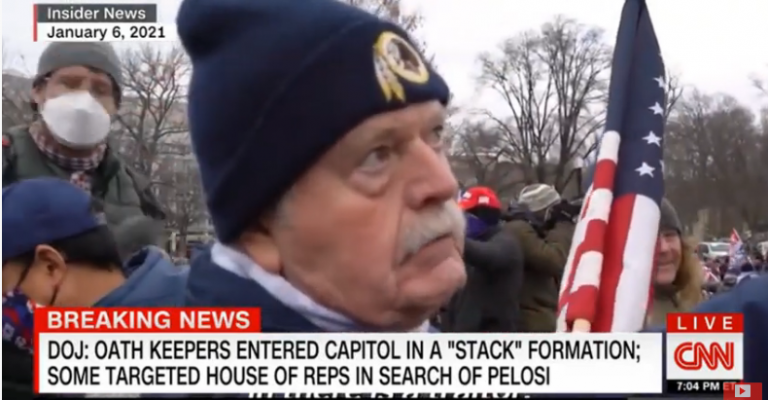
The bombshell seditious conspiracy indictment of 11 members of the militia group OathKeepers following their involvement in the January 6th insurrection, is raising serious questions as to how far up the law enforcement, military, and intelligence food chain, the conspiracy went. Specifically, given the level of tactical military sophistication they displayed on January 6th, there are valid questions as to whether Trump-allied senior members of U.S. law enforcement, military, and intelligence apparatus, gave material support, or even worse, are still members of this dangerous militia group that attempted to violently overthrow the government. A segment on CNNโ€™s Outfront with Erin Burnett(01/13/22) delved into this very topic.

Host Erin Burnett said in relevant part: โ€œPrior planning, coordination, sedition, weapons. The 11 people charged today, were[in a]conspiracy, and they are not small fish, like many of the more than 700 people already charged, some of who may have been wrapped up in the moment. Not the case with these individuals. This group had a level of combat training, they were prepared to use force, they had a stash of weapons that they brought for that specific intent, and the question tonight isโ€ฆnow youโ€™ve got a conspiracy, youโ€™ve got planning, youโ€™ve got it all laid out. How much higher does that go?โ€

Any reasonable person presented with the OathKeepers indictment would reasonably conclude, as host Erin Burnett did, that given the sophistication of their January 6th operation, people higher up in the law enforcement, military, intelligence and even political food chain, were providing material support to the OathKeepers. Providing material support to this dangerous militia group would also necessarily imply that they are members of the groupโ€“a scary thought indeed.

CNNโ€™s Sara Sidner followed up with an in depth look at OathKeepers leader Stewart Rhodes in an appearance on New Day (01/14/22), where she dropped a bombshell that further bolsters the troubling prospect that the OathKeepers may have enjoyed material support from insiders within our law enforcement, military and intelligence ranks.

Sara Sidner said: โ€œOne of the things the OathKeepers do, is they try and recruit either current or former military, current or former members of law enforcement, current or former people who have been part of the intelligence apparatus in the United States, whether it be the FBI , CIA, anybody that they can get and bring into the organization, and when you think about that, it means that they have tactical training to do something like this[January 6th], and to plan something like this.โ€

This raises serious questions including but not limited to, what kind of arms and illegally acquired intelligence the OathKeepers currently have, whether in light of this indictment, itโ€™s still okay to have active members of our law enforcement, military, and intelligence apparatus being active members of this violent militia group, etc.

Bottom line folks, Erin Burnettโ€™s question as to how high up this conspiracy goes, is a very serious one, that needs to be seriously addressed by Congress, especially the January 6th Committee, and the mainstream media. For the record, this question has been raised before by concerned members of the public, including Yours Truly, but always treated as one requiring a voluntary answer from our law enforcement, military and intelligence brass. Given the seriousness of this OathKeepers indictment, this question should no longer be one that requires a voluntary answer. The mainstream media and Congress, preferably the January 6th Committee, must demand an answer from leaders in our law enforcement, military and intelligence agencies, as to how much the OathKeepers have infiltrated their ranks. This is a serious national security problem, and it should be treated as such. A major part of the January 6th Committeeโ€™s mission is to prevent another January 6th-type insurrection. Reasonable people will agree that rooting out extremism within our law enforcement, military, and intelligence ranks will go a long way in fulfilling that mission.

Specific emphasis should be placed on Trumper states like Texas, which has a heavy OathKeepers presence, and was involved all the way to the top(AG Paxton and other political leaders) in Trumpโ€™s efforts to overturn the 2020 election results. What other nefarious activities are the OathKeepers enlisted for in such states? Did the Texas political establishment provide material support to the OathKeepers, for their January 6th operation?

For those of you very happy with @Emolclauseโ€™s activism donโ€™t shy away from the โ€œtip jarโ€ below on your way out. You may also Cash App

Email author at admin@grassrootsdempolitics.com

Become an Octapharma Plasma donor. Make up to $200 in one week and help save lives too!ย Learn More