A Provocative Claim About Presidential Responsibility

In a striking segment on MSNOWโ€™s The Last Word, host Lawrence Oโ€™Donnell argued that Donald Trump is the only American president whose peacetime policies have resulted in more deaths than those occurring under his wartime actions. The claim immediately ignited fierce debate. Supporters of Trump dismissed it as hyperbolic political theater, while critics said it merely put numbers to what they see as the lethal consequences of policy choices.

To be precise, the argument is not that Trump personally โ€œkilledโ€ anyone, but that decisions made under his administration produced deadly outcomes. Oโ€™Donnellโ€™s central focus was the sweeping DOGE cuts, which he contends slashed critical foreign aid programs and humanitarian assistance. According to the segment, those reductions led to food shortages and medical supply disruptions in vulnerable regionsโ€”particularly in parts of sub-Saharan Africaโ€”contributing to starvation deaths, interruptions in HIV treatment, and preventable fatalities among infants and immunocompromised patients. The broader moral claim is straightforward: when the United States withdraws life-sustaining aid at scale, the consequences are measured in lives lost.

Oโ€™Donnellโ€™s case draws added force from history. For decades, humanitarian aid to Africa enjoyed bipartisan backing. Republican President George W. Bush, for example, earned praise for expanding anti-HIV/AIDS initiatives that saved millions of lives. By that standard, Oโ€™Donnell suggests the Trump-era retrenchment marked not just a policy shift but a break from a rare area of cross-party moral consensus.

A related point, not specifically raised by Oโ€™Donnell but relevant to the broader debate, is that the United States continues to provide substantial aid to strategic allies such as Israel. That reality complicates a blanket โ€œAmerica Firstโ€ defense of foreign aid reductions, since it suggests the issue is less about ending foreign assistance altogether and more about where and to whom it is directed.

Critics of Oโ€™Donnellโ€™s assertion counter that it stretches causation beyond responsible limits. Foreign aid systems are complex, involving NGOs, host governments, and multilateral institutions; attributing downstream deaths directly to a single administrationโ€™s budget decisions can oversimplify reality. They also argue that every president makes trade-offs and that fiscal restraint, even when painful, is not equivalent to intent to harm. Some pro-Trump voices further contend that global poverty, corruption, and logistical failuresโ€”rather than U.S. policy aloneโ€”bear primary responsibility for humanitarian crises. From this vantage point, labeling Trump as uniquely deadly in peacetime risks politicizing tragedy.

Yet supporters of Oโ€™Donnellโ€™s framing respond that intent is not the only moral metricโ€”foreseeability matters. If experts warned that cutting HIV medication pipelines or food assistance would predictably result in deaths, and those warnings were ignored, responsibility cannot be shrugged off as indirect. They also fold in the administrationโ€™s handling of COVID-19, arguing that inconsistent messaging, resistance to mitigation strategies, and delayed responses contributed to avoidable American deaths. When those domestic losses are considered alongside alleged foreign aid consequences, the cumulative toll becomes central to the debate.

Ultimately, Oโ€™Donnellโ€™s claim sounds bombastic at first hearing. Comparing peacetime and wartime death tolls is inherently fraught, and presidential accountability for global mortality is complex. Still, given the scale of reported COVID fatalities and credible estimates that reductions in humanitarian aid can translate into hundreds of thousands of preventable deaths, it is not unreasonable to argue that Trump-era policies may have produced an extraordinary peacetime human cost. One can dispute the framing, question the arithmetic, and challenge the causationโ€”but it is no longer far-fetched to make the claim.

Trumpโ€™s Business Dealings With U.A.E. Sheikh Fuels More Corruption Allegations

On the February 1, 2026 edition of ABCโ€™s This Week, host George Stephanopoulos raised a question that cuts to the heart of the ethical cloud hanging over the Trump administration: how can President Trumpโ€™s private business dealings with a senior foreign power broker not constitute a glaring conflict of interest? Pressing Deputy Attorney General Todd Blanche, Stephanopoulos pointed directly to reporting that suggests the lines between U.S. policy, presidential power, and private profit are once again dangerously blurred.

Citing a Wall Street Journal investigation, Stephanopoulos noted that Sheikh Tahnoum bin Zayed Al Nahyanโ€”one of the most powerful figures in the United Arab Emirates and a central player in its national security and intelligence apparatusโ€”made a substantial investment in a Trump familyโ€“linked cryptocurrency venture around the time Trump was inaugurated for his second term. The WSJ underscored how extraordinary this arrangement is: it is virtually unprecedented for a senior foreign government official to hold an ownership stake in a business tied to a sitting U.S. president. The concern is obvious and unavoidable. Such a financial relationship creates at least the appearance, if not the reality, of leverage over the president of the United States by a foreign actor whose interests may not align with Americaโ€™s.

Those concerns only deepen when viewed alongside subsequent U.S. policy decisions. Not long after Sheikh Tahnoumโ€™s investment became public, the United States approved the sale or transfer of advanced, high-end computer chips to the UAEโ€”technology the country had previously been restricted from accessing due to national security concerns. The timing invites scrutiny. At minimum, it raises the question of whether a foreign officialโ€™s financial stake in a presidentโ€™s business created privileged access or influence over U.S. decision-making. At worst, it suggests a pay-to-play dynamic in which private investment is rewarded with favorable government action.

The national security implications are significant. The United Statesโ€™ dominance in artificial intelligence and advanced computing rests heavily on its control of cutting-edge semiconductor technology. Allowing these chips to flow to the UAE carries the risk that they could be shared, resold, or otherwise end up in the hands of strategic competitors such as China. Even the possibility of that outcome should demand extreme caution. When such decisions coincide with financial entanglements involving the presidentโ€™s private ventures, the question is no longer hypotheticalโ€”it becomes whether U.S. security interests are being subordinated to personal enrichment.

This episode fits a broader pattern that has defined Trumpโ€™s return to power: persistent allegations that public office is being used as an extension of private business interests. From foreign investments and licensing deals to policy decisions that appear to benefit political allies and financial partners, the administration has repeatedly asked the public to accept ethical gray zones that past presidents were expected to avoid outright. The strategy has been familiarโ€”dismiss every concern as partisan noise or the hysterics of the โ€œradical leftโ€โ€”but the sheer volume and seriousness of the allegations make that defense increasingly untenable.

As the 2026 midterms approach, these issues are unlikely to fade. Voters may disagree on ideology, but conflicts of interest that implicate foreign influence and national security tend to cut across partisan lines. If Democrats can frame these stories not as abstract ethics debates but as concrete examples of corruption that put American interests at risk, they may find a potent line of attack. Simply put, there are now too many red flags, too many suspicious alignments between money and policy, for the administration to wave them away. Whether Trump chooses to confront these questions or continue to ignore them may help determine not only the political narrative of his second term, but the balance of power in Congress come 2026.

Jenna Ellis Circulated A Memo Detailing How They Would Overturn The Election On January 6th

$upport via Cash App

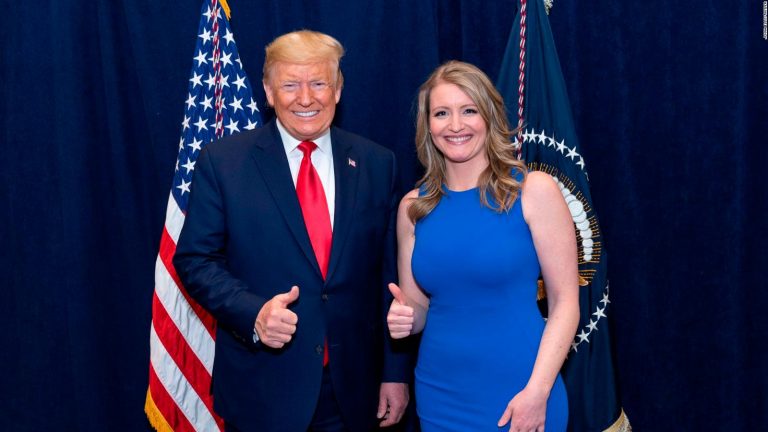
Donald Trump With His Campaign Lawyer Jenna Ellis

A bombshell report on ABCโ€™s This Week with George Stephanopoulos (11/14/21) reveals that among the documents former President Trump is fighting tooth and nail to keep away from the January 6th Committee, is a memo from Trump campaign lawyer Jenna Ellis, which reportedly laid out in elaborate detail, exactly how they were going to overturn the election on January 6th to keep Trump in the White House. If this bombshell reporting holds, it will, blow away the defense commonly employed by Trumpers, that the January 6th insurrection was just some spontaneous rally that got out of hand. It will also for the first time put Trump campaign lawyer Jenna Ellis right at the center of the insurrection.

Reporter Jonathan Karl told host George Stephanopoulos: โ€œThis is a very important document, George. On new yearโ€™s eve, it is from[Trumpโ€™s Chief of Staff] Meadows himself, forwarded to Mike Penceโ€™s Chief of Staff, and it outlines in very clear detail, what should be done on January 6th to effectively overturn the election, to effectively have a coup. This is Mark Meadows forwarding a memo, not from an outside lawyer, but from a lawyer for the campaign, Jenna Ellis.โ€

Any reasonable person presented with this bombshell news report would conclude that the events of January 6th were not some innocent rally gone bad, but rather a meticulously planned coup orchestrated by Trump campaign lawyer Jenna Ellis and others. Jenna Ellis must be made to testify before the January 6th Committee as to who else was involved in drafting the detailed coup memo. Was Trump involved?

Bottom line folks, the January 6th Committee owes it to the public to follow through on any lead that brings us closer to the behind-the-scenes orchestrators of DC insurrection. Where, as here, it appears Trump campaign lawyer Jenna Ellis may have been one of the masterminds behind the attempted coup, she must be hauled in to testify.

For those of you very happy with @Emolclauseโ€™s activism donโ€™t shy away from the โ€œtip jarโ€ below on your way out. You may also Cash App

Email author at admin@grassrootsdempolitics.com

Become an Octapharma Plasma donor. Make up to $200 in one week and help save lives too! Learn More