
When the Warning Signs Are Ignored: What the FBI Director’s Email Hack Really Reveals

A recent segment on The Briefing with Jen Psaki has drawn renewed attention to a troubling report: a hacking group linked to the Iranian government allegedly compromised the personal Gmail account of Kash Patel, Director of the Federal Bureau of Investigation. While officials have stated that no classified or sensitive government information was exposed, the implications of the breach go far beyond what may—or may not—have been accessed.

As Jen Psaki pointed out, the real concern is not the content of the hacked account but the broader vulnerability it exposes. Iran has spent years developing sophisticated cyber warfare capabilities, frequently targeting U.S. institutions, private companies, and government officials. These threats have been well documented by intelligence agencies and cybersecurity experts alike, making incidents like this less surprising and more indicative of systemic shortcomings.

The breach raises pressing questions about preparedness at the highest levels of government. Cybersecurity is no longer a secondary concern—it is a frontline issue in modern geopolitical conflict. When the personal communications of a senior official like the FBI Director can be compromised, it suggests potential lapses not just in individual security practices, but in the broader strategic posture of the administration. Effective cyber defense requires constant vigilance, proactive planning, and an assumption that adversaries are always probing for weaknesses.

Adding to the concern are reports that the administration reduced staffing at the Cybersecurity and Infrastructure Security Agency, the nation’s primary civilian cybersecurity defense body. If true, such reductions could have undermined efforts to anticipate and mitigate precisely this type of threat. Cybersecurity resilience depends on sustained investment and expertise, not reactive measures taken only after vulnerabilities are exposed.

This incident should not be viewed in isolation. Iran has a documented history of launching cyber operations against U.S. targets, including critical infrastructure sectors such as energy, finance, and transportation. Against that backdrop, the reported hack serves as a stark reminder that cyber warfare is an ongoing and evolving threat. The question is not whether attacks will occur, but whether the United States is adequately prepared to defend against them.

From an SEO and audience standpoint, this story taps into several high-interest areas: national security, cybersecurity threats, geopolitical tensions, and government accountability. Readers searching for terms like “Iran cyber attack,” “FBI hack,” or “U.S. cybersecurity weaknesses” are likely to find this issue both timely and consequential. Structuring the narrative around these themes not only improves visibility but also ensures the content resonates with a broad audience concerned about digital security and national defense.

Ultimately, the reported breach should be seen as a warning shot. If adversaries can access the personal communications of top officials, it raises serious concerns about the security of more critical systems, including the power grid and financial networks. Incidents like this demand more than reassurance—they require a reassessment of priorities, renewed investment in cybersecurity infrastructure, and a recognition that in the digital age, preparedness is the first line of defense.

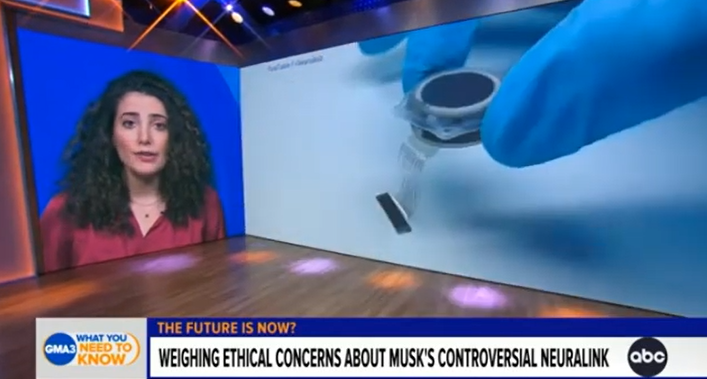
Ethical Concerns Raised Over Elon Musk’s Neuralink

$upport via Cash App👇

Interesting segment on ABC’s GMA show delved into billionaire Elon Musk’s cutting edge brain technology–Neuralink implants–that are supposed to revolutionize how we deal with neurological disorders. The GMA segment came against the backdrop of news reports that the first Neuralink implant on a human had taken place.

The guest, Dr Leah Croll described Neuralink technology thus (0:38): “Basically this is the concept of using a brain machine interface to help people. Neuralink is a device that gets implanted within the brain, and then reads the electrical signals that our brain cells are constantly sending to one another, and then it can translate those signals into actions outside of the body, in this case the ability to control a computer or smartphone.”

Dr Croll added that this is by no means novel technology saying, “It [Neuralink] is absolutely not the first player on this field. This area of research really started back in the 90s but in recent years the pace of that research has just accelerated immensely…”

But as we know all too well, with every cutting edge technology, there are bound to be negative effects, and to that, Dr Jen Ashton popped this million dollar question (1:50): “Physically, what are the risks, and ethically, what are the risks that you can see with this type of technology?”

Dr Croll responded that because we are dealing with brain implants here, we should treat Neuralink procedures as any other brain surgery, and worry about all the physical risks we normally associate with such surgeries–bleeding, damage to brain tissue etc. As for the ethical concerns raised by Neuralink, she said (2:26): “When we get into the ethical realm, that raises so many questions because we are in completely uncharted territory here. There’s concerns about the data that this device is collecting and how secure it might be, there’s potential for privacy concerns to come into play, bad actors could potentially come into play and hack these devices. So there’s a lot of discussions that the medical community is going to have to have with the legal community, the ethical community, the technological community, so we can work together to figure out how we regulate something like this.”

Any reasonable person watching this GMA segment would conclude that even though Elon Musk’s Neuralink technology, on its face,exhibits the potential for significantly improving how we treat neurological disorders, the technology comes with serious ethical concerns that necessitate guardrails before proceeding.

This also means time has finally come for the government to come clean regarding the plight of targeted individuals, who have complained for decades about being the subjects of these “mind reading” technologies while being laughed out of the room as some crazy conspiracy theorists. This GMA segment establishes conclusively that we do indeed have technology that can read minds and more importantly, that this research has been going on since the 90s. It’s also worth pointing out that while Dr Croll correctly insists that there must be guardrails put in place before this technology is deployed to the public, targeted individuals have endured this very invasive technology with zero ethical guardrails. Should they be compensated for the irreparable harm this invasive technology has subjected them to? Should Congress hold hearings into government research projects in this field such as DARPA, to ensure that there have not been abuses? These are the questions one hopes the media will pose to the government as we delve deeper into the Neuralink era.

For those of you very happy with @Emolclause’s activism don’t shy away from the CashApp “tip jar” below👇 on your way out.

Email author at admin@grassrootsdempolitics.com