Did FBI Director Patel Lie Under Oath?

In a striking segment on MSNOW’s Last Word with Lawrence O’Donnell, host Lawrence O’Donnell raised a provocative and consequential question: did FBI Director Kash Patel mislead Congress under oath during his exchange with Congressman Eric Swalwell about Donald Trump’s presence in the Jeffrey Epstein files? During that hearing, Swalwell pressed Patel directly on whether Trump’s name appeared in the Epstein material and sought clarity about the extent and significance of those references. Patel did not provide a numerical estimate, nor did he use the phrase “very few,” but his answer was widely interpreted as downplaying the frequency and importance of Trump’s appearance in those records. He framed his response in a way that suggested there was nothing substantial or alarming tied to Trump in the context of the FBI’s investigative findings.

Since that testimony, claims have circulated asserting that Trump’s name appears in the Epstein files far more extensively than Patel’s response implied. Some reports and political commentators have cited extraordinarily large raw reference counts, arguing that Trump’s name appears hundreds of thousands or even more than a million times across various forms of Epstein-related material, including emails, contact directories, flight records, investigative notes, and digital indexing systems. Even accounting for duplication, automated references, and database artifacts, such figures—if accurate—would appear difficult to reconcile with the general impression Patel conveyed during his testimony. The core issue is not whether Patel gave a precise number, because he did not, but whether his answer created a misleading impression that minimized the scale of Trump’s documented presence.

Whether that impression rises to the level of criminal conduct is a much more complex question. Federal law makes it a crime to knowingly provide false or materially misleading testimony to Congress, but the key word is “knowingly.” Prosecutors would have to prove that Patel was aware, at the time he testified, that his characterization was materially inconsistent with the actual scope of the records. That is a high bar. The Epstein files are massive, technically complex, and include raw, unfiltered material alongside analyzed investigative conclusions. It is entirely possible that Patel relied on summaries prepared by subordinates or focused specifically on references deemed relevant to criminal conduct rather than raw textual mentions. Under that interpretation, his testimony could be defended as reflecting his understanding of investigative significance rather than literal database frequency.

At the same time, Patel’s role as FBI Director weakens any argument that he lacked access to critical information. As head of the bureau, he has the authority to receive detailed briefings on major investigative matters, especially one as high-profile and politically sensitive as Epstein’s network and its associated records. Critics argue that it strains credibility to believe that the FBI Director would be unaware of the general magnitude of references to a former president in such a consequential investigative archive. If evidence were to surface showing that Patel had been briefed specifically about the scope or frequency of Trump-related references before his testimony, it could support the argument that his answer was not merely cautious or incomplete, but intentionally misleading.

On the other hand, defenders of Patel would likely emphasize the distinction between raw data mentions and meaningful investigative findings. Large digital archives often contain inflated reference counts due to repetitive indexing, duplicate communications, or incidental references that carry no investigative weight. A person’s name might appear thousands of times without indicating wrongdoing or even direct interaction. From that perspective, Patel could argue that his testimony reflected the FBI’s substantive investigative conclusions, not superficial database metrics. Courts have historically been reluctant to criminalize testimony that can reasonably be interpreted as technically accurate or dependent on interpretation, particularly when the witness avoids making precise factual claims.

The political implications of this controversy are significant and could shape how the matter unfolds. If a future Democratic administration were to take office, there would likely be pressure from some quarters to investigate whether Patel’s testimony crossed the legal line. Such an inquiry could take the form of a congressional referral, a Justice Department investigation, or the appointment of a special counsel. Any decision to prosecute would ultimately depend on whether investigators could uncover clear evidence of intent—such as internal communications, briefing documents, or witness testimony showing that Patel knowingly conveyed a misleading impression. Without that level of proof, the matter would likely remain in the realm of political controversy rather than criminal prosecution.

At the same time, the broader political climate has changed dramatically in recent years. Actions that were once considered unthinkable—such as investigating or prosecuting senior federal law enforcement officials—are now part of the modern political landscape. That reality cuts both ways. Any future administration pursuing such a case would face accusations of political retaliation, while declining to act could fuel claims of unequal accountability. Ultimately, the question of whether Patel misled Congress may hinge less on public debate over document counts and more on what evidence exists about his state of mind when he testified. Without clear proof that he knowingly created a false impression, the controversy may never evolve into a criminal case—but it will remain a potent flashpoint in the ongoing struggle over truth, accountability, and political power at the highest levels of government.

CIA Accused Of Coverup In Havana Syndrome Probe

$upport via Cash App

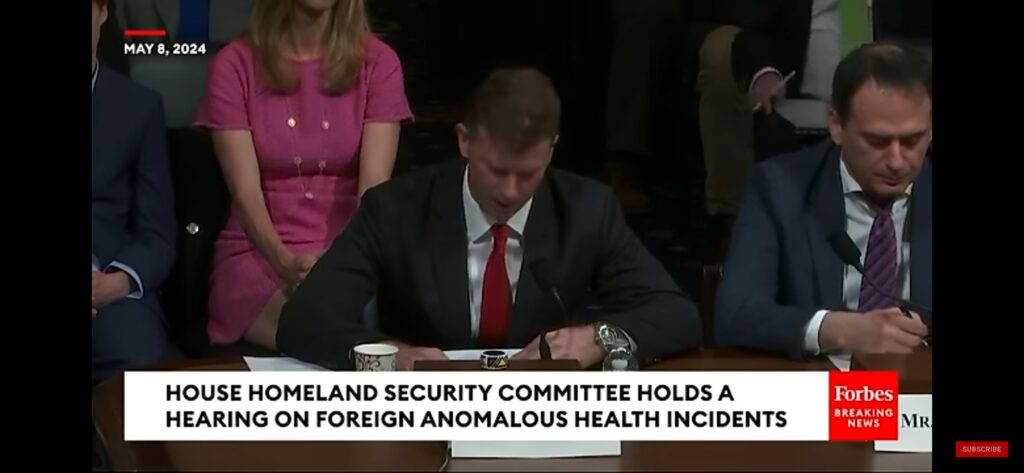
Bombshell testimony at a House Homeland Security Committee hearing (05/08/24) regarding Havana Syndrome, opened up new leads for investigators to follow up on. The unmistakable message from all the three witnesses however, all of whom have deep experience/ties to the U.S. intel community, was that U.S. intel agencies, and the CIA in particular, were not leveling with the American public as to the cause of these ailments. More importantly, that the continued coverup threatens our national security because it provides an incentive for Russia and our other adversaries to ramp up the attacks.

The expert witnesses at the 05/08/24 hearing were Retired Army Lt. Colonel Gregory Edgreen (led DIA’s probe into havana syndrome), leading National Security Attorney Mark Zaid and award-winning journalist currently working for The Insider, Christo Grozev

We are not going to focus here on the technical/scientific issues surrounding havana syndrome but rather, the bombshell coverup allegations made by all the three expert witnesses. Reasonable people will agree that this by itself–a national security compromising coverup–should be sufficient cause for President Biden to do some “housecleaning” at the top echelons of our intel agencies.

Lt. Col Edgreen began by putting out some important context, and that is, the U.S. government has a long history of slowly responding to emergent national security threats, adding that the lax havana syndrome response “is nothing new”.

Edgreen(10:16): “As a country, we have been here before. Most people think this all started in Havana in 2016, the wildly reported Havana Syndrome…but before Havana Syndrome, there was the Moscow Syndrome. Soviet intelligence bathed the U.S. Embassy in Moscow with microwave transmissions. The health effects were similar to what we see today. There are many examples of syndromes and ailments from Americans injured in the line of duty, that the government did not recognize for many years, which were eventually proven. Agent Orange used in Vietnam, the Gulf War Syndrome, Burn Pits during the forever wars in Iraq and Afghanistan. In all of these examples, America took too long to acknowledge these injuries, and our service members languished without care. Havana Syndrome is no different. The gaslighting of AHI survivors continues to this day, as history repeats itself.”

Regarding documented reports of CIA officers being harassed overseas. Lt. Col Edgreen said(13:26): “There were reports of CIA incidents which included harassment, room intrusions, houses being defiled, tossed, pets poisoned, assaults on our personnel, and diplomats being drugged, doxxing, families harassed and attacked via directed energy, a red line to many because of the debilitating nature of these weapons…” Notice that these are the exact same complaints raised by targeted individuals in the United States, only to be summarily dismissed by the mainstream media as some form of “mass paranoia”.

Regarding the coverup, Lt Col Edgreen said(15:50): “I think the bar for AHI attribution was set so high because we do not, as a country and a government, want to face some very hard truths: Can we secure America? Are these massive counterintelligence failures? Can we protect our people on American soil? Is this an act of war?” Edgreen added, “It’s time to take action. This is a nonpartisan issue which has spanned several administrations. Let’s start to get this right with executive and legislative action…most importantly, pressure the government to fight back.”

Award-winning Journalist Christo Grozev testified that he had initially relied on information from U.S. government officials in his Havana Syndrome reporting, but was approached by an intel official in Europe, and advised to seek independent sources–Exhibit A as to a coverup, and a sad state of affairs indeed.

Attorney Mark Zaid testified(27:00): “A recent investigation by 60 Minutes, Der Spiegel and The Insider identified potential credible links between AHIs and alleged Russian operatives for military unit 29155. This included activities within the United States. What was the government’s response? CIA doubled down that there’s nothing to see, and that it knew of, and had already ruled out the same evidence. That is blatant falsehood that has infuriated many serving members of the intelligence community because so much of the evidence, to the contrary, is available to them in reports, briefings and cable traffic. Of course, this evidence is classified.”

Zaid added that regular law enforcement officials should be allowed to pursue investigations into Havana Syndrome rather than maintaining the status quo, where the CIA hogs such probes.

During the question and answer session, Christo Grozev said(29:59): “One of the most disturbing denials that I’ve seen in some of the publications leading up to our findings being published, was an attempt to create the impression that no technology would allow this impact on the human brain. That is provably untrue…There is sufficient evidence that it’s possible.” Grozev added that a Russian intelligence official told him that the Russians were doing this because America has been doing it to their intel officials as far back as the 80s. So this idea that AHIs are some mysterious occurrences requiring “new research” is highly questionable.

The biggest bombshell during the question and answer session came from Attorney Mark Zaid, when he was asked whether he believed the government was blocking some information. Zaid responded(37:44): “Information is absolutely being blocked from one agency to the other, particularly at the CIA. I mean, that’s who we’re going to point to the most, of information that the CIA has, that its sister intelligence agencies it hasn’t been shared with, and I can identify a number of specific classified documents in a proper setting.”

Bottom line folks, there’s no way to sugar coat this. Three esteemed expert witnesses testified in Congress on 05/08/24 that our intel agencies, and the CIA in particular, are not only engaged in a coverup when it comes to Havana Syndrome, but that the coverup threatens our national security because it provides an incentive for further such attacks. Heads must roll!!

For those of you very happy with @Emolclause’s activism don’t shy away from the “tip jar” below on your way out. You may also Cash App

Email author at admin@grassrootsdempolitics.com

Become an Octapharma Plasma donor. Make up to $200 in one week and help save lives too! Learn More

Dem Rep Jayapal Questions FBI Director Wray Over Warrantless Searches

$upport via Cash App

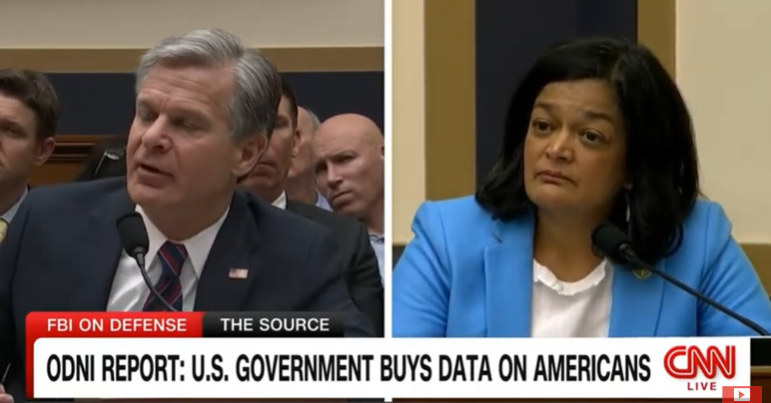
Rep Pramila Jayapal (D-WA) appeared on CNN’s The Source show (07/12/23) where she discussed among other things, her questioning of FBI Director Christopher Wray about warrantless searches at a recent House hearing. Specifically, Rep Jayapal wanted to know why the FBI and other federal agencies are buying vast quantities of personal data from data brokers, and how the agencies use this warrantless search data.

Rep Jayapal dropped a bombshell during her interview, telling host Kaitlan Collins that if the FBI doesn’t provide a satisfactory answer to this important question, she will have no other choice but to vote against reauthorizing the Foreign Intelligence Surveillance Act (FISA) when it expires later this year–a very big deal.

What makes this a very big deal, you ask? Well, Rep Jayapal heads the House Progressive Caucus. If she decides to vote against reauthorizing FISA, you can rest assured that nearly all House Progressives will vote with her, killing FISA.

Asked by host Kaitlan Collins whether she was satisfied by the answers she got from FBI Director Wray, Rep Jayapal said she wasn’t, adding( 1:29), “We do have significant concerns, It’s not just I. The Office of Director of National Intelligence(ODNI) is where the report came from, that said that the FBI is purchasing large amounts of data from these data brokers, and that information contains everything, from your location information, your medical information, it could contain information about all kinds of private things that American people understandably don’t want the FBI to have…These are warrantless searches…they are backdoor searches. The information is used in ways we don’t know…”

Bottom line folks, Rep Jayapal is absolutely correct that warrantless surveillance by the FBI and other federal agencies is out of control, and in serious need of a fix. We’ve become accustomed to hearing members of Congress threatening to block FISA reauthorization over the same surveillance abuses, only to have them cave at the end due to pressure from the national security establishment. Something however tells me (not exactly sure what that is), that 2023 may be the year members of Congress finally drop the hammer on FISA, or as legal eagle Jonathan Turley puts it, the year they decide against being “chumps”.

For those of you very happy with @Emolclause’s activism don’t shy away from the “tip jar” below on your way out. You may also Cash App

Email author at admin@grassrootsdempolitics.com

Become an Octapharma Plasma donor. Make up to $200 in one week and help save lives too! Learn More