Russia Helped Iran Destroy An AWACS Plane

A striking segment on the March 30, 2026 edition of MSNOW’s The Rachel Maddow Show spotlighted a deeply concerning allegation: that Russia may have assisted Iran in targeting a high-value U.S. surveillance aircraft—one of the military’s prized AWACS platforms. If true, the implications stretch far beyond a single incident, raising urgent questions about great-power alignment, escalation risks, and how Washington responds when two adversaries appear to coordinate against U.S. assets.

AWACS—short for Airborne Warning and Control System—refers to aircraft like the Boeing E-3 Sentry, which function as flying command centers. Outfitted with powerful radar domes, they can track airborne threats across vast distances—often hundreds of miles—while coordinating fighter jets and missile defenses in real time. With unit costs running into the hundreds of millions of dollars and strategic value far exceeding that price tag, these aircraft are central to U.S. air superiority and battlefield awareness.

According to the segment, emerging reports suggest Iran successfully targeted such an aircraft, with intelligence pointing to possible Russian involvement in identifying or tracking its location. Ukrainian President Volodymyr Zelenskyy has publicly stated that Ukrainian intelligence observed Russian efforts to gather data on high-value Western aviation assets, a claim that adds weight—though not definitive proof—to the theory of coordination. It’s important to note that, as of now, publicly confirmed details remain limited, and U.S. officials have not fully corroborated the extent of any Russian role.

Still, even the suggestion of this kind of cooperation marks a potentially serious shift. Russia and Iran have grown closer in recent years, particularly through military and economic ties forged under the pressure of Western sanctions. From drone transfers to shared geopolitical interests in countering U.S. influence, the relationship has steadily deepened. Direct or indirect collaboration in targeting a U.S. platform, however, would represent a more provocative step—one that blurs the line between parallel interests and active coordination against American forces.

That raises immediate questions for the current administration under Donald Trump, whose past posture toward Russian President Vladimir Putin has been the subject of intense scrutiny. Trump has often emphasized diplomacy and strategic restraint in dealing with Moscow, even as critics argue that such an approach risks emboldening adversarial behavior. If credible evidence emerges tying Russia to an attack on a U.S. asset, the pressure to respond—politically and strategically—would be immense.

Complicating matters further are reports of shifting U.S. policy in global energy and security theaters, including decisions affecting sanctions enforcement and maritime tensions in key chokepoints. Any perceived softening toward Moscow, juxtaposed with allegations like these, could fuel criticism that deterrence is eroding at a dangerous moment.

Ultimately, the significance of this story lies not just in what may have happened to a single aircraft, but in what it signals about the evolving alignment between Russia and Iran—and how the United States chooses to respond. If adversaries are indeed coordinating more closely in ways that threaten U.S. military assets, the old assumptions about deterrence and separation between conflicts may no longer hold. Whether this becomes a turning point or just another warning sign will depend on what evidence surfaces next—and how forcefully Washington decides to act.

When the Warning Signs Are Ignored: What the FBI Director’s Email Hack Really Reveals

A recent segment on The Briefing with Jen Psaki has drawn renewed attention to a troubling report: a hacking group linked to the Iranian government allegedly compromised the personal Gmail account of Kash Patel, Director of the Federal Bureau of Investigation. While officials have stated that no classified or sensitive government information was exposed, the implications of the breach go far beyond what may—or may not—have been accessed.

As Jen Psaki pointed out, the real concern is not the content of the hacked account but the broader vulnerability it exposes. Iran has spent years developing sophisticated cyber warfare capabilities, frequently targeting U.S. institutions, private companies, and government officials. These threats have been well documented by intelligence agencies and cybersecurity experts alike, making incidents like this less surprising and more indicative of systemic shortcomings.

The breach raises pressing questions about preparedness at the highest levels of government. Cybersecurity is no longer a secondary concern—it is a frontline issue in modern geopolitical conflict. When the personal communications of a senior official like the FBI Director can be compromised, it suggests potential lapses not just in individual security practices, but in the broader strategic posture of the administration. Effective cyber defense requires constant vigilance, proactive planning, and an assumption that adversaries are always probing for weaknesses.

Adding to the concern are reports that the administration reduced staffing at the Cybersecurity and Infrastructure Security Agency, the nation’s primary civilian cybersecurity defense body. If true, such reductions could have undermined efforts to anticipate and mitigate precisely this type of threat. Cybersecurity resilience depends on sustained investment and expertise, not reactive measures taken only after vulnerabilities are exposed.

This incident should not be viewed in isolation. Iran has a documented history of launching cyber operations against U.S. targets, including critical infrastructure sectors such as energy, finance, and transportation. Against that backdrop, the reported hack serves as a stark reminder that cyber warfare is an ongoing and evolving threat. The question is not whether attacks will occur, but whether the United States is adequately prepared to defend against them.

From an SEO and audience standpoint, this story taps into several high-interest areas: national security, cybersecurity threats, geopolitical tensions, and government accountability. Readers searching for terms like “Iran cyber attack,” “FBI hack,” or “U.S. cybersecurity weaknesses” are likely to find this issue both timely and consequential. Structuring the narrative around these themes not only improves visibility but also ensures the content resonates with a broad audience concerned about digital security and national defense.

Ultimately, the reported breach should be seen as a warning shot. If adversaries can access the personal communications of top officials, it raises serious concerns about the security of more critical systems, including the power grid and financial networks. Incidents like this demand more than reassurance—they require a reassessment of priorities, renewed investment in cybersecurity infrastructure, and a recognition that in the digital age, preparedness is the first line of defense.

A Renewed Spotlight on Jared Kushner’s Saudi Ties and Potential Conflicts

A recent segment on The Rachel Maddow Show drew fresh attention to reporting from The New York Times that places Jared Kushner back at the center of ethics concerns involving Saudi Arabia and U.S. policy in the Middle East. According to the report discussed on air, Kushner—who played a central diplomatic role in the region during the administration of Donald Trump—has continued pursuing substantial investments from Saudi sources through his private equity firm, even as he remains closely associated with ongoing Middle East policy conversations tied to Trump’s political orbit.

The backdrop to this controversy is well established. After leaving government, Kushner’s firm Affinity Partners secured a $2 billion investment from Saudi Arabia’s sovereign wealth fund, a move that drew bipartisan scrutiny at the time due to Kushner’s prior role shaping U.S.-Saudi relations. That history is critical context for the latest reporting, which suggests he has sought to expand those financial ties significantly, with discussions reportedly involving billions more in potential capital. While private investment activity is not inherently improper, the overlap between Kushner’s financial interests and his continued informal influence on geopolitical strategy raises familiar—and unresolved—questions about where public policy ends and private gain begins.

During the segment, Rachel Maddow emphasized the apparent tension between Kushner’s business dealings and his proximity to policymaking circles that could directly affect Saudi Arabia’s strategic position, particularly regarding Iran. Maddow framed the situation in stark terms, arguing that the optics alone—of a former senior adviser with deep regional relationships seeking large-scale funding from a key U.S. partner while remaining engaged in diplomacy—create an unmistakable conflict of interest. Her commentary, including the provocative suggestion that such arrangements could be perceived as “renting out” U.S. influence or power, underscores how politically charged the issue has become.

It is important, however, to distinguish between verified facts and interpretive claims. There is no public evidence that U.S. military actions are being directed in exchange for private financial arrangements, and such assertions remain speculative. What is firmly documented is the scale of the Saudi investment in Kushner’s firm and the concerns raised by ethics experts about the precedent it sets. The lack of formal guardrails—such as mandatory financial disclosures or clear separation from policymaking roles—has only amplified those concerns. Unlike current government officials, Kushner does not appear to be subject to standard disclosure requirements, which limits transparency and makes it difficult for Congress or watchdog groups to fully assess potential conflicts.

The broader issue here is less about any single transaction and more about systemic vulnerability. When former officials with extensive foreign policy portfolios transition into private ventures that depend on capital from foreign governments they once dealt with, the lines can blur quickly. In Kushner’s case, his deep ties to Saudi leadership—cultivated during his White House tenure—continue to carry both diplomatic and financial implications, creating a feedback loop that critics argue demands closer scrutiny.

Given the controversy surrounding the initial $2 billion Saudi investment, renewed reporting of additional fundraising efforts is almost certain to reignite calls for oversight. Whether those calls translate into formal investigations or policy reforms remains to be seen, but the underlying concern is unlikely to fade: in an era where private capital and public influence increasingly intersect, the Kushner-Saudi relationship has become a high-profile test of how—or whether—those boundaries can be enforced.

Pentagon Briefing Erupts After Hegseth Suggests Trump Ally Should Take Over CNN

A Pentagon press briefing on the escalating war with Iran took an unexpected turn when Defense Secretary Pete Hegseth veered off script and lashed out at the press—specifically CNN—after being pressed about reports that the Trump administration had underestimated Iran’s response to U.S. strikes. What began as a routine question about strategy in the Strait of Hormuz quickly turned into a remarkable moment of political commentary from a sitting defense secretary.

The exchange centered on a CNN report citing sources who said U.S. officials had not fully anticipated how aggressively Iran might move to disrupt shipping through the Strait of Hormuz following American military action. The waterway is one of the world’s most critical energy chokepoints, carrying a large share of global oil shipments, and any disruption has immediate implications for international markets and regional stability. CNN reported that planners in Washington may have underestimated Tehran’s willingness to escalate by threatening maritime traffic, a claim administration officials have strongly rejected. 

Hegseth dismissed the reporting outright as “fake news,” accusing the network of sensationalizing the conflict and misrepresenting the administration’s preparedness. But instead of stopping there, he added a comment that immediately drew attention across political and media circles. Referring to entertainment executive David Ellison—whose company has been linked to a massive media acquisition that could affect CNN’s corporate ownership—Hegseth remarked that “the sooner David Ellison takes over that network, the better.” 

The remark stunned many observers not only because of its tone but also because it appeared to cross an informal line traditionally observed by defense secretaries, who generally avoid commenting on the ownership or editorial direction of major news organizations. Critics immediately pointed out that the comment could be interpreted as signaling a preference for a more politically friendly media landscape—an unusual position for the head of the Pentagon to articulate publicly. Others viewed it as a continuation of the Trump administration’s broader pattern of attacking outlets that publish unfavorable coverage.

Until that moment, speculation about Ellison’s potential influence over CNN had largely remained the subject of media industry analysis rather than open discussion by senior government officials. Ellison, the CEO of Skydance Media and the son of Oracle founder Larry Ellison, has been associated with a sweeping media consolidation deal that could place major news assets under new corporate leadership. Supporters of the transaction say Ellison has pledged to maintain editorial independence, though skeptics worry that the shift could reshape the network’s tone or priorities. 

Hegseth’s off-the-cuff endorsement effectively injected the Pentagon into that debate. For critics, the comment sounded less like a passing remark and more like an acknowledgment—intentional or not—that some figures within the administration expect or hope for a friendlier editorial posture from major news organizations once ownership changes hands. That perception alone has already intensified scrutiny of the proposed deal and raised fresh questions about how political power and media ownership intersect in the current environment.

The broader context makes the moment even more striking. Since the start of the Iran conflict, administration officials have repeatedly accused major media outlets of undermining public confidence in the war effort by focusing on intelligence assessments, civilian impacts, or strategic miscalculations. Hegseth himself has frequently clashed with reporters at briefings, often framing critical coverage as evidence of institutional bias rather than legitimate scrutiny. This latest episode appeared to follow the same pattern but escalated it by introducing the issue of media ownership.

It also underscores the unusual political style that Hegseth has brought to the Pentagon. A former television commentator before entering government, he has often used press conferences not only to deliver updates on military operations but also to wage rhetorical battles with reporters and news organizations. That approach has energized supporters who see him as pushing back against hostile media coverage, while critics argue it blurs the line between military leadership and partisan messaging.

Whether the remark will have consequences remains unclear. In previous administrations, a defense secretary publicly cheering for a specific corporate owner of a major news network might have prompted swift internal reprimand. But the Trump administration has often embraced confrontation with the press as a political strategy, meaning the comment could just as easily be dismissed as part of the ongoing media war between the White House and major outlets.

Still, the episode has already achieved one undeniable effect: it has drawn far more attention to Ellison’s potential influence over CNN than industry analysts alone ever could. What had previously been an inside-baseball discussion about corporate mergers and media consolidation is now part of the broader political narrative surrounding the war with Iran and the administration’s relationship with the press.

If anything, Hegseth’s brief aside ensured that the question many observers were quietly asking—what a change in ownership might mean for CNN’s editorial direction—will now be examined far more closely. And whether intentional or not, the defense secretary’s comment has turned that speculation into a matter of national political conversation.

America First No More? Trump’s Iran War Splits MAGA and Risks a Regional Firestorm

President Donald Trump’s decision in the early hours of 02/28/26 to launch military strikes against Iran marks a dramatic turning point in his presidency — and a direct test of the “America First” doctrine that helped propel him to power.

For nearly a decade, Trump has argued that prior presidents recklessly entangled the United States in costly, open-ended foreign wars. He relentlessly criticized the Iraq War and the long U.S. presence in Afghanistan, portraying them as strategic blunders that drained American treasure and cost thousands of American lives without delivering stability to the Middle East. That message resonated deeply with voters weary of interventionism. It became a core pillar of MAGA identity: no more endless wars.

That’s why the move against Iran has triggered visible unease within parts of Trump’s own coalition. Many of his supporters took his anti-war rhetoric literally. The “no more wars” mantra wasn’t just campaign messaging — it was ideological. Now, those same voices are grappling with the reality of a new Middle Eastern conflict under a president who explicitly promised to avoid one.

The tension is especially notable given the presence of figures like Tulsi Gabbard in Trump’s orbit. Gabbard built much of her national profile opposing regime-change wars and warning specifically against U.S. conflict with Iran. Her longstanding public skepticism toward intervention raises obvious questions: Was she fully on board with this decision? Did she counsel restraint? And more broadly, how unified is the administration internally as this conflict unfolds?

Historically, even presidents viewed as hawkish have stopped short of full-scale war with Iran. Leaders from both parties understood the risks: Iran is not Iraq. It has significant missile capabilities, a network of regional proxy forces, influence in Iraq and Syria, and the ability to threaten shipping through the Strait of Hormuz — a chokepoint through which a substantial portion of the world’s oil supply passes. Any sustained conflict risks spiking global energy prices, destabilizing neighboring countries, and drawing in regional actors.

Another unavoidable dimension is Israel. Iran and Israel have been engaged in a shadow war for years — through cyber operations, proxy forces, and targeted strikes. If U.S. military action is perceived as directly advancing Israel’s security agenda, critics — including some within the MAGA base — will ask whether America is fighting its own war of necessity or stepping into Israel’s conflict with Tehran. That perception alone could deepen domestic divisions.

War with Iran is also uniquely complex because of asymmetry. Tehran does not need to defeat the United States conventionally. It can retaliate indirectly — through militia attacks on U.S. personnel in Iraq or Syria, missile strikes on regional bases, cyberattacks, or disruption of maritime traffic. Even limited American casualties could dramatically shift public opinion. Trump has long been sensitive to domestic political backlash. If U.S. troop deaths mount, would he escalate to restore deterrence — or pivot quickly toward de-escalation to preserve his political coalition?

Previous administrations avoided full war with Iran precisely because once kinetic conflict begins, control becomes elusive. Retaliation invites counter-retaliation. Regional allies get involved. Oil markets react. Global powers reposition. What begins as a “limited strike” can evolve into a prolonged regional confrontation with no clear exit ramp.

The central political irony is stark: the president who campaigned against endless wars now faces the prospect of managing one. Whether this becomes a short, contained operation or the beginning of a drawn-out conflict will define not just Trump’s second term, but the durability of the America First movement itself.

If American casualties rise or the conflict expands, the internal MAGA divide may become impossible to ignore. And the question many supporters are now asking — quietly or publicly — will grow louder: Is this what America First was supposed to mean?

President Trump’s 062925 Interview On Fox News

U.S. President Donald Trump sat down with Fox News’ Maria Bartiromo on 06/29/25 for a wide ranging interview that covered the recent U.S. bombing of Iran’s nuclear facilities, the Big Beautiful Bill, immigration, tariffs and many other topics.

One very interesting exchange happened when host Maria Bartiromo asked President Trump how his administration intends to tackle the massive layoffs/job losses that will assuredly happen as a result of developments in artificial intelligence. Trump responded that he will solve that by “bringing in more companies”–a strange answer that appeared to shock Maria. 

It wasn’t clear whether the president meant bringing in more AI companies to hire more people, or whether he meant bringing in other companies to offset the job losses caused by AI. What’s clear is that neither option adequately addresses the core question raised by Maria. 

I was left wondering whether Fox News, or any other media outlet for that matter, would have let former President Biden off the hook with such an inadequate answer to real and present concerns surrounding AI? My guess is they would would have found a way to tie such an inadequate response to his “mental unfitness for office.” 

Is The Media Covering Up The Damage In Israel?

Troubling reports on social media are increasingly suggesting that the public is not being told the truth about the extent of damages the state of Israel has sustained, and is sustaining, in its war with Iran. On Thursday 06/19/25, Col Wilkerson appeared on MSNBC’s All In w/Chris and all but confirmed these troubling reports. He told host Hayes that Prime Minister Netanyahu, and indeed the citizens of Israel, are stunned at how effective the Iranian missiles have been–essentially that they they underestimated their capabilities.

Long story short, it appears that initial indications suggest that Israel’s PM Netanyahu may have grossly underestimated Iranian military capabilities when he he recently launched a preemptive attack.

The Trump administration has recently showed signs of an eagerness to join Israel in its bombardment of Iran. It will be interesting to see how they process these new reports that Israel is actually suffering more than PM Netanyahu is publicly admitting.

Senator Chris Murphy Wants U.S. Led Probe Into Shireen Abu Akleh’s Death

$upport via Cash App

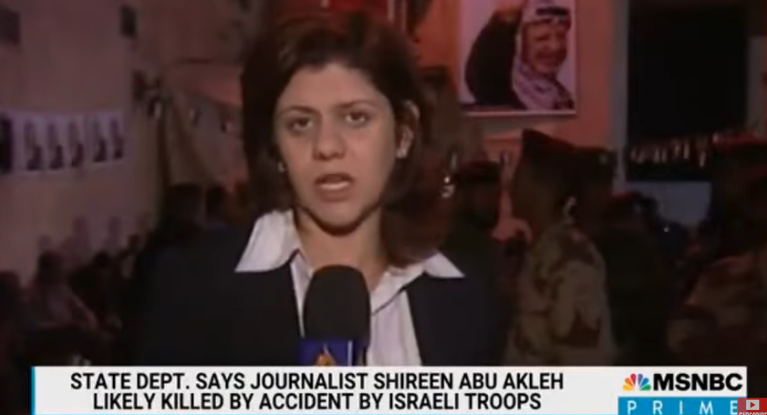
Senator Chris Murphy(D-CT) appeared on MSNBC Prime(07/13/22) to discuss President Biden’s trip to the Middle East, and especially his trip to Saudi Arabia which has drawn condemnation, given Crown Prince Mohammed bin Salman’s implication in Washington Post Columnist Jamal Khashoggi’s brutal murder. During his interview , Senator Murphy also delved into another controversial topic, and that is, the killing of Palestinian-American journalist Shireen Abu Akleh by Israeli troops.

An investigation conducted by the Israel government into Akleh’s killing concluded that IDF troops shot her by accident. Naturally, this conclusion has generated a lot of criticism from around the globe, and especially from press freedom advocates. Senator Murphy is calling for an independent U.S. led investigation into Shireen Abu Akleh’s death.

Asked by host Ali Velshi why it was important for the U.S. to conduct an independent investigation, Senator Murphy responded(video at 4:57):“Senator Murphy told host Ali Velshi(video at ):”First and foremost, any time an American dies overseas, we should apply the highest degree of scrutiny to make sure we get to the bottom of the story as to how an American citizen was killed, and in this case, given that it might have come at the hands of foreign security forces, that inquiry is even more important. We are simply asking that we do a thorough review that we are not confident the Israeli authorities have done themselves. So I think it’s important to get to the bottom of this even if the bottom involves some unsavory truths about what an important ally of the United States may have done, or elements of their security forces may have done to contribute to this American’s death.”

Bottom line folks, Israel has been, and remains America’s closest and dearest foreign ally. Ordinarily, Yours Truly would be inclined to accept Israel’s explanation of Shireen Abu Akleh’s death at face value but where, as here, the death in question is of a U.S. citizen, Yours Truly has no choice but to agree with Senator Murphy, that the United States needs to conduct its independent investigation. however unpleasant the results may be. Israel and the United States will forever remain close friends, so there’s no harm in finding out the truth behind Shireen Abu Akleh’s death. The Biden administration owes her family the truth regarding the circumstances of her death overseas.

For those of you very happy with @Emolclause’s activism don’t shy away from the “tip jar” below on your way out. You may also Cash App

Email author at admin@grassrootsdempolitics.com

Become an Octapharma Plasma donor. Make up to $200 in one week and help save lives too! Learn More