Trumpโ€™s Business Dealings With U.A.E. Sheikh Fuels More Corruption Allegations

On the February 1, 2026 edition of ABCโ€™s This Week, host George Stephanopoulos raised a question that cuts to the heart of the ethical cloud hanging over the Trump administration: how can President Trumpโ€™s private business dealings with a senior foreign power broker not constitute a glaring conflict of interest? Pressing Deputy Attorney General Todd Blanche, Stephanopoulos pointed directly to reporting that suggests the lines between U.S. policy, presidential power, and private profit are once again dangerously blurred.

Citing a Wall Street Journal investigation, Stephanopoulos noted that Sheikh Tahnoum bin Zayed Al Nahyanโ€”one of the most powerful figures in the United Arab Emirates and a central player in its national security and intelligence apparatusโ€”made a substantial investment in a Trump familyโ€“linked cryptocurrency venture around the time Trump was inaugurated for his second term. The WSJ underscored how extraordinary this arrangement is: it is virtually unprecedented for a senior foreign government official to hold an ownership stake in a business tied to a sitting U.S. president. The concern is obvious and unavoidable. Such a financial relationship creates at least the appearance, if not the reality, of leverage over the president of the United States by a foreign actor whose interests may not align with Americaโ€™s.

Those concerns only deepen when viewed alongside subsequent U.S. policy decisions. Not long after Sheikh Tahnoumโ€™s investment became public, the United States approved the sale or transfer of advanced, high-end computer chips to the UAEโ€”technology the country had previously been restricted from accessing due to national security concerns. The timing invites scrutiny. At minimum, it raises the question of whether a foreign officialโ€™s financial stake in a presidentโ€™s business created privileged access or influence over U.S. decision-making. At worst, it suggests a pay-to-play dynamic in which private investment is rewarded with favorable government action.

The national security implications are significant. The United Statesโ€™ dominance in artificial intelligence and advanced computing rests heavily on its control of cutting-edge semiconductor technology. Allowing these chips to flow to the UAE carries the risk that they could be shared, resold, or otherwise end up in the hands of strategic competitors such as China. Even the possibility of that outcome should demand extreme caution. When such decisions coincide with financial entanglements involving the presidentโ€™s private ventures, the question is no longer hypotheticalโ€”it becomes whether U.S. security interests are being subordinated to personal enrichment.

This episode fits a broader pattern that has defined Trumpโ€™s return to power: persistent allegations that public office is being used as an extension of private business interests. From foreign investments and licensing deals to policy decisions that appear to benefit political allies and financial partners, the administration has repeatedly asked the public to accept ethical gray zones that past presidents were expected to avoid outright. The strategy has been familiarโ€”dismiss every concern as partisan noise or the hysterics of the โ€œradical leftโ€โ€”but the sheer volume and seriousness of the allegations make that defense increasingly untenable.

As the 2026 midterms approach, these issues are unlikely to fade. Voters may disagree on ideology, but conflicts of interest that implicate foreign influence and national security tend to cut across partisan lines. If Democrats can frame these stories not as abstract ethics debates but as concrete examples of corruption that put American interests at risk, they may find a potent line of attack. Simply put, there are now too many red flags, too many suspicious alignments between money and policy, for the administration to wave them away. Whether Trump chooses to confront these questions or continue to ignore them may help determine not only the political narrative of his second term, but the balance of power in Congress come 2026.

Can A Farmer Revolt Shape The Outcome Of The 2026 Midterms?

Please consider $upporting GDPolitics by scanning the QR code below or clicking on this link

President Trumpโ€™s latest tariffs have dealt a severe blow to Americaโ€™s farmersโ€”many of whom form the backbone of his political base. By making U.S. agricultural exports more expensive abroad, the tariffs have driven key trading partners, especially China, to look elsewhere for soybeans and beef. The result: a mounting glut of unsold American farm goods and growing resentment in rural communities that once rallied behind the โ€œAmerica Firstโ€ banner.

Nowhere is the impact clearer than in the soybean sector. For years, China was the single largest buyer of U.S. soybeans, accounting for over half of all American exports. But since the imposition of Trumpโ€™s tariffs, Beijing has turned almost entirely to Argentina and Brazil to fill its soybean needs. The shift has devastated U.S. growers across the Midwestโ€”states like Iowa, Illinois, and Missouri that voted overwhelmingly for Trump in 2020 and again in 2024.

What makes the situation even more striking is Argentinaโ€™s precarious economic state. The country teeters on the edge of financial collapse, yet President Javier Mileiโ€”a populist and self-proclaimed ally of Trumpโ€”has benefited from a quiet U.S.-backed economic rescue package. That move, intended to stabilize Argentinaโ€™s government, has inadvertently helped keep its agricultural exports flowingโ€”at the direct expense of American farmers.

โ€œThis feels like betrayal,โ€ said one Iowa soybean farmer interviewed by local media. โ€œWe were told America First. But right now, it looks like Argentina first.โ€

The same story is unfolding in the cattle industry. U.S. ranchers, already squeezed by high feed and fuel costs, now face declining demand from key international buyers. China and several Asian nations have ramped up imports of Argentine beef, taking advantage of lower prices and a favorable trade environment. For American ranchers, the optics of Washington bailing out a competitor while their own operations struggle are politically toxic.

As the 2026 midterms approach, this discontent threatens to boil over. Farmers who once viewed Trump as their champion are questioning whether his trade policiesโ€”and his personal alliancesโ€”reflect the economic nationalism he promised. In small-town coffee shops and agricultural forums across the Midwest, talk of a โ€œfarmer revoltโ€ is no longer unthinkable.

The irony, of course, is that the very communities that helped fuel Trumpโ€™s rise could now play a decisive role in blunting his political momentum. If the rural backlash takes root, it could reshape not just the midterms, but the broader balance of power in a Republican Party increasingly split between loyalty to Trump and frustration over his policies.

In short, Americaโ€™s farm country is waking up to a sobering realization: โ€œAmerica Firstโ€ may have sounded good on the campaign trailโ€”but the global farm economy tells a very different story.

Did Russia Funnel Money To TeamTrump Through The NRA?

$upport via Cash App

One of the biggest obstacles for Democrats, especially in the battle for control of State Legislatures has been the powerful gun lobby group National Rifle Association(NRA). Unlike other powerful lobby groups that influence both the Republican and the Democratic Party, the NRA literally has a stranglehold on the Republican party. NRAโ€™s stranglehold on the GOP is so bad, even President Trump recently had to ask GOP Members of Congress not to be โ€œafraid ofโ€ the gun lobby group when discussing sensible gun control proposals. Marion Hammer, a powerful NRA lobbyist in Florida for example is so feared by Florida State GOPers, that sheโ€™s dubbed โ€œThe Real Gov of Florida.โ€ Such is the power the NRA wields over the GOP

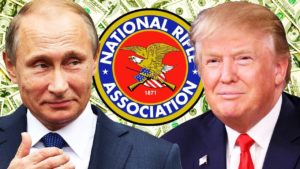
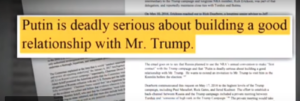
The troubling news therefore that the FBI is investigating the NRA as a possible vehicle for funnelling Russian money to help Trump in the 2016 elections should be of great concern to Democrats. New York Times Columnist Frank Bruni said on CNNโ€™s Outfront with Erin Burnett that the NRA spent a whopping $30M to help Trump get elected, which is more than they spent the last two Presidential cycles combined. A Russian banker Alexander Torshin who has ties to Putin is an NRA life member and the key suspect in the alleged funnelling scheme. Torshin apparently wanted to create a โ€œback channelโ€ between the Trump Campaign and Russia and one of his associates reportedly told a Trump campaign staffer that โ€œPutin is deadly serious about building a good relationship with Mr. Trump.

Under normal circumstances this would be just another questionable daliance between a powerful U.S. gun lobby group and a foreign financier. However against the backdrop of an ongoing Special Counsel investigation into U.S. election meddling by the Russians, this strange relationship between the NRA and the Putin-allied Russian financier has become a much more serious issue, one that Americans trust Mueller and Co. will get to the bottom of.

It also bears pointing out, as New York Times Columnist Frank Bruni did that Trumpโ€™s son Donald Trump Jr, is a major NRA supporter and activist. Trump Jr youโ€™ll remember is already in the middle of a very questionable meeting with Russian lawyer Natalya Veselnitskaya at Trump Tower. Veselnitskaya has since confessed that sheโ€™s an informant for Putinโ€™s Kremlin

Simply put, the NRA-Russia story is a major story that could affect the Dem political fortunes from here on out. According to CNN Political Correspondent Sara Murray, the NRA is privately, very concerned about the FBIโ€™s investigation into its ties to the Russian Banker(vid at 14:00). Obviously we Dems have to be patient and allow the feds to conduct their investigation into the NRA but just like Trump used the ongoing Clinton email probe to hamstring her 2016 campaign, there is no reason why the DNC should not pummel NRA-allied GOP candidates over Russian money as we head to Midterms 2018, the perfect target being Sen Ted Cruz

For those of you very happy with @Emolclauseโ€™s activism donโ€™t shy away from the โ€œtip jarโ€ below on your way out. You may also Cash App

Email author at admin@grassrootsdempolitics.com

Become an Octapharma Plasma donor. Make up to $200 in one week and help save lives too!ย Learn More