A Provocative Claim About Presidential Responsibility

In a striking segment on MSNOWโ€™s The Last Word, host Lawrence Oโ€™Donnell argued that Donald Trump is the only American president whose peacetime policies have resulted in more deaths than those occurring under his wartime actions. The claim immediately ignited fierce debate. Supporters of Trump dismissed it as hyperbolic political theater, while critics said it merely put numbers to what they see as the lethal consequences of policy choices.

To be precise, the argument is not that Trump personally โ€œkilledโ€ anyone, but that decisions made under his administration produced deadly outcomes. Oโ€™Donnellโ€™s central focus was the sweeping DOGE cuts, which he contends slashed critical foreign aid programs and humanitarian assistance. According to the segment, those reductions led to food shortages and medical supply disruptions in vulnerable regionsโ€”particularly in parts of sub-Saharan Africaโ€”contributing to starvation deaths, interruptions in HIV treatment, and preventable fatalities among infants and immunocompromised patients. The broader moral claim is straightforward: when the United States withdraws life-sustaining aid at scale, the consequences are measured in lives lost.

Oโ€™Donnellโ€™s case draws added force from history. For decades, humanitarian aid to Africa enjoyed bipartisan backing. Republican President George W. Bush, for example, earned praise for expanding anti-HIV/AIDS initiatives that saved millions of lives. By that standard, Oโ€™Donnell suggests the Trump-era retrenchment marked not just a policy shift but a break from a rare area of cross-party moral consensus.

A related point, not specifically raised by Oโ€™Donnell but relevant to the broader debate, is that the United States continues to provide substantial aid to strategic allies such as Israel. That reality complicates a blanket โ€œAmerica Firstโ€ defense of foreign aid reductions, since it suggests the issue is less about ending foreign assistance altogether and more about where and to whom it is directed.

Critics of Oโ€™Donnellโ€™s assertion counter that it stretches causation beyond responsible limits. Foreign aid systems are complex, involving NGOs, host governments, and multilateral institutions; attributing downstream deaths directly to a single administrationโ€™s budget decisions can oversimplify reality. They also argue that every president makes trade-offs and that fiscal restraint, even when painful, is not equivalent to intent to harm. Some pro-Trump voices further contend that global poverty, corruption, and logistical failuresโ€”rather than U.S. policy aloneโ€”bear primary responsibility for humanitarian crises. From this vantage point, labeling Trump as uniquely deadly in peacetime risks politicizing tragedy.

Yet supporters of Oโ€™Donnellโ€™s framing respond that intent is not the only moral metricโ€”foreseeability matters. If experts warned that cutting HIV medication pipelines or food assistance would predictably result in deaths, and those warnings were ignored, responsibility cannot be shrugged off as indirect. They also fold in the administrationโ€™s handling of COVID-19, arguing that inconsistent messaging, resistance to mitigation strategies, and delayed responses contributed to avoidable American deaths. When those domestic losses are considered alongside alleged foreign aid consequences, the cumulative toll becomes central to the debate.

Ultimately, Oโ€™Donnellโ€™s claim sounds bombastic at first hearing. Comparing peacetime and wartime death tolls is inherently fraught, and presidential accountability for global mortality is complex. Still, given the scale of reported COVID fatalities and credible estimates that reductions in humanitarian aid can translate into hundreds of thousands of preventable deaths, it is not unreasonable to argue that Trump-era policies may have produced an extraordinary peacetime human cost. One can dispute the framing, question the arithmetic, and challenge the causationโ€”but it is no longer far-fetched to make the claim.

Did Trump Admin Halt Federal Subsidies For EV Charging Stations To Benefit Muskโ€™s Tesla?

$upport viaย Cash App

An interesting segment on the 02/10/25 edition of MSNBCโ€™s Rachel Maddow Show revealed that the recent decision by the Trump administration to halt federal subsidies for EV charging stations directly benefits Elon Muskโ€™s Tesla.

This is a glaring conflict of interest, which once again underscores the need for some congressional oversight regarding the work Musk and his DOGE are doing, ostensibly to identify and eliminate government waste and fraud.

Simply put, Congress needs to step in to ensure that Muskโ€™s โ€œwaste cuttingโ€ operations are not benefiting his private businesses.

For those of you very happy withย @Emolclauseโ€™s activism donโ€™t shy away from the CashApp โ€œtip jarโ€ below on your way out.

Email author at admin@grassrootsdempolitics.com

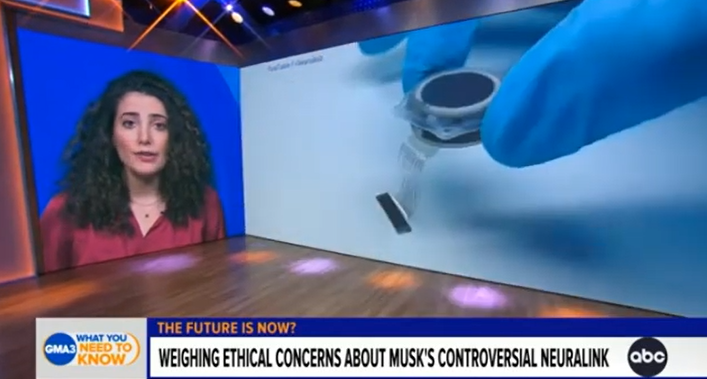
Ethical Concerns Raised Over Elon Musk’s Neuralink

$upport viaย Cash App๐Ÿ‘‡

Interesting segment on ABC’s GMA show delved into billionaire Elon Musk’s cutting edge brain technology–Neuralink implants–that are supposed to revolutionize how we deal with neurological disorders. The GMA segment came against the backdrop of news reports that the first Neuralink implant on a human had taken place.

The guest, Dr Leah Croll described Neuralink technology thus (0:38): “Basically this is the concept of using a brain machine interface to help people. Neuralink is a device that gets implanted within the brain, and then reads the electrical signals that our brain cells are constantly sending to one another, and then it can translate those signals into actions outside of the body, in this case the ability to control a computer or smartphone.”

Dr Croll added that this is by no means novel technology saying, “It [Neuralink] is absolutely not the first player on this field. This area of research really started back in the 90s but in recent years the pace of that research has just accelerated immensely…”

But as we know all too well, with every cutting edge technology, there are bound to be negative effects, and to that, Dr Jen Ashton popped this million dollar question (1:50): “Physically, what are the risks, and ethically, what are the risks that you can see with this type of technology?”

Dr Croll responded that because we are dealing with brain implants here, we should treat Neuralink procedures as any other brain surgery, and worry about all the physical risks we normally associate with such surgeries–bleeding, damage to brain tissue etc. As for the ethical concerns raised by Neuralink, she said (2:26): “When we get into the ethical realm, that raises so many questions because we are in completely uncharted territory here. There’s concerns about the data that this device is collecting and how secure it might be, there’s potential for privacy concerns to come into play, bad actors could potentially come into play and hack these devices. So there’s a lot of discussions that the medical community is going to have to have with the legal community, the ethical community, the technological community, so we can work together to figure out how we regulate something like this.”

Any reasonable person watching this GMA segment would conclude that even though Elon Musk’s Neuralink technology, on its face,exhibits the potential for significantly improving how we treat neurological disorders, the technology comes with serious ethical concerns that necessitate guardrails before proceeding.

This also means time has finally come for the government to come clean regarding the plight of targeted individuals, who have complained for decades about being the subjects of these “mind reading” technologies while being laughed out of the room as some crazy conspiracy theorists. This GMA segment establishes conclusively that we do indeed have technology that can read minds and more importantly, that this research has been going on since the 90s. It’s also worth pointing out that while Dr Croll correctly insists that there must be guardrails put in place before this technology is deployed to the public, targeted individuals have endured this very invasive technology with zero ethical guardrails. Should they be compensated for the irreparable harm this invasive technology has subjected them to? Should Congress hold hearings into government research projects in this field such as DARPA, to ensure that there have not been abuses? These are the questions one hopes the media will pose to the government as we delve deeper into the Neuralink era.

For those of you very happy withย @Emolclauseโ€™s activism donโ€™t shy away from the CashApp โ€œtip jarโ€ below๐Ÿ‘‡ on your way out.

Email author at admin@grassrootsdempolitics.com