Inside the Supreme Court’s Quiet Power Shift

The report from The New York Times lands like an accusation, not a curiosity: that the Supreme Court of the United States has not just drifted into new procedural territory, but deliberately engineered a quieter, faster, and less transparent way to wield its power. If the justices knowingly chose to bypass long-standing norms to expand the use of the “shadow docket,” then this isn’t a minor procedural evolution—it’s a fundamental shift in how the nation’s highest court operates, with real consequences for how its decisions are understood and trusted.

To understand why this lands the way it does, you have to grasp what the “shadow docket” actually is. Historically, it wasn’t controversial at all. It referred to routine, often administrative decisions—things like scheduling, brief extensions, or emergency stays in extreme circumstances. These decisions were typically fast, procedural, and not meant to set sweeping precedent. For decades, they were used sparingly and mostly in situations where time was critical, like imminent executions or urgent injunctions.

What’s changed—and what the Times story is getting at—is not the existence of the shadow docket, but its evolution. Over the past several years, especially since the late 2010s, the Court has increasingly used this fast-track mechanism to decide major, politically charged issues: immigration policy, abortion restrictions, environmental rules, executive power. And it often does so without full briefing, oral arguments, or detailed written opinions.

That’s where the perception problem starts. In the traditional “merits docket,” cases unfold slowly and publicly. Lawyers argue. Justices ask questions. Opinions are written and scrutinized. Even people who disagree with the outcome can at least see the reasoning. The shadow docket, by contrast, can feel abrupt and opaque—decisions appear, sometimes late at night, unsigned, with minimal explanation. That lack of transparency is what critics say undermines legitimacy, not just the outcomes themselves.

Now, the reporting adds a new layer: intent. If internal memos show that justices were aware they were breaking from “time-tested procedures” and did so deliberately, it reframes the shift from something organic or reactive into something strategic. A 2016 case involving federal environmental regulation is often cited as a turning point—an instance where the Court intervened early and unusually, effectively laying the groundwork for the modern use of the shadow docket.

But calling this entirely unprecedented would be overstating it. The Court has always had emergency powers, and it has occasionally used them in high-stakes ways before. The difference today is scale, frequency, and subject matter. What used to be rare is now relatively common, and what used to be technical is now often deeply political. That shift is why even some judges and legal scholars say the current moment feels different, not just in degree but in kind.

Supporters of the Court’s approach push back on the idea that this is some kind of procedural coup. They argue that the judiciary needs flexibility to act quickly, especially when lower courts issue nationwide injunctions that can halt federal policy instantly. From that perspective, the shadow docket is less about secrecy and more about necessity—an efficient tool in a system where legal conflicts move faster than ever. Some justices have even criticized the term “shadow docket” itself as misleading and politically charged.

Still, perception matters, and this is where the political dimension becomes unavoidable. The current Court’s conservative majority has been the primary user of this expanded shadow docket, and many of the outcomes have aligned with conservative legal priorities. That doesn’t automatically make the decisions illegitimate, but it does make the optics harder to separate from ideology. When major policy questions are resolved quickly, quietly, and in ways that track partisan expectations, it reinforces the belief—fair or not—that the Court is acting as a political body.

Recent criticism from within the Court itself underscores how serious this concern has become. Ketanji Brown Jackson has warned that heavy reliance on emergency rulings risks eroding transparency and weakening the authority of lower courts, describing the trend as potentially corrosive. That kind of internal dissent doesn’t just stay within legal circles—it spills into public discourse and shapes how ordinary people interpret what the Court is doing.

So when a widely read outlet like The New York Times publishes a story framed around “secret memos” and procedural bypassing, it amplifies an already fragile dynamic. For critics, it confirms suspicions that the Court is consolidating power in less visible ways. For defenders, it likely looks like another attempt to delegitimize a conservative judiciary by framing routine internal deliberations as something more sinister than they are.

The real impact on public perception is likely to be cumulative rather than immediate. The Supreme Court has long depended on a kind of institutional mystique—an image of deliberation, neutrality, and distance from politics. The more its most consequential decisions appear to come from expedited, opaque processes, the harder it becomes to sustain that image. And once that perception erodes, it doesn’t just affect how people view individual rulings—it shapes how they view the Court as an institution.

In that sense, the controversy over the shadow docket isn’t just about legal procedure. It’s about legitimacy, trust, and whether the Court is still seen as playing by a consistent set of rules. The memos, if interpreted the way the Times suggests, don’t just document a change—they symbolize it.

NY Post’s Page Six and the Unanswered Questions Around Epstein’s Orbit

The renewed scrutiny surrounding Jeffrey Epstein has forced a much broader examination of the ecosystems that enabled his abuse, and that scrutiny is now brushing up against institutions that, for years, operated in plain sight without serious challenge. Among them is the New York Post and its influential gossip column Page Six, which, according to resurfaced reporting and commentary, repeatedly featured young models connected to Paolo Zampolli—some of whom would later be identified as victims within Epstein’s orbit.

The issue is not that Page Six covered the modeling world; that has long been part of its DNA. The deeper concern is the pattern described in archival clippings and now circulating widely online: profiles and blurbs that spotlighted very young girls—sometimes explicitly identified as teenagers—newly arrived from Europe or elsewhere, framed as “discoveries,” and often described in ways that emphasized their youth, availability, and physical appeal. At the time, this may have read to casual readers as standard tabloid fare, the kind of breathless promotion that fuels nightlife culture and celebrity gossip. But viewed through the lens of what is now known about Epstein’s network, those same items take on a far more troubling dimension.

Zampolli, a well-connected figure in New York’s social and business circles, was frequently linked to these Page Six mentions. His role in bringing young models into elite social spaces—introducing them to powerful men, placing them in high-visibility environments—has been documented in various contexts over the years. The question that now emerges is not merely about his actions, but about the broader amplification system around him. When a major publication like the New York Post repeatedly platformed these introductions, complete with photos and suggestive descriptors, was it simply chronicling a scene, or was it inadvertently serving as a promotional channel within a pipeline that, in some cases, led to exploitation?

To be clear, there is no publicly established evidence that Page Six knowingly facilitated criminal activity. That distinction matters. But the absence of proven intent does not eliminate the need for accountability or inquiry. Media outlets, especially ones with the reach and cultural influence of the New York Post, do not operate in a vacuum. They shape visibility, legitimacy, and desirability. If individuals within Epstein’s broader network were using social columns as a way to signal, advertise, or elevate young women to a particular audience of wealthy, powerful men, then the publication’s role—whether active or passive—deserves examination.

The tone of some of these archived items is what makes them especially unsettling in retrospect. Descriptions of teenage girls as “discoveries,” paired with language that borders on sexualization, read very differently today. At minimum, they reflect a media culture that was far more permissive about blurring the lines between youth, glamour, and adult attention. At worst, they suggest a system in which vulnerability was being aestheticized and circulated to precisely the kinds of circles where exploitation could occur.

This is why the current moment, in which Epstein-related documents and associations are again under intense public focus, creates an obligation to revisit not just the central figures, but the surrounding infrastructure. Who provided access? Who created visibility? Who normalized the presence of extremely young women in elite adult spaces? And crucially, who benefited from that normalization?

The New York Post has, over decades, built a reputation on being plugged into the pulse of New York’s social life. That proximity is part of its brand, but it also comes with responsibility. If Page Six functioned, even unintentionally, as a conduit through which certain individuals and introductions gained legitimacy and attention, then the paper owes its readers a transparent accounting of how those editorial decisions were made. What vetting, if any, existed around the ages and circumstances of the individuals being featured? Were there internal concerns raised at the time? And how does the publication reflect on that coverage now, in light of what has since come to light about Epstein and those connected to him?

These are not accusations so much as necessary questions—questions that arise naturally when past media practices intersect with present-day revelations about abuse and exploitation. The Epstein case has already demonstrated how many layers of society, from finance to academia to politics, were entangled in ways that went unchallenged for far too long. It would be a mistake to assume that media institutions were entirely separate from that web.

If nothing else, this moment underscores the importance of reexamining the cultural and journalistic norms that once seemed routine. What was dismissed as gossip may, in hindsight, reveal patterns of power, access, and vulnerability that demand closer scrutiny. And for the New York Post, the path forward likely begins with acknowledging that scrutiny—and answering, as clearly as possible, the questions that are now impossible to ignore.

Senior Official At Trump’s Interior Department Accused Of Corruption

Please consider $upporting GDPolitics by scanning the QR code below or clicking on this link

The January 5, 2026 edition of MSNOW’s Rachel Maddow Show devoted a lengthy segment to corruption allegations involving Karen Budd-Falen, a powerful but little-known figure who served as the number three official at Donald Trump’s Department of the Interior and previously held senior posts there during Trump’s first term. Maddow framed the story as emblematic of a familiar pattern from the Trump years: public office intersecting uncomfortably with private financial interests, and the ethical guardrails that normally prevent that collision appearing either weakened or ignored.

Maddow opened with a sardonic observation that Budd-Falen may have been an unintended beneficiary of Trump’s dramatic weekend escalation involving Venezuela, which dominated headlines just as The New York Times was preparing a major investigative report on Budd-Falen. The international crisis effectively crowded out what might otherwise have been a front-page political scandal, buying time and quiet for a senior Interior Department official facing serious scrutiny.

At the center of the allegations is Budd-Falen’s role at Interior, where she wielded substantial influence over land use, water rights, and energy development—particularly in the West. Before and during her government service, Budd-Falen was well known as a lawyer representing ranchers, mining interests, and extractive industries, often in disputes against federal regulators and environmental protections. That background made her appointment controversial from the start, as critics argued she was now overseeing, from inside the government, policy areas that directly overlapped with her prior clients and personal interests.

According to reporting discussed on Maddow’s show, Budd-Falen and her husband own a ranch in Nevada that became strategically important to investors seeking to build a lithium processing facility nearby. Lithium, a critical mineral for electric vehicle batteries and energy storage, has been the subject of intense political and economic interest, and Interior Department approvals can make or break such projects. The investors allegedly offered the Budd-Falens $3.5 million for the ranch’s water rights—a staggering sum in itself—but the payment was reportedly contingent on the Interior Department approving the lithium plant. As Maddow summarized it, the deal appeared to hinge on a simple but troubling condition: no approval, no money.

What deepens the ethical concerns is the timeline. Maddow reported that Budd-Falen met with the investors for lunch in the Interior Department cafeteria during Trump’s first term. Not long afterward, the department gave the lithium project the green light. Even more striking, the project was reportedly fast-tracked, allowing it to bypass layers of environmental and regulatory review that similar projects typically face. Critics argue that this accelerated process reduced the chances that internal watchdogs or career civil servants would flag the apparent conflict of interest between a senior official’s personal financial stake and her department’s decision-making.

From an ethics standpoint, the issue is not merely whether Budd-Falen personally signed off on the approval, but whether her position and influence created an environment in which subordinates understood what outcome was desired. Federal ethics rules are designed to prevent even the appearance of such impropriety, precisely because public trust erodes when officials stand to gain financially from decisions made by their agencies.

At the same time, Maddow emphasized that Budd-Falen and the lithium investors deny any wrongdoing. A potential defense is that the water rights transaction was a private land deal negotiated at arm’s length, and that Interior Department approvals followed standard procedures driven by policy priorities rather than personal enrichment. Budd-Falen could also argue that she formally recused herself from decisions directly involving the project, or that career staff—not political appointees—made the ultimate determinations. Without full documentation and testimony, those claims remain unresolved, and they underscore why independent investigations, rather than television segments or partisan talking points, are essential to establishing the facts.

Still, the optics are undeniably damaging, particularly when viewed against the broader backdrop of corruption and ethics scandals that repeatedly engulfed Trump’s senior officials. From former Interior Secretary Ryan Zinke’s real estate dealings, to EPA Administrator Scott Pruitt’s resignation amid revelations of lavish perks and secret meetings with lobbyists, to Cabinet members like Tom Price and Wilbur Ross facing scrutiny over private travel and undisclosed financial ties, the Trump administration developed a reputation for blurring the line between public service and private gain. Even figures outside the Cabinet, such as Jared Kushner, drew sustained criticism for foreign financial entanglements that appeared to follow directly from their government roles. More recently, other high-profile Trump allies and officials, including Kristi Noem, have faced their own waves of controversy and ethical questions, reinforcing the sense that these were not isolated incidents but part of a recurring pattern.

Whether Karen Budd-Falen ultimately becomes another confirmed example of that pattern remains to be seen. What is clear is that the allegations strike at the heart of public trust in government: the expectation that officials act in the public interest, not their own financial self-interest. For now, Budd-Falen’s case sits in an uneasy limbo between denial and suspicion, with unanswered questions about influence, transparency, and accountability. As Maddow suggested, time—and thorough investigation—will determine whether these allegations collapse under scrutiny or become yet another entry in the long ledger of Trump-era corruption scandals.

HHS Secretary Guts Funding For mRNA Vaccine Research

Please consider $upporting GDPolitics by scanning the QR code below or clicking on this link

A troubling segment on MSNOW’s Velshi reported that HHS Secretary Robert F. Kennedy Jr. has moved to gut federal funding for mRNA vaccine research, a decision he reportedly made without offering a credible scientific justification. Researchers have long argued that mRNA technology extends far beyond COVID-era vaccines and holds enormous promise, including the potential to treat—or even cure—certain forms of cancer. For decades, finding a cancer cure has been a central goal of governments and medical institutions worldwide, which makes this abrupt reversal especially alarming to scientists who see mRNA as one of the most promising breakthroughs of the modern era.

According to the report, Secretary Kennedy’s rationale is that mRNA vaccines proved ineffective against upper respiratory illnesses such as COVID and the flu. Yet, as highlighted on the program, he has not publicly produced data or peer-reviewed evidence to substantiate that claim. Critics argue that even if one accepts his premise, it ignores the broader scientific consensus that mRNA’s value lies not only in infectious disease prevention but also in its adaptability for cancer therapies, personalized medicine, and treatments for previously intractable conditions. To many in the medical community, the decision appears less like a science-based reassessment and more like an ideological intervention with far-reaching consequences.

At the same time, it would be disingenuous to ignore the deep controversy surrounding vaccines in general and mRNA technology in particular. A sizable segment of the public believes the government has not always been fully transparent about vaccine risks, choosing instead to emphasize benefits while downplaying potential harms. mRNA technology, because it involves genetic instructions, has become a lightning rod for broader fears about government overreach. Claims—often unsupported—have circulated about mRNA being used for surveillance, social control, or even population reduction, folded into darker narratives about a looming “New World Order.” While these ideas remain firmly outside mainstream science, they have nevertheless shaped public opinion and political behavior.

Viewed through that lens, Kennedy’s move is likely to be celebrated by vaccine skeptics and anti-vaccine activists, many of whom already regard him as a champion of their cause. For them, gutting mRNA funding is not a loss but a victory—proof that resistance to vaccines has finally reached the highest levels of government. Yet the absence of a clear scientific explanation raises an unavoidable question: was this decision driven by evidence, or was it a calculated appeal to a constituency deeply distrustful of vaccines and public health institutions?

What happens next remains uncertain, but one thing is clear: the debate over mRNA funding is far from over. As researchers warn of lost momentum in the fight against cancer and other diseases, and critics cheer what they see as a blow against an overreaching biomedical establishment, the controversy is only likely to intensify. In the end, the fate of mRNA research may say less about science itself and more about how politics, fear, and ideology increasingly shape public health policy.

Rep Clyburn’s New Book Looks At How SCOTUS Is Taking Us Back To Jim Crow Era


Please consider $upporting GDPolitics by scanning the QR code below or clicking on this link

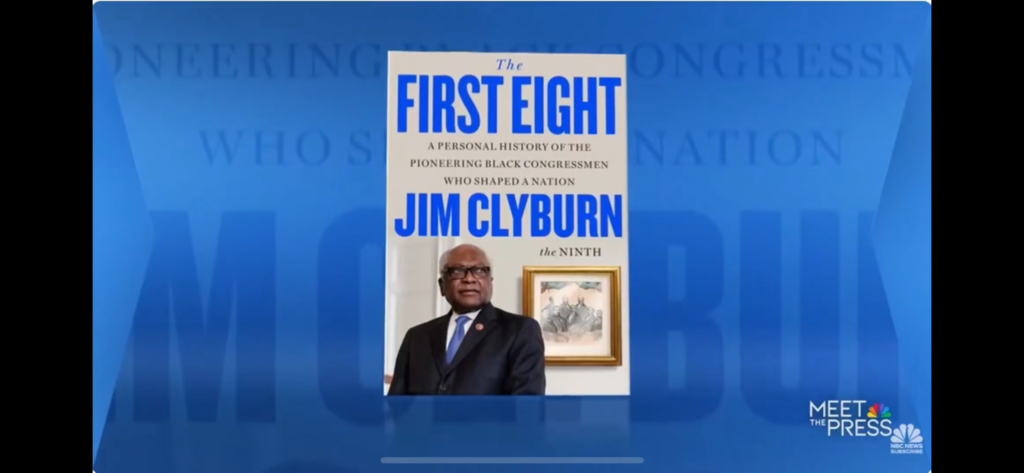
An important new book by Rep. James Clyburn (D-SC), The First Eight, warns that disturbing signs suggest we may be sliding back toward a modern form of Jim Crow. In it, Clyburn examines the lives and careers of the first eight Black men to serve in Congress from South Carolina — all elected in the period after the Civil War during Reconstruction. He recalls that after the last of those eight left Congress in 1897, there was no Black representation from South Carolina for 95 years, until Clyburn himself was elected in 1992.

Clyburn uses their stories not just to spotlight that lost legacy, but to warn that many of the same forces that disenfranchised Black voters at the turn of the 20th century are resurfacing today. He draws parallels between the backlash that ended Reconstruction — Jim Crow laws, restrictive state constitutions, poll taxes, literacy tests, and violence — and current efforts to redraw voting districts and suppress minority voting power. A key part of his argument is the role the Supreme Court played then and now. He notes that foundational decisions like the Slaughterhouse Cases narrowed the scope of the 14th Amendment almost immediately after its ratification, stripping federal protections from formerly enslaved people and allowing Southern states to impose discriminatory laws. That judicial retreat set the stage for later rulings such as Plessy v. Ferguson, which constitutionally sanctioned segregation and cemented the legal framework that enabled Black disenfranchisement for generations.

In particular, Clyburn argues that modern partisan and racial gerrymandering — especially in his home state of South Carolina — resembles the “old Jim Crow power play” that erased a century of Black political representation. He points to recent attempts by the State Legislature to redraw congressional districts in a way that moved tens of thousands of Black voters out of his district, a practice a federal court found to be an unconstitutional racial gerrymander. When the map was challenged, however, it was the current Supreme Court that stepped in and reversed the lower court, making it significantly harder for voting-rights advocates to block discriminatory district maps. To Clyburn, this echoes the pattern of the past: when state governments use race to manipulate electoral maps, and the Court either narrows protections or declines to intervene, the result is the same erosion of political power that once produced the 95-year gap between the eighth Black congressman from South Carolina and himself.

Clyburn does not merely retell history — he warns that history is repeating. He argues the country is in the early stages of what he calls a “Third Reconstruction,” threatened by political forces determined to dilute or suppress the votes of people of color. In his view, the stakes are nothing less than the integrity of democracy itself: the story of those first eight Black congressmen is a reminder that gains in political power and representation can be undone — and undone intentionally. The book emerges not just as history, but as a timely call-to-action to defend voting rights, safeguard fair representation, and resist any revival of Jim Crow-era disenfranchisement.

Clyburn closes with a telling reminder that the first eight Black congressmen from South Carolina were routinely assigned racist and belittling nicknames by their opponents — a tactic meant to diminish their legitimacy, sow disrespect, and discourage those they represented. He notes that the weaponization of mockery and demeaning labels is not a relic of the past; it echoes loudly in today’s political climate, where leaders of color are again targeted with derisive nicknames designed to undercut their standing and weaken the communities they serve. For Clyburn, these parallels — from state laws to Supreme Court decisions to symbolic attacks — underscore his broader warning: the architecture of disenfranchisement is being rebuilt piece by piece, and the patterns of the past are reappearing in unmistakably familiar ways.

MSNBC’s Lawrence Blasts President Trump Over His “Enemies List”

On the October 9, 2025 edition of The Last Word, MSNBC host Lawrence O’Donnell launched a blistering critique of President Trump’s growing pattern of targeting perceived political foes. O’Donnell accused the president of using the Justice Department as a weapon against his “enemies list,” a tactic he compared directly to the disgraced legacy of former President Richard Nixon. Drawing a chilling parallel, O’Donnell reminded viewers that Nixon’s presidency “didn’t end well,” warning that Trump could face a similar collapse if his administration continues to blur the lines between justice and political vengeance.

The controversy intensified after the U.S. Attorney for the Eastern District of Virginia, Lindsey Halligan, brought high-profile indictments against former FBI Director James Comey and New York Attorney General Letitia James — two officials long vilified by Trump in public remarks and social media tirades. Halligan’s actions have fueled speculation that she’s become Trump’s de facto enforcer, using the machinery of federal prosecution to settle old political scores.

Critics argue that Halligan’s pattern of cases mirrors the tone of Trump’s personal grievances, targeting figures who embarrassed or challenged him during his presidency. Observers have noted that while Trump portrays these prosecutions as “justice being served,” the timing and selection of defendants make the process look less like impartial law enforcement and more like a coordinated campaign of retribution.

Legal analysts on MSNBC suggested that Halligan’s aggressive posture — and her proximity to Trump’s political orbit — could backfire. By appearing to criminalize dissent, the administration risks creating a perception of authoritarian overreach, echoing the very abuses of power that ended Nixon’s career. As O’Donnell put it, this “enemies list revival” may serve as both a warning and a reminder: presidents who weaponize justice to punish critics rarely escape the consequences.

Is FHFA Boss Targeting Dems?

Bombshell segment on the 09/18/25 edition of MSNBC’s All In w/Chris Hayes delved into the current head of the Federal Housing Finance Authority (FHFA), William Pulte, and specifically whether he is the source of all the mortgage fraud allegations currently leveled at prominent Democrats

Hayes correctly pointed out that it does appear odd, that Democrats who President Trump has publicly feuded with, and expressed contempt for, are suddenly facing accusations of mortgage fraud. Importantly, the person who President Trump has appointed to head FHFA, which among other things, overseas the U.S. mortgage market, is a diehard MAGA and a major donor to the Trump campaign. Per Hayes, he’s an heir to a major construction company.

Could he be the one digging into Trump opponents’ mortgage files for “dirt”? Hayes certainly seems to be making that argument in this segment. If true, this would not only be a blatant abuse of power, but could potentially also be a legal infraction pertaining to privacy. 

But let’s not put the cart before the horse here. The prudent thing is to first confirm that it is indeed Mr Pulte who is leaking people’s mortgage files. After that, we can consider the potential legal ramifications

 Bottom line, this is the classic issue that begs for congressional oversight. Americans are already struggling to keep up with their mortgage payments. The last thing they need is some politically-motivated fat cat rummaging through their mortgage files digging for “political dirt”. There are federal agencies already in place to independently deal with mortgage fraud.

The Best Case For Jailing Trump Over The Hush Money Case

$upport via Cash App

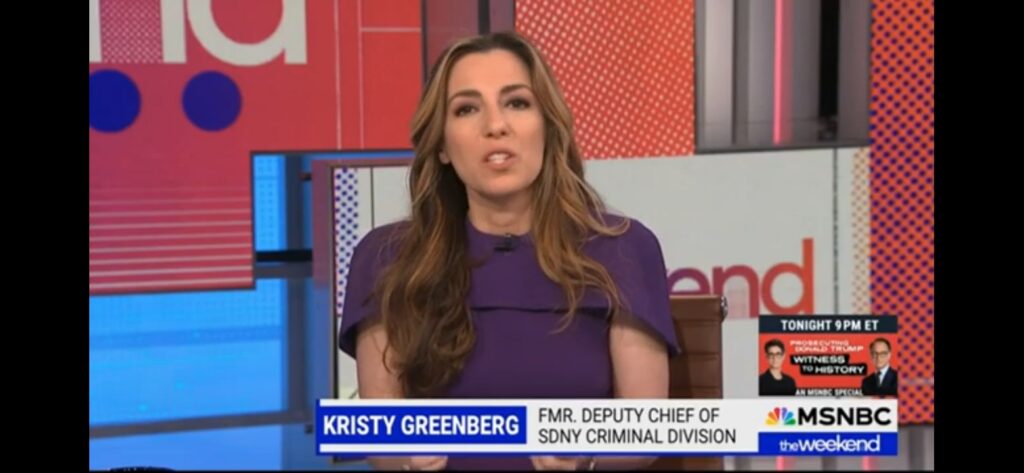
Kristy Greenberg, Former Deputy Chief at SDNY’s Criminal Division, appeared on MSNBC’s The Weekend show (06/09/24) where she made quite a compelling case as to why former President Trump should be imprisoned after being found guilty of 34 felony counts in the hush money case–the best case yet, as far as Yours Truly is concerned.

Kristi Greenberg: “I think that if you objectively look at all of the factors that are taken into account in sentencing, the prosecutors here should be seeking a jail sentence, and the judge should impose one. Look at the nature and the seriousness of the conduct…This was about the subversion of democracy. This was about depriving the voter of information that they would need when they go to the ballot box and decide who to vote for. What is more important than that?”

She also knocked down the argument one regularly hears on Fox News and other pro-Trump media outlets–that Trump should be accorded some deference and spared prison time, simply because he’s a former president. She argued instead that, because Trump wrote the hush money checks from the Oval Office, the judge should treat that as “an aggravating factor” for sentencing purposes.

In conclusion, she made the case that because Michael Cohen went to jail for the same conduct, Trump should likewise be imprisoned, especially given the fact that he was directing the criminal scheme–a slam dunk argument in my opinion. She specifically told the MSNBC hosts (1:09): “Michael Cohen went to jail for the same conduct, and he was less culpable than Donald Trump, who was directing him to do it. So if it’s serious enough for Michael Cohen to go to jail, it is certainly serious enough for Donald Trump to go to jail as well.”

For those of you very happy with @Emolclause’s activism don’t shy away from the “tip jar” below on your way out. You may also Cash App

Email author at admin@grassrootsdempolitics.com

Become an Octapharma Plasma donor. Make up to $200 in one week and help save lives too! Learn More

Rep AOC Calls For Senate Probe Into Supreme Court Justice Samuel Alito

$upport via Cash App👇

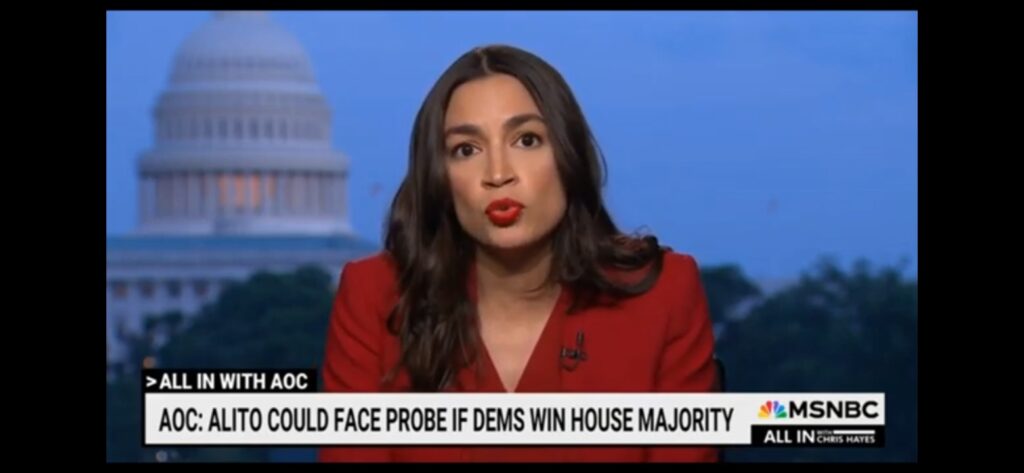
Rep Alexandria Ocasio-Cortez (D-NY) appeared on the 05/22/24 edition of MSNBC’s All In w/Chris Hayes show, where she dropped a bombshell by calling for a U.S. Senate probe into the affairs of Supreme Court Justice Samuel Alito. Rep AOC’s call for an investigation is of course related to recent news reports that say a flag known to be sympathetic to the January 6th insurrection, was spotted flying at Justice Alito’s residence.

Asked by host Chris Hayes what she thought about the Alito news reports, Rep AOC replied(2:22): “I don’t even think that we have to wait until we have a Democratic House majority, because we have a Democratic Senate majority. This is an alarm that I have been sounding for quite some time now. I think that what we’re seeing here, is an extraordinary breach of not just the trust and the stature of the Supreme Court, but we’re seeing a fundamental challenge to our democracy. [Justice] Samuel Alito has identified himself with the same people who raided the Capitol on January 6th, and is now going to be presiding over court cases that have deep implications over the participants of that rally.”

Rep AOC went on to add that Democrats cannot just keep on sitting on power after getting elected. They actually have to use the power that voters bestow upon them, to start addressing this runaway Supreme Court, and other burning voter concerns.

Rep AOC specifically told host Chris Hayes(3:13): “Democrats have a responsibility for defending our democracy, and in the Senate, we have gavels. There should be subpoenas going out, there should be active investigations that are happening, and I believe that when House Democrats take the majority, we are preparing and ensuring to support the broader effort to stand up our democracy…When Democrats have power, we have to use it. We cannot be in perpetual campaign mode. We need to be in governance mode, we need to be in accountability mode, with every lever that we have…”

As you know, Yours Truly has for a long time lamented weakness by congressional Dems. It was therefore quite refreshing to see Rep AOC calling it out too.

https://twitter.com/Emolclause/status/1648761419251302401?t=IYMJDz7UPSwfOtKhLULw9w&s=19

For those of you very happy with @Emolclause’s activism don’t shy away from the CashApp “tip jar”👇 below on your way out.

Email author at admin@grassrootsdempolitics.com

Maddow On Why The Trump-Stormy Daniels Affair Is A Big Deal

$upport via Cash App

Former Porn Star Stormy Daniels recently appeared to testify at former President Donald Trump’s hush money trial currently playing out in Manhattan, New York. As was expected, a lot of juicy details came out of her testimony, some previously known by the public, and others totally new. Trump’s supporters have predictably sought to downplay, even totally disregard Daniels’ testimony, but as MSNBC’s Rachel Maddow recently said on her colleague Nicolle Wallace’s show, we cannot/must not forget the fact that the person at the heart of this sordid affair, is someone who could potentially end up as U.S. president again. Put another way, this is, as Maddow would put it, “a big freaking deal”.

Maddow said(5:55): “The very big picture here is, we are thinking seriously as a country, about putting somebody back in the White House, who mounted a violent effort to overthrow the government the last time that he was voted out, who says that parts of the constitution should be terminated, who says he wants to put the U.S. military in American cities, he wants to build camps for tens of millons of people. That’s what we’re thinking about doing. There’s like this huge yikes factor when it comes to him.”

Maddow adds(6:43): “On top of the scariness about what he’s offering us as a political figure, on top of his likely criminal liability in his multiple criminal trials, we also then just get this yuck factor stuff[with the porn star].”

Maddow then lists the yucky stuff

  1. “She’s doing a porn company promotion at a golf tournament.”
  2. “His infant son is four months old.”
  3. “He has his bodyguard ask her if she’d like to have dinner, so she goes to his room. There is no dinner. He’s wearing satin pajamas. She says get dressed.”
  4. “He tells her I’ll get you under my reality competition TV show and I will help you cheat at it. I’ll give you advance notice on the challenges on the show, and that will help you.”
  5. “He tells her me and my wife don’t sleep in the same room.”
  6. “He asks her when she was last tested for sexually transmitted diseases.”
  7. “He tells her she reminds him of his daughter.”
  8. “She goes to the bathroom, she comes out of the bathroom, and he’s stripped down to his underpants.”
  9. “She tries to leave, and he steps between her and the door. She doesn’t want to do it. She says she doesn’t feel threatened but he says to her, I thought you were serious about what you wanted. If you ever want to get out of that trailer park…”
  10. “They have sex. She’s not into it. He does not wear a condom. That is particularly concerning to her, and he should know that it is because she has just explained to him about her work in the adult film industry.”
  11. “They meet several more times, he makes more sexual advances, they never have sex again, and ultimately it is only when he finally says no, I’m not putting you on my TV show, that she stops picking up his calls.”

Maddow then bottom lines it perfectly saying, “[President]Jimmy Carter almost lost in 1976 because he said he had committed lust in his heart, but this is who we are thinking about putting back in the White House right now, along with what he has threatened to do to the country, in part out of anger for the criminal liability that he has brought on himself by trying to cover up things like this, behavior like this, character like this.”