
House MKULTRA Hearing Set For 051326

When Anna Paulina Luna publicly signals a hearing tied to something as controversial and historically unsettling as Project MKUltra, it’s bound to turn heads—and not just because of the subject matter, but because of the willingness it takes to even go there. For decades, MKUltra has occupied a strange space in American consciousness: partially declassified fact, partially dismissed suspicion, and fully uncomfortable. Many elected officials would rather steer clear of it altogether, treating it as politically radioactive. That’s precisely why Luna’s move stands out. It suggests a readiness to engage with topics that others avoid, not because they lack relevance, but because they carry reputational risk.

There’s a broader context here that makes this moment particularly notable. Across the country, there’s a growing appetite for transparency—whether it’s about government surveillance, intelligence practices, or long-buried programs that were once waved away as conspiracy. From renewed scrutiny of agencies like the Central Intelligence Agency to bipartisan calls for declassification in other areas, the public mood has shifted. People are less willing to accept “trust us” as a sufficient answer, especially when it comes to historical abuses of power. In that sense, this hearing isn’t just about MKUltra itself; it fits into a larger pattern of reevaluating what has been hidden and why.

What makes Luna’s approach noteworthy is not necessarily that she’s promising explosive revelations—there’s no indication that May 13 will suddenly rewrite the historical record—but that she’s legitimizing the conversation within a formal government setting. That alone matters. When something moves from the fringes into a congressional hearing room, it changes how it’s perceived. It becomes something that can be questioned, documented, and entered into the public record, rather than dismissed outright.

For a subset of Americans often referred to as “targeted individuals,” this development will likely carry particular significance. Many in that community have long argued that programs resembling MKUltra never truly ended, but instead evolved under different classifications and technologies. Their claims are controversial and widely disputed, but they persist in part because of the historical reality that MKUltra itself was once denied before being partially confirmed. A hearing like this, even if it doesn’t validate those beliefs, signals that the door to inquiry is not completely shut—and that alone can feel like a shift.

At the same time, expectations should remain grounded. It’s unlikely that May 13 will produce a major bombshell or definitive answers to decades-old questions. Government hearings, especially on sensitive intelligence matters, tend to move incrementally rather than dramatically. But that doesn’t make them meaningless. In many cases, the first hearing is less about revelation and more about establishing that the topic deserves attention at all.

If anything, this could serve as a starting point—a signal that even the most uncomfortable chapters of government history are not off-limits forever. And if that leads to more hearings, more documents, and more scrutiny over time, then it will have achieved something meaningful. Because in a climate increasingly defined by demands for openness, even small steps toward transparency matter. As the saying goes, sunshine is the best disinfectant.

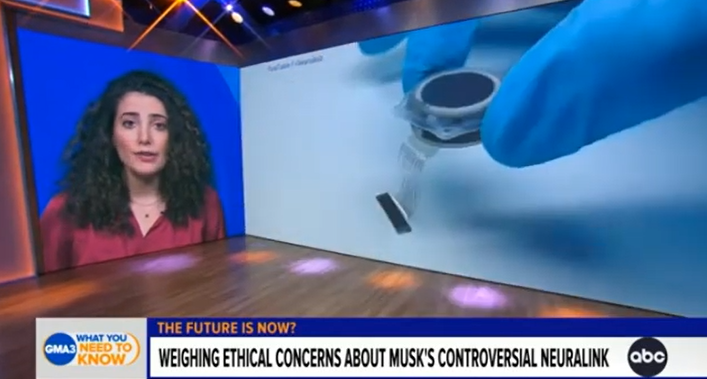
Ethical Concerns Raised Over Elon Musk’s Neuralink

$upport via Cash App👇

Interesting segment on ABC’s GMA show delved into billionaire Elon Musk’s cutting edge brain technology–Neuralink implants–that are supposed to revolutionize how we deal with neurological disorders. The GMA segment came against the backdrop of news reports that the first Neuralink implant on a human had taken place.

The guest, Dr Leah Croll described Neuralink technology thus (0:38): “Basically this is the concept of using a brain machine interface to help people. Neuralink is a device that gets implanted within the brain, and then reads the electrical signals that our brain cells are constantly sending to one another, and then it can translate those signals into actions outside of the body, in this case the ability to control a computer or smartphone.”

Dr Croll added that this is by no means novel technology saying, “It [Neuralink] is absolutely not the first player on this field. This area of research really started back in the 90s but in recent years the pace of that research has just accelerated immensely…”

But as we know all too well, with every cutting edge technology, there are bound to be negative effects, and to that, Dr Jen Ashton popped this million dollar question (1:50): “Physically, what are the risks, and ethically, what are the risks that you can see with this type of technology?”

Dr Croll responded that because we are dealing with brain implants here, we should treat Neuralink procedures as any other brain surgery, and worry about all the physical risks we normally associate with such surgeries–bleeding, damage to brain tissue etc. As for the ethical concerns raised by Neuralink, she said (2:26): “When we get into the ethical realm, that raises so many questions because we are in completely uncharted territory here. There’s concerns about the data that this device is collecting and how secure it might be, there’s potential for privacy concerns to come into play, bad actors could potentially come into play and hack these devices. So there’s a lot of discussions that the medical community is going to have to have with the legal community, the ethical community, the technological community, so we can work together to figure out how we regulate something like this.”

Any reasonable person watching this GMA segment would conclude that even though Elon Musk’s Neuralink technology, on its face,exhibits the potential for significantly improving how we treat neurological disorders, the technology comes with serious ethical concerns that necessitate guardrails before proceeding.

This also means time has finally come for the government to come clean regarding the plight of targeted individuals, who have complained for decades about being the subjects of these “mind reading” technologies while being laughed out of the room as some crazy conspiracy theorists. This GMA segment establishes conclusively that we do indeed have technology that can read minds and more importantly, that this research has been going on since the 90s. It’s also worth pointing out that while Dr Croll correctly insists that there must be guardrails put in place before this technology is deployed to the public, targeted individuals have endured this very invasive technology with zero ethical guardrails. Should they be compensated for the irreparable harm this invasive technology has subjected them to? Should Congress hold hearings into government research projects in this field such as DARPA, to ensure that there have not been abuses? These are the questions one hopes the media will pose to the government as we delve deeper into the Neuralink era.

For those of you very happy with @Emolclause’s activism don’t shy away from the CashApp “tip jar” below👇 on your way out.

Email author at admin@grassrootsdempolitics.com