Is CJ Roberts The New Roger Taney?

Please consider $upporting GDPolitics by scanning the QR code below or clicking on this link

An interesting discussion unfolded on MSNOW’s All In with Chris Hayes in a segment that was initially intended to examine whether the courts have held up against the threat of authoritarianism posed by Trump 2.0. What emerged instead was a sobering assessment of the judiciary’s uneven performance—and a striking indictment of the Supreme Court’s role in enabling, rather than constraining, presidential power.

There was broad agreement among the panelists that the lower federal courts have largely done their job. District courts and federal appellate courts have repeatedly pushed back against Trump-era policies that stretch or outright exceed constitutional authority, issuing rulings that reflect a continued commitment to legal norms and institutional guardrails. In that sense, the judiciary below the Supreme Court was seen as functioning as a genuine check on executive overreach. That consensus, however, collapsed the moment the conversation turned to the nation’s highest court.

On the Supreme Court, the panel was unified in its criticism. Rather than reinforcing the limits imposed by the Constitution, the Court was described as an active enabler of the Trump administration, routinely undermining or reversing lower-court efforts to restrain him. The justices, in this telling, have not merely failed to defend democracy but have helped hollow it out, often by cloaking deeply political outcomes in the language of neutral legal principle.

The segment took a dramatic turn when NYU Law Professor Melissa Murray made a blunt and explosive claim: that Chief Justice John Roberts has now surpassed Roger Taney as the most damaging chief justice in American history. Taney, long regarded as the Court’s nadir, presided over the infamous Dred Scott decision of 1857, which declared that Black Americans could not be citizens and helped propel the nation toward civil war. To suggest that Roberts belongs in the same conversation—let alone that he is worse—was a jarring assertion, and Murray did not soften it.

Professor Murray argued that Roberts has authored at least four opinions that she described as “the absolute most corrosive for democracy.” She pointed first to Rucho v. Common Cause, a decision that effectively blessed extreme partisan gerrymandering by declaring it a nonjusticiable political question. In doing so, the Court closed the federal courthouse doors to challenges against a practice that allows politicians to choose their voters, entrenching minority rule in state after state. She then cited Shelby County v. Holder, the 2013 ruling that gutted the Voting Rights Act by striking down its preclearance formula, a move that unleashed a wave of voter suppression laws across the country almost immediately. Murray also pointed to Trump v. United States, the presidential immunity case, which dramatically expanded the scope of executive immunity and signaled that a president may be functionally above the law when acting under the guise of official duties.

Although she did not explicitly name a fourth decision, the implication was hard to miss. Citizens United looms over any discussion of democratic corrosion, having opened the floodgates to unlimited, often opaque political spending and accelerating the transformation of American democracy into something approaching oligarchy. Taken together, these rulings form a throughline in which democratic participation is narrowed, accountability is weakened, and power is consolidated in the hands of the few—all under the stewardship of a chief justice who has repeatedly claimed to care deeply about the Court’s legitimacy.

Whether the argument that “Roberts is worse than Taney” gains wider traction remains to be seen, but it is crucial to note that Professor Murray is far from alone in making it. Legal scholars and commentators have increasingly drawn parallels between Taney’s Court, which entrenched slavery and inequality, and a modern Court that has systematically undermined voting rights, empowered unchecked executive authority, and normalized vast concentrations of political power. What made the moment on All In so striking was not just the severity of the claim, but the growing sense that it no longer sounds fringe. Instead, it reflects a mounting recognition that the greatest threats to American democracy may now be coming not from lawless actors outside the system, but from those entrusted to interpret and preserve it.

Chief Justice Roberts Slammed As Biggest Enemy To Voting Rights Act

Please consider $upporting GDPolitics by scanning the QR code below or clicking on this link

In the October 19, 2025, edition of MSNBC’s Velshi, legal commentator Elie Mystal delivered a striking critique, telling host Ali Velshi that U.S. Supreme Court Chief Justice John Roberts has, in many respects, become the most formidable obstacle to the enforcement of the landmark 1965 Voting Rights Act (VRA)—and, by extension, a significant impediment to protecting the voting rights of communities of color.

Mystal’s remarks were prompted by the high-profile redistricting case currently before the Supreme Court, Louisiana v. Calais. Experts warn that the Court’s ruling could fundamentally undermine the VRA, effectively allowing racially motivated redistricting and diluting the electoral power of Black and minority voters. The stakes are enormous: analysts suggest that, if the Court rules in favor of Louisiana’s approach, Republicans could gain as many as 19 additional House seats in the 2026 elections alone.

The case raises critical questions under the VRA’s Section 2, which prohibits voting practices that result in racial discrimination, and Section 5, which historically required jurisdictions with a documented history of voter suppression to obtain federal approval before changing voting laws. Louisiana v. Calais centers on whether the state’s proposed redistricting plan unfairly diminishes the influence of Black voters in certain congressional districts. Proponents of the challenge argue that the plan reflects legitimate political considerations, while opponents contend it is a transparent attempt to circumvent the VRA and dilute minority voting power.

This moment is reminiscent of a discussion I initiated back in 2018, when I criticized what I then termed the “unjust Roberts Supreme Court” for systematically chipping away at the VRA’s protections. At the time, such a stance was considered controversial. Today, with mainstream voices like Mystal echoing similar concerns, it appears those warnings have entered the broader public discourse.

As the Supreme Court deliberates Louisiana v. Calais, the implications extend far beyond a single state. The decision could redefine the legal contours of voting rights protections nationwide, setting a precedent that either reinforces or weakens decades of civil rights progress. Observers on both sides of the political spectrum will be watching closely, as the Court’s ruling could reshape congressional representation and influence the trajectory of American democracy for years to come.

Will Dems Subpoena Justice Kennedy’s Son Over Deutsche Bank?

$upport via Cash App

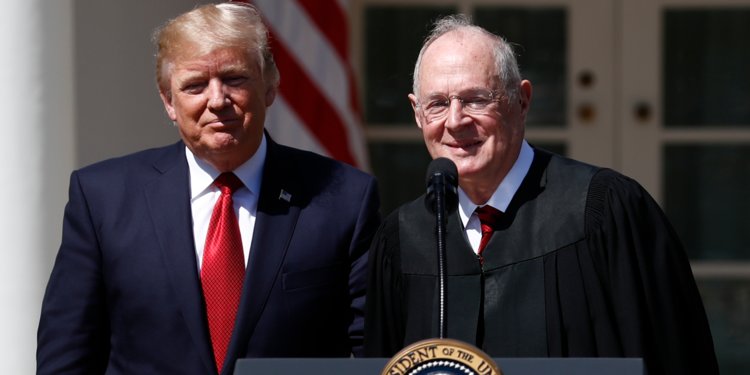
President Trump with Justice Anthony Kennedy(Retired)

In the days following the June 2018 announcement by Justice Anthony Kennedy that he was retiring from the Supreme Court, there was rampant speculation that his resignation was not entirely voluntary but rather that the Trump administration engineered/even forced him out for fear that the GOP may lose their U.S. Senate majority to the Democrats in the November 2018 elections. In essence, the Trump administration did not want Justice Kennedy to retire at a time when Democrats controlled the Senate because that would make it difficult for any Trump SCOTUS nominee to be confirmed.

Speculation that the Trump Admin forced out Justice Kennedy took a whole new turn after the New York Times did a bombshell piece revealing that Justice Kennedy’s son Justin Kennedy had been a longtime financier for Trump. Specifically, that Justin Kennedy was Trump’s financier at the troubled Deutsche Bank which has come under international scrutiny over allegations that it is the bank of choice for Russian money launderers.

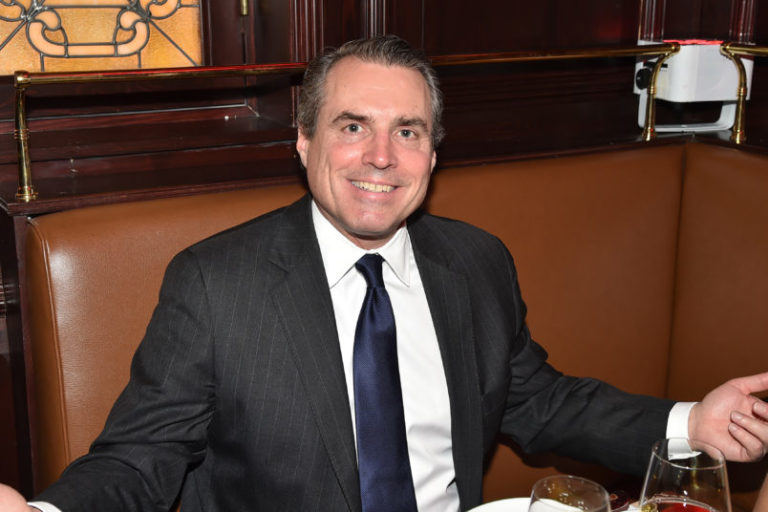
Justin Kennedy, the son of Retired Supreme Court Justice Anthony Kennedy

Justin Kennedy was apparently the global head of real estate capital markets at Deutsche Bank which leaves absolutely no doubt that he would be the point man at Deutsche Bank for Trump’s vast real estate empire. Part of the bombshell The NYT piece read;“During Mr. Kennedy’s tenure, Deutsche Bank became Mr. Trump’s most important lender, dispensing well over $1 billion in loans to him for the renovation and construction of skyscrapers in New York and Chicago at a time other mainstream banks were wary of doing business with him because of his troubled business history.” 

With Special Counsel Mueller increasingly zeroing in on Trump’s business ties to Russia and news that German authorities recently raided the troubled Deutsche Bank, the question now being raised is whether with their new found majority in the House, Democrats will subpoena Trump-related Deutsche Bank records and specifically whether they will call Justin Kennedy to testify about his financial dealings with Trump.

Justin Kennedy’s testimony in Congress could also lay to rest the lingering speculation as to whether his dad was forced by the Trump administration to resign from the U.S. Supreme Court before the November 2018 elections. For more on this topic Yours Truly suggests that you check out this must read thread, which also raises questions about Justice Kavanaugh’s involvement in Justice Kennedy’s abrupt decision to retire.

Justin Kennedy’s testimony in Congress could also lay to rest the lingering speculation as to whether his dad was forced by the Trump administration to resign from the U.S. Supreme Court before the November 2018 elections.

Bottom line given the serious questions being raised about Deutsche Bank’s ties to President Trump and its troubling history as a conduit for Russian money laundering, it would be Congressional malpractice if House Democrats did not call Justin Kennedy to testify about his role at the troubled bank and specifically, find out what criteria Deutsche Bank used to justify loaning Trump so much money when other “mainstream” banks declined to do so. Was Russia the source of these loans to Trump?. Grassroots Democrats would also like to know whether Kavanaugh played any part in Justice Kennedy’s retirement–essentially engineering his own ascendancy to the U.S. Supreme Court.

For those of you very happy with @Emolclause’s activism don’t shy away from the “tip jar” below on your way out. You may also Cash App

Email author at admin@grassrootsdempolitics.com

Become an Octapharma Plasma donor. Make up to $200 in one week and help save lives too! Learn More

Emails Prove Kavanaugh Lied To Congress Under Oath Several Times

$upport via Cash App

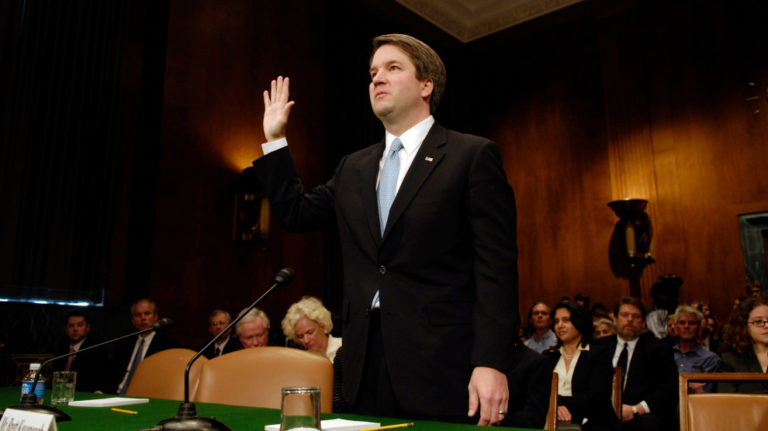
Brett Kavanaugh is sowrn-in to be U. S. Circuit Judge for the Ninth Circuit.

Trump’s Supreme Court nominee Brett Kavanaugh had a tense time on the confirmation hot seat taking questions from Senator Patrick Leahy and other Dems as to whether he lied to Congress under oath during his confirmation hearings for the DC Circuit Court of Appeals.

Well, courtesy of a Daily Beast article, we can definitively identify multiple instances where Kavanaugh lied to Congress under oath.

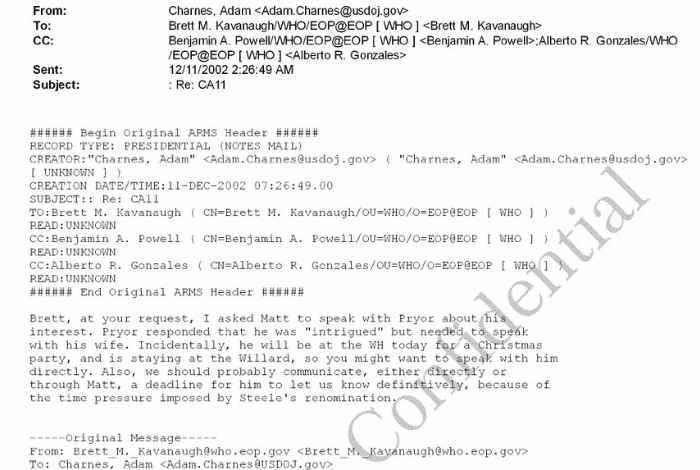
Kavanaugh lie #1—In 2006, under questioning by the late Dem Senator Ted Kennedy, Kavanaugh said he wasn’t involved in the selection and vetting process of controversial conservative judge William Pryor. Turns out there are now emails proving Kavanaugh was intricately involved in Judge Pryor’s vetting.

Kavanaugh lie #3—-Kavanaugh also lied about George W. Bush administration’s “Terrorist Surveillance Program”. Kavanaugh initially testified under oath that he found out about the program through a 2005 New York Times article. Well, turns out there is a 2001 email in which Kavanaugh is asking a DOJ lawyer: “Any results yet on the 4A implications of random/constant surveillance of phone and e-mail conversations of non-citizens who are in the United States when the purpose of the surveillance is to prevent terrorist/criminal violence?”. This again proves that Kavanaugh knew about the terrorist surveillance program way back in 2001 but decided to lie to congress about it under oath

It is well known that lying to congress under oath is a felony. Any reasonable person would therefore conclude that repeatedly lying to congress under oath is so serious, it should preclude anybody from assuming any judgeship, especially a judgeship at the U.S. Supreme Court.

Bottom line Dems and the mainstream media must continue shedding light on Kavanaugh’s troubling conduct which clearly precludes him from being a Supreme Court Justice.

For those of you very happy with @Emolclause’s activism don’t shy away from the “tip jar” below on your way out. You may also Cash App

Email author at admin@grassrootsdempolitics.com

Become an Octapharma Plasma donor. Make up to $200 in one week and help save lives too! Learn More