From Backpacks to Orbit: New Disclosures Put Directed-Energy Claims in a Different Light

For years, people who identify as “targeted individuals” have alleged that sophisticated directed-energy or electromagnetic weapons are being used covertly against people. Their accounts vary dramatically: some describe attacks originating from nearby vehicles or portable devices, while others believe energy is being directed from aircraft, satellites or other space-based platforms, with some specifically pointing to the U.S. Space Force. Those individual allegations remain unproven. But roundly dismissing targeted individuals as “crazy conspiracy theorists” merely because the technologies they describe sound impossible is increasingly difficult to justify. Two developments are particularly noteworthy: neuroscientist Dr. James Giordano has publicly discussed directed-energy systems small enough to be carried in backpacks or mounted in vehicles, while the Pentagon has now acknowledged for the first time that the United States has operational weapons in orbit.

Giordano’s comments during a July appearance on NewsNation’s Katie Pavlich Tonight are especially relevant. Giordano, who has been involved in examining cases associated with the so-called Havana Syndrome, told Pavlich that directed-energy technology is not science-fiction “ray gun” material: the technology exists and can be weaponized. More strikingly, he discussed the increasing scalability and portability of these systems. NewsNation’s reporting said directed-energy weapons can be mounted in backpacks or vehicles and that Giordano said there was evidence of domestic use. He also discussed countermeasures capable of detecting, blocking or deflecting directed energy and stressed the importance of identifying exposures quickly enough to treat affected individuals. That doesn’t establish who was responsible for any particular incident, much less validate every targeted-individual account. But it significantly changes the technological part of the conversation.

Now add what happened in September. Air Force Secretary Troy Meink announced that the Space Force has “on-orbit space control weapons” capable of defending U.S. forces against hostile adversary action. Meink deliberately declined to say whether those systems are kinetic or non-kinetic, how they operate, whether they have been tested, or precisely what they can target. The following day, Space Force Chief of Space Operations Gen. Douglas Schiess confirmed that Guardians currently operate weapons in orbit. The disclosure is extraordinary, but it is important not to connect dots that the available evidence doesn’t connect. There is currently no public evidence demonstrating that the portable systems Giordano discussed and the newly acknowledged orbital weapons are components of the same system, work together, or are being used against civilians. Indeed, “space control” could mean weapons intended primarily to interfere with or destroy adversaries’ satellites.

Still, viewed together, the disclosures illustrate how broad the directed-energy and advanced-weapons landscape has become—from potentially concealable systems operating at relatively short range to highly classified military capabilities operating hundreds of miles above Earth. That makes an important distinction unavoidable: the existence and weaponization of these technologies is one question; whether a particular person has been attacked with one is another. Targeted individuals cannot use the Pentagon’s orbital announcement or Giordano’s remarks as proof that their particular symptoms, injuries or alleged fatalities were caused by government weapons. Establishing that would require independently verifiable evidence connecting an actual device, operator and exposure to an individual case. But critics likewise should no longer treat concepts such as portable directed-energy weapons or weapons operating in space as inherently fantastical when experts and the government are openly discussing precisely those broad categories of technology.

That brings us to the transparency problem. National-security agencies necessarily keep genuine military capabilities secret, but that secrecy can also create profound distrust when technologies become publicly acknowledged only years after their development. In this instance, Meink even said the wording of the orbital-weapons announcement was “very well thought out,” while declining to reveal the systems’ specifics. Given the much more serious allegations raised by targeted individuals—including alleged directed-energy injuries, deaths and nonconsensual experimentation—the Pentagon should address the civilian question explicitly. Have U.S.-controlled directed-energy weapons ever been tested or deployed against civilians inside the United States? Have unwitting civilians ever been subjects in experiments involving them? Could portable systems and space-based military capabilities ever operate as parts of a larger architecture, and if so, what safeguards prevent their misuse? If civilians were subjected to such experimentation, what legal authority permitted it, who provided oversight, and would victims be entitled to compensation? None of those questions presupposes that targeted individuals’ allegations are true. But between Giordano publicly discussing concealable, weaponized directed-energy technology and the Pentagon acknowledging weapons operating in orbit, demanding clear answers about the boundaries, oversight and history of these technologies is no longer a conversation that can reasonably be dismissed with ridicule.

Congress also has an important—and necessarily bipartisan—role to play. Questions involving directed-energy technology, national security and possible harm to Americans should not become another partisan football. Congress has already demonstrated that Democrats and Republicans can act together on anomalous health incidents: the HAVANA Act passed unanimously and established a mechanism to compensate qualifying U.S. government personnel suffering certain brain injuries, while congressional committees have previously called for continued investigation of unexplained cases and possible external stimuli. Lawmakers should bring that same bipartisan scrutiny to the broader questions raised here, using their oversight powers to demand classified and unclassified briefings from the Pentagon, intelligence agencies and Space Force; determine what directed-energy capabilities exist and what rules govern them; and establish whether any such technology has ever been tested on or used against unwitting civilians. If evidence ultimately substantiates civilian victims, Congress should also examine accountability and an appropriate compensation mechanism. If investigations find no evidence supporting those allegations, that conclusion should likewise be made public to the greatest extent national security permits. Either way, these are questions that deserve investigation and evidence—not partisan assumptions or ridicule.


42 House Democrats Vote For FISA Reauthorization

The news that 42 House Democrats voted to reauthorize surveillance powers under Foreign Intelligence Surveillance Act is almost guaranteed to land poorly with a sizable portion of the party’s grassroots. For activists who have spent years warning about civil liberties, executive overreach, and the potential for abuse—especially under polarizing figures like Donald Trump—this kind of vote feels less like a technical policy decision and more like a betrayal of core principles. It cuts directly against a narrative that Democrats often use to distinguish themselves: that they are the party more skeptical of unchecked surveillance power and more protective of individual rights. When that expectation collides with reality, frustration tends to spill out quickly and loudly.

That frustration is likely to be amplified online, where simplified interpretations take hold fast. The idea that “if all Democrats had voted no, the measure would have failed” creates a clean, emotionally resonant storyline—one where a unified opposition could have stopped something unpopular, but didn’t. That gap between what could have happened and what did happen becomes fertile ground for accusations of hypocrisy or complicity. It also feeds directly into the long-running “uniparty” critique—the belief that, despite rhetorical differences, both major parties ultimately converge on key issues like national security and surveillance when it matters most. For critics who already suspect that partisan divides are overstated, this vote becomes exhibit A.

At the same time, the motivations behind those 42 votes are likely far more complicated than the online backlash suggests. Members of Congress don’t operate in a vacuum; they represent districts with very different political compositions and priorities. For Democrats in competitive or purple districts—places where elections are decided on the margins—national security votes can carry particular weight. A “no” vote on surveillance authorities can be framed by opponents as being weak on security, even if that framing oversimplifies the policy. In tightly contested races, that kind of vulnerability can be decisive, and lawmakers know it.

There’s also the institutional pressure that comes with governing. Intelligence agencies, leadership figures, and bipartisan committees often emphasize the importance of maintaining surveillance capabilities, arguing that they are essential tools for counterterrorism and foreign intelligence. Lawmakers who sit on relevant committees or receive classified briefings may come away with a different sense of urgency than the public sees. Even if they have reservations about privacy implications, they may weigh those concerns against what they are told are real-world risks. In that context, a vote to reauthorize isn’t always an endorsement of the status quo—it can be a reluctant calculation shaped by information that isn’t fully visible to voters.

Political incentives inside Congress also play a role. Party leadership sometimes encourages members to support certain measures to maintain negotiating leverage or to secure concessions elsewhere. For newer members or those seeking committee assignments or leadership favor, breaking with the party line—or with a bipartisan consensus—can carry costs. Even in a party that often emphasizes ideological cohesion, there are layers of strategic decision-making that complicate what might otherwise look like a straightforward vote.

None of that is likely to fully satisfy grassroots critics, though. From their perspective, the broader pattern matters more than the internal reasoning. Each vote like this reinforces a sense that campaign rhetoric about protecting civil liberties doesn’t always translate into legislative action. Over time, that perception can erode trust, dampen enthusiasm, and create tension between the party’s base and its elected officials. It also gives political opponents—and internal critics—an easy talking point: that when it comes to certain core powers of government, the differences between the parties narrow considerably.

What emerges, then, is a familiar dynamic in American politics: elected officials navigating complex, often conflicting pressures, while voters—especially highly engaged ones—demand clearer adherence to stated principles. The gap between those two realities doesn’t just produce moments of backlash like this one; it shapes the broader narrative about what each party stands for, and whether those distinctions hold up when the stakes are highest.

Trump’s Business Dealings With U.A.E. Sheikh Fuels More Corruption Allegations

On the February 1, 2026 edition of ABC’s This Week, host George Stephanopoulos raised a question that cuts to the heart of the ethical cloud hanging over the Trump administration: how can President Trump’s private business dealings with a senior foreign power broker not constitute a glaring conflict of interest? Pressing Deputy Attorney General Todd Blanche, Stephanopoulos pointed directly to reporting that suggests the lines between U.S. policy, presidential power, and private profit are once again dangerously blurred.

Citing a Wall Street Journal investigation, Stephanopoulos noted that Sheikh Tahnoum bin Zayed Al Nahyan—one of the most powerful figures in the United Arab Emirates and a central player in its national security and intelligence apparatus—made a substantial investment in a Trump family–linked cryptocurrency venture around the time Trump was inaugurated for his second term. The WSJ underscored how extraordinary this arrangement is: it is virtually unprecedented for a senior foreign government official to hold an ownership stake in a business tied to a sitting U.S. president. The concern is obvious and unavoidable. Such a financial relationship creates at least the appearance, if not the reality, of leverage over the president of the United States by a foreign actor whose interests may not align with America’s.

Those concerns only deepen when viewed alongside subsequent U.S. policy decisions. Not long after Sheikh Tahnoum’s investment became public, the United States approved the sale or transfer of advanced, high-end computer chips to the UAE—technology the country had previously been restricted from accessing due to national security concerns. The timing invites scrutiny. At minimum, it raises the question of whether a foreign official’s financial stake in a president’s business created privileged access or influence over U.S. decision-making. At worst, it suggests a pay-to-play dynamic in which private investment is rewarded with favorable government action.

The national security implications are significant. The United States’ dominance in artificial intelligence and advanced computing rests heavily on its control of cutting-edge semiconductor technology. Allowing these chips to flow to the UAE carries the risk that they could be shared, resold, or otherwise end up in the hands of strategic competitors such as China. Even the possibility of that outcome should demand extreme caution. When such decisions coincide with financial entanglements involving the president’s private ventures, the question is no longer hypothetical—it becomes whether U.S. security interests are being subordinated to personal enrichment.

This episode fits a broader pattern that has defined Trump’s return to power: persistent allegations that public office is being used as an extension of private business interests. From foreign investments and licensing deals to policy decisions that appear to benefit political allies and financial partners, the administration has repeatedly asked the public to accept ethical gray zones that past presidents were expected to avoid outright. The strategy has been familiar—dismiss every concern as partisan noise or the hysterics of the “radical left”—but the sheer volume and seriousness of the allegations make that defense increasingly untenable.

As the 2026 midterms approach, these issues are unlikely to fade. Voters may disagree on ideology, but conflicts of interest that implicate foreign influence and national security tend to cut across partisan lines. If Democrats can frame these stories not as abstract ethics debates but as concrete examples of corruption that put American interests at risk, they may find a potent line of attack. Simply put, there are now too many red flags, too many suspicious alignments between money and policy, for the administration to wave them away. Whether Trump chooses to confront these questions or continue to ignore them may help determine not only the political narrative of his second term, but the balance of power in Congress come 2026.

A Strong Case For Trump’s Military Intervention In Venezuela

Please consider $upporting GDPolitics by scanning the QR code below or clicking on this link

An interesting segment on MSNOW featured Hagar Chemali, who made one of the most coherent and intellectually serious cases yet for President Trump’s military posture toward Venezuela. Going into the segment, the prevailing narrative across television news was nearly unanimous: Trump’s actions were framed as a reckless violation of international law, untethered from any legitimate U.S. national security interest. What Chemali did—methodically and without theatrics—was complicate that narrative in a way most pundits either cannot or will not.

Chemali did not dispute that Trump’s actions strain, and may even violate, existing international legal frameworks. Instead, she argued that focusing exclusively on legality misses the more consequential question of national security. According to Chemali, the post–World War II international system—particularly institutions like the United Nations—has become largely incapable of enforcing the very rules it was designed to uphold. That vacuum, she contends, has been aggressively exploited by rogue states and non-state actors who operate with near impunity, often embedding themselves in fragile or hostile regimes much closer to U.S. shores than many Americans appreciate.

What gives Chemali’s argument particular weight is her background. She is not a partisan talking head or an armchair strategist. Chemali served in senior roles at the U.S. Department of the Treasury, including in the Office of Terrorist Financing and Financial Crimes, where she worked directly on counterterrorism, sanctions policy, and efforts to disrupt the financial networks of hostile states and extremist groups. She also held positions during the Obama administration and has worked closely with interagency national security teams, giving her firsthand exposure to how threats are assessed when cameras are not rolling. In other words, she understands how national security doctrine is applied in practice, not just debated on cable news panels.

From that vantage point, Chemali argues that Venezuela cannot be viewed in isolation. It is not merely a failing state or a humanitarian crisis; it has become a strategic foothold for U.S. adversaries seeking influence in the Western Hemisphere. In that context, she suggests, the United States asserting a policing role in the Americas is less about imperial ambition and more about responding to a security architecture that no longer functions. When international bodies fail to act—or selectively enforce rules—power vacuums do not remain empty for long.

Chemali’s analysis effectively provides the Trump administration with a serious national security rationale that goes beyond bluster or appeals to raw power. It offers a framework for countering the charge that the administration is acting lawlessly by arguing that the law itself has become disconnected from enforcement realities. Whether one agrees with that conclusion or not, it is a far more substantive defense than the caricature of Trump acting on impulse or ego.

Trump has occasionally gestured toward the Monroe Doctrine when addressing Venezuela, at times referring to his own version as the “Donroe Doctrine,” but he has rarely articulated the argument with the clarity or discipline Chemali brings to it. Her explanation distills what the administration seems to believe but has struggled to communicate: that American restraint, in a world where enforcement mechanisms are broken, can itself become a liability. Whether Trump adopts this rationale more explicitly going forward remains to be seen, but Chemali’s intervention may well give the administration an opening to reframe the debate on terms that are strategic rather than merely legalistic.

Sen Rand Paul Promises Vigorous Oversight Of DHS

$upport via CashApp👇

In his opening remarks at the Senate confirmation hearings for incoming DHS Secretary Kristi Noem, GOP Senator Rand Paul, Chairman of the Homeland Security & Governmental Affairs Committee, laid out brilliantly, the case as to why the behemoth that is DHS, begs for some serious oversight.

Senator Paul characterized DHS as a very powerful agency that was created after the 9/11 attacks to secure the homeland, but has since veered from its intended course, and into attacks against Americans simply exercising their free speech rights.

Sen Paul: “Think about it, an agency [DHS] commanding over $110 billion annually, can’t account for its own activities. This is not just bureaucratic incompetence, it’s emblematic of a deeper issue. An agency unsure of its own boundaries and commitments.”

He went on to add that DHS is increasingly focusing on people’s social media posts, and even placing people on terrorism watchlists based on such posts—a total travesty.

Bottom line folks, the criticisms Senator Paul levels at DHS are well founded and longstanding. The only question now is whether he’ll follow through, and use his position as Senate Homeland Security Chair, to provide the much-needed oversight DHS cries for.

Sadly, if the past is anything to go by, Sen Paul’s oversight promises might devolve into his just using his lofty committee chair perch to score political points by digging into, idk, Hunter Biden files. Let’s hope that doesn’t end up being the case, but I’ll readily admit, I would not be surprised.

CIA Accused Of Coverup In Havana Syndrome Probe

$upport via Cash App

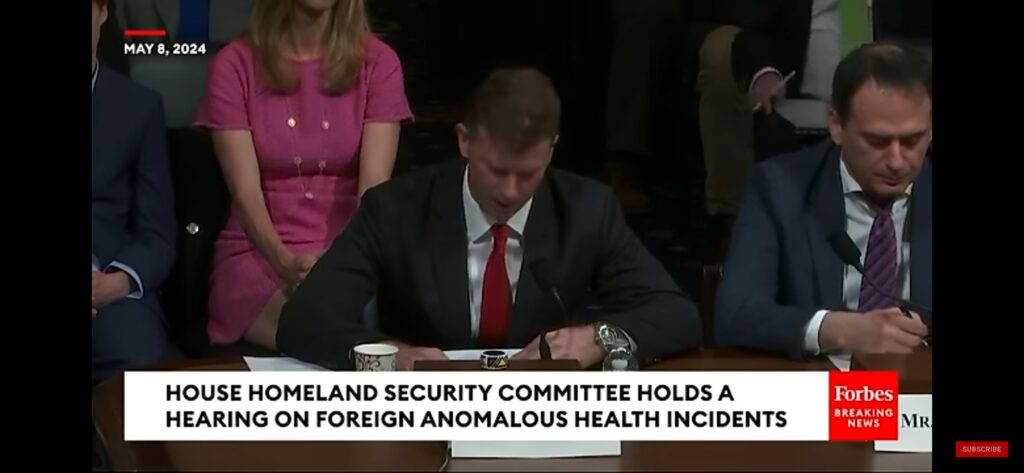
Bombshell testimony at a House Homeland Security Committee hearing (05/08/24) regarding Havana Syndrome, opened up new leads for investigators to follow up on. The unmistakable message from all the three witnesses however, all of whom have deep experience/ties to the U.S. intel community, was that U.S. intel agencies, and the CIA in particular, were not leveling with the American public as to the cause of these ailments. More importantly, that the continued coverup threatens our national security because it provides an incentive for Russia and our other adversaries to ramp up the attacks.

The expert witnesses at the 05/08/24 hearing were Retired Army Lt. Colonel Gregory Edgreen (led DIA’s probe into havana syndrome), leading National Security Attorney Mark Zaid and award-winning journalist currently working for The Insider, Christo Grozev

We are not going to focus here on the technical/scientific issues surrounding havana syndrome but rather, the bombshell coverup allegations made by all the three expert witnesses. Reasonable people will agree that this by itself–a national security compromising coverup–should be sufficient cause for President Biden to do some “housecleaning” at the top echelons of our intel agencies.

Lt. Col Edgreen began by putting out some important context, and that is, the U.S. government has a long history of slowly responding to emergent national security threats, adding that the lax havana syndrome response “is nothing new”.

Edgreen(10:16): “As a country, we have been here before. Most people think this all started in Havana in 2016, the wildly reported Havana Syndrome…but before Havana Syndrome, there was the Moscow Syndrome. Soviet intelligence bathed the U.S. Embassy in Moscow with microwave transmissions. The health effects were similar to what we see today. There are many examples of syndromes and ailments from Americans injured in the line of duty, that the government did not recognize for many years, which were eventually proven. Agent Orange used in Vietnam, the Gulf War Syndrome, Burn Pits during the forever wars in Iraq and Afghanistan. In all of these examples, America took too long to acknowledge these injuries, and our service members languished without care. Havana Syndrome is no different. The gaslighting of AHI survivors continues to this day, as history repeats itself.”

Regarding documented reports of CIA officers being harassed overseas. Lt. Col Edgreen said(13:26): “There were reports of CIA incidents which included harassment, room intrusions, houses being defiled, tossed, pets poisoned, assaults on our personnel, and diplomats being drugged, doxxing, families harassed and attacked via directed energy, a red line to many because of the debilitating nature of these weapons…” Notice that these are the exact same complaints raised by targeted individuals in the United States, only to be summarily dismissed by the mainstream media as some form of “mass paranoia”.

Regarding the coverup, Lt Col Edgreen said(15:50): “I think the bar for AHI attribution was set so high because we do not, as a country and a government, want to face some very hard truths: Can we secure America? Are these massive counterintelligence failures? Can we protect our people on American soil? Is this an act of war?” Edgreen added, “It’s time to take action. This is a nonpartisan issue which has spanned several administrations. Let’s start to get this right with executive and legislative action…most importantly, pressure the government to fight back.”

Award-winning Journalist Christo Grozev testified that he had initially relied on information from U.S. government officials in his Havana Syndrome reporting, but was approached by an intel official in Europe, and advised to seek independent sources–Exhibit A as to a coverup, and a sad state of affairs indeed.

Attorney Mark Zaid testified(27:00): “A recent investigation by 60 Minutes, Der Spiegel and The Insider identified potential credible links between AHIs and alleged Russian operatives for military unit 29155. This included activities within the United States. What was the government’s response? CIA doubled down that there’s nothing to see, and that it knew of, and had already ruled out the same evidence. That is blatant falsehood that has infuriated many serving members of the intelligence community because so much of the evidence, to the contrary, is available to them in reports, briefings and cable traffic. Of course, this evidence is classified.”

Zaid added that regular law enforcement officials should be allowed to pursue investigations into Havana Syndrome rather than maintaining the status quo, where the CIA hogs such probes.

During the question and answer session, Christo Grozev said(29:59): “One of the most disturbing denials that I’ve seen in some of the publications leading up to our findings being published, was an attempt to create the impression that no technology would allow this impact on the human brain. That is provably untrue…There is sufficient evidence that it’s possible.” Grozev added that a Russian intelligence official told him that the Russians were doing this because America has been doing it to their intel officials as far back as the 80s. So this idea that AHIs are some mysterious occurrences requiring “new research” is highly questionable.

The biggest bombshell during the question and answer session came from Attorney Mark Zaid, when he was asked whether he believed the government was blocking some information. Zaid responded(37:44): “Information is absolutely being blocked from one agency to the other, particularly at the CIA. I mean, that’s who we’re going to point to the most, of information that the CIA has, that its sister intelligence agencies it hasn’t been shared with, and I can identify a number of specific classified documents in a proper setting.”

Bottom line folks, there’s no way to sugar coat this. Three esteemed expert witnesses testified in Congress on 05/08/24 that our intel agencies, and the CIA in particular, are not only engaged in a coverup when it comes to Havana Syndrome, but that the coverup threatens our national security because it provides an incentive for further such attacks. Heads must roll!!

For those of you very happy with @Emolclause’s activism don’t shy away from the “tip jar” below on your way out. You may also Cash App

Email author at admin@grassrootsdempolitics.com

Become an Octapharma Plasma donor. Make up to $200 in one week and help save lives too! Learn More

Excellent UTSW Webinar On Havana Syndrome

$upport via Cash App

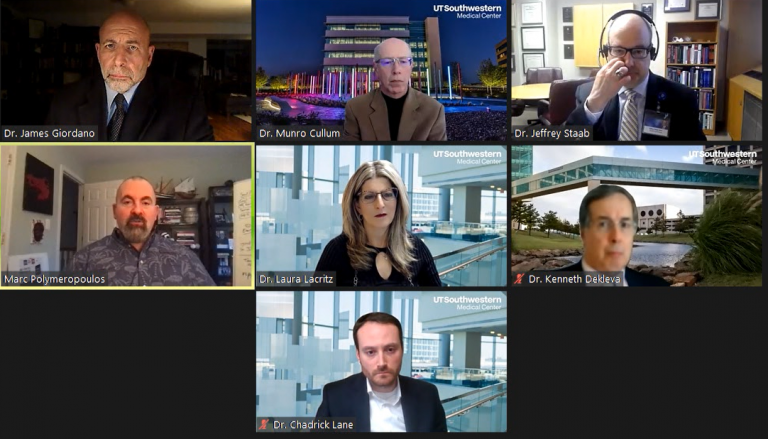
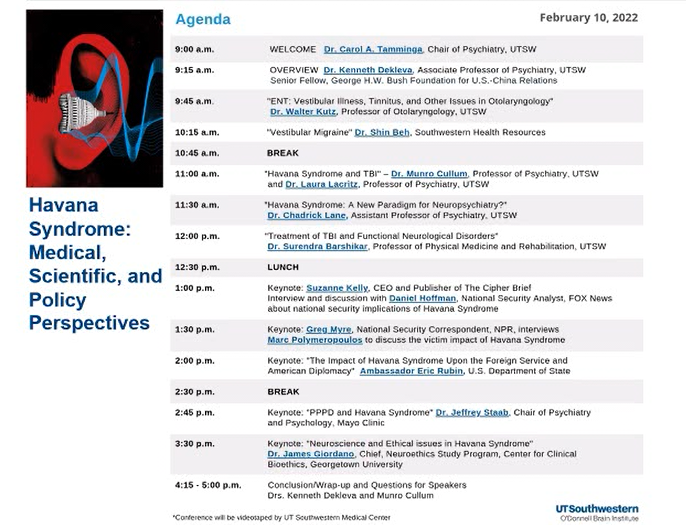
On 02/10/2022 the Department of Psychiatry and the Peter O’Donnell Jr. Brain Institute at the University of Texas Southwestern (UTSW-Dallas), hosted an excellent webinar on Havana Syndrome featuring some of the leading minds in Neurology and importantly, offering suggestions on the path forward for both government investigators, and affected families (victims).

The webinar titled “Havana Syndrome: Medical, Scientific, and Policy Perspectives”, featured this esteemed panel of subject matter experts.

Among the visiting speakers(not from UTSW) were Cipher CEO Suzanne Kelly, Fox News National Security Analyst Daniel Hoffman, Former CIA Officer and Havana Syndrome victim Marc Polymeropoulos, NPR National Security Correspondent Greg Myre, and of course, the star of the show, the undisputed MVP, Dr. James Giordano(Georgetown), who they saved for last. Dr. Giordano’s entire presentation is below.

The key takeaway from Dr Giordano’s presentation was this(video at 17:00): “What this thing allowed us to do is to examine in greater detail, the technological readiness level(TRL),of forms of energy that could be directed in ways that would be scalable, fieldable, and therefore operationalizable. Now again, please understand that there is information that simply cannot be discussed in an open forum such as this, some of it exists as confidential and classified…but suffice it to say that information both at the time(2016, 2017, and part of 2018), and subsequently 2018 and 2019…reveal that there are two primary domains of directable energy that represented not only state of the science and technology, but were at a point of technological readiness that would allow or enable possible deployability and operational use. The idea of utilizing accoustic rangeable devices in the high sonic and/or ultrasonic range, very possible, very probable. The possibility of also utilizing some form of microwave energy particularly low to moderate gigawatt microwave energy that could be generated using very very rapid pulsing, perhaps utilizing a light source or laser source to be able to develop nanosecond or perhaps even quicker pulsing, would allow the scalability, the fieldability, and the containability of microwaves, and also get by some of the power source requirements that might be necessary. Why would such devices be in operation?…These types of devices can be used for surveillance, and/or they can be used either kinetically or non-kinetically, for disruptive effects. What do we mean by that[disruptive effects]? What we mean, is that there are a number of nations worldwide that have dedicated effort to employing these devices for testing organic and inorganic substances primarily in the occupational and commercial range…They[nations]include United States and many of its allies, China, Russia, among others. So the technology exists. We know the technology is being employed at least in part for the evaluation of vulnerability and volatility for organic and inorganic substances.”

A layman’s understanding of Dr. Giordano’s scientific analysis boils down to this(feel free to offer corrections/more insight): That microwaves and sound (accoustics) are the two forms of energy that scientists agree, could be harnessed, scaled and deployed to effect the kind of attacks experienced by U.S. Embassy staff in Havana, Cuba. Scientists also agree that this kind of technology(sound and microwave directed energy) is readily available in the U.S.(and its Western allies), China, and Russia, and is currently used for surveillance and other industrial applications(testing the vulnerability of organic and inorganic substances). This scientific analysis by Dr. Giordano is very important because to this day, mainstream media reports have characterized Havana Syndrome as being caused by some hostile foreign power(prime suspect Russia), using some mysterious technology that nobody in the U.S. knows about. Clearly, per Dr. Giordano’s analysis, this technology is already being used in the United States for surveillance and other industrial applications, meaning part of the inquiry into the causes of Havana Syndrome going forward, has to look inward, as opposed to only pointing the finger at Russia and China.

The webinar also featured a joint discussion by Cipher CEO Suzanne Kelly and Fox News National Security Analyst Daniel Hoffman, which focused squarely on the national security implications of Havana Syndrome, as opposed to the other panelists who delved into the clinical aspects. Even though this was an interesting discussion, it totally sidestepped the million dollar question which many attendees, including Yours Truly tuned in for, and that is, Havana Syndrome among regular civilians(not government employees).

Interestingly, the million dollar question found it’s way into the webinar at the very end(after Dr. Giordano’s presentation), as the panelists were entertaining written questions from attendees. One of the questions directed at Dr. Giordano asked what regular civilians(ding ding ding–magic word) who suspect they are victims of similar directed energy attacks, should do?(see video below @ 1:50) Dr. Giordano’s answer was very interesting. He said regular civilians should first consult their attending physicians with their concerns, and upon a traumatic brain injury(TBI) diagnosis, have their attending physician refer them to Walter Reed for further analysis. It has to be a physician’s referral–none of that self-diagnosis stuff. A question as to whether there’s any evidence of regular civilians being victims of directed energy attacks came up at the 18:45 mark, and Dr. Giordano answered in the affirmative, saying yes, there is evidence both in Europe and domestically. WHOA!!

Hopefully Dr. Giordano’s suggestion for regular civilians suffering from directed energy attacks will encourage them to seek the much needed medical attention, and crucially, provide enough leads for scientists and government investigators, to get to the bottom of the Havana Syndrome mystery. Hopefully , it also opens up debate about the plight of regular civilians vis a vis directed energy weapons in the mainstream media, and in the halls of Congress where strangely, this remains a taboo topic, as exhibited by the tweet below.

For those of you very happy with @Emolclause’s activism don’t shy away from the “tip jar” below on your way out. You may also Cash App

Email author at admin@grassrootsdempolitics.com

Become an Octapharma Plasma donor. Make up to $200 in one week and help save lives too! Learn More

Sen Joni Ernst Busted Again Talking About Cuts To Medicare, Medicaid, SS

$upport via Cash App

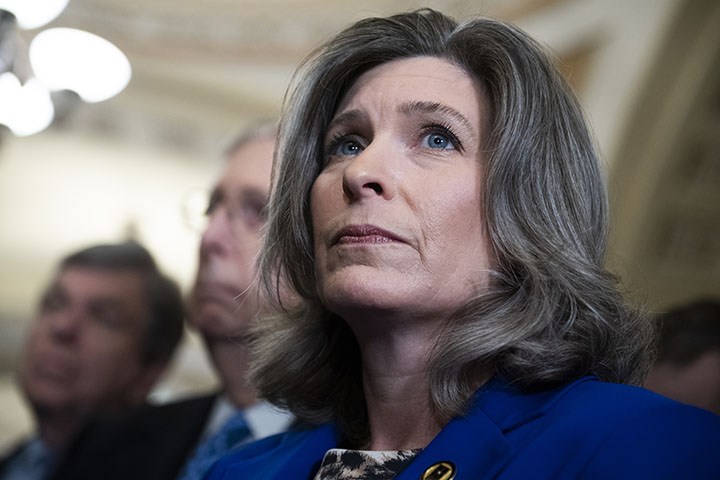
Sen Joni Ernst (R-Iowa)

An audio recording of Sen Joni Ernst(R-Iowa) telling a group of GOP donors that there needs to be “changes”(read cuts) to Medicare, Medicaid and Social Security has surfaced. You’ll remember that Sen Ernst made similar remarks at a town hall in September 2019 where she said Congress needs to meet behind closed doors to address these programs–essentially gut Medicare, Medicaid and Social Security in secret.

In the latest audio, a person at the GOP event can be heard saying, “Even without the additional spending we’re already going bankrupt…the biggest driver of that being entitlements. It is interesting hearing your classmate [Sen]David Perdue. He’s been pretty frank about the changes that need to happen with Medicare and Medicaid. Are you on the same page with him on that?

Sen Ernst responded, “I think we [Republican Senators]all are because we all understand our non discretionary spending is growing like this. Everybody focuses on the discretionary spending because that’s what we have control over in Congress. The rest is on auto pilot and it’s out of control. So we have to figure out ways to honor the commitments that have been made and make changes for the future.”

For the record Sen David Perdue(R-GA) has been very vocal about his desire to reign in Medicare, Medicaid and Social Security spending in an effort to address the ballooning federal deficit. Sen Joni Ernst has also flirted with this idea previously but unlike Sen Perdue, is afraid to say so in public. Why won’t Sen Joni Earnst, who is up for reelection in 2020, look Iowans in their eyes and tell them that she wants cuts to their Medicare, Medicaid and Social Security benefits?

Bottom line folks, Americans elect politicians and send them to Washington with the understanding that the said politicians will in turn look out for their interests. All national polls indicate that Medicare, Medicaid and Social Security remain very popular programs among Americans, including Iowans. Where, as here, Sen Joni Earnst appears hell bent on gutting such programs, she owes Iowans an explanation–publicly. Simply put, Sen Ernst should tell Iowans in public, what she says all the time at private GOP gatherings and that is, she wants cuts to Medicare, Medicaid and Social Security programs. Iowans deserve a Senator who will level with them.

For those of you very happy with @Emolclause’s activism don’t shy away from the “tip jar” below on your way out. You may also Cash App

Email author at admin@grassrootsdempolitics.com

Become an Octapharma Plasma donor. Make up to $200 in one week and help save lives too! Learn More

Kushner Accused Of Selling State Secrets

$upport via Cash App

Author Sarah Kendzior, a regular conributor on MSNBC’s AM Joy Show repeated an explosive allegation she has made time and time again–that Trump’s son in law Jared Kushner is using his position in the White House to gain access to top state secrets and then selling/sharing them. The author says Kushner is a major national security problem who needs to be indicted.

Author Sarah kendzior told AM Joy host Joy Reid, “I have to say this is like the 12th time I have been on your show talking about Jared Kushner and the fact that he lied on his clearance forms, he’s done illicit dealings, he’s giving away state secrets and that he is a massive national security risk, and so is Ivanka Trump. The only way that we will be able to finally stop having this conversation on national TV is if he is indicted. That’s what needs to be done….” 

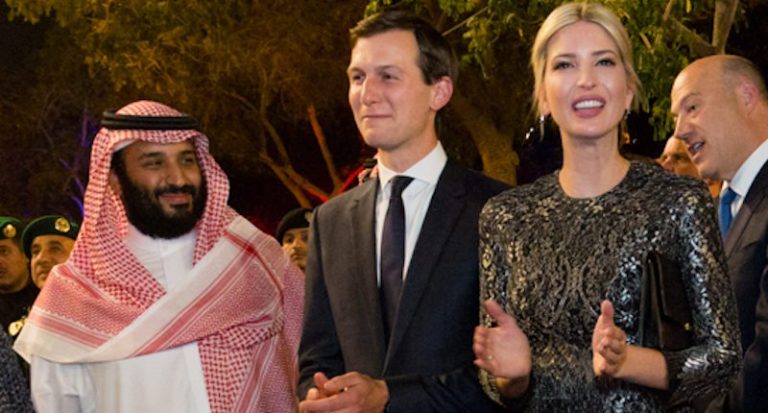
National security expert Malcolm Nance, also echoed similar sentiments regarding Kushner on the same AM Joy show. He told Joy Reid, “Jared Kushner’s problem is…he is trading intelligence for favors. And the one thing we know he did is Prince Mohammed Bin Salman of Saudi Arabia said, bragged publicly that Jared Kushner brought him the names of all the tax cheats in Saudi Arabia and he carried out that massive sweep of Princes and billionaires and then extorted almost a trillion dollars of money that was being withheld out of them. And that came from U.S. intelligence.”

Think about that folks, top-secret U.S. intelligence is being used in Saudi Arabia to extort trillions of dollars. This would be very troubling under any other previous U.S. administration, but it is exceptionally troubling when it happens under the Trump administration which is already littered with corruption scandals. One has to wonder if some of the extorted trillions of dollars did not end up “rewarding” the U.S. players up to and including Kushner, who facilitated the transfer of this sensitive U.S. intelligence to MBS

It is shocking that in a country where we have the Department of Homeland Security, a humongous department of the federal government ostensibly dedicated to protecting the country from threats both foreign and from within, even an extremely serious allegation that a senior White House official is selling state secrets is not enough to trigger a massive crackdown into who’s involved. Many Americans fully share Author Sarah Kendzior’s outrage as to why nothing is ever done to address the serious national security threat posed by Kushner and hopefully very soon the good folks at the Department of Justice will act on these concerns . Not long ago national security threats were a bipartisan issue. It appears in the age of Trump, even that tradition is thrown out of the window.

Bottom line House Democrats and the mainstream media need to get to the bottom of Kushner and Ivanka’s security clearance saga. It is very important that the public know exactly why intelligence officials were opposed to Kushner being granted a security clearance and whether Kushner has done anything to allay those concerns. Simply put, there was a lot of public skepticism when Trump brought Kushner and Ivanka to work in the White House(Nepotism). Now that their continued presence in the White House is a serious national security risk, they must be compelled to either answer serious questions about their security clearance, or leave the White House.

***UPDATED on 09/21/23 to include this 09/20/23 interview Saudi Crown Prince had with Fox News’ Bret Baier. MBS addresses the Kushner question at the 26 minute mark***

For those of you very happy with @Emolclause’s activism don’t shy away from the “tip jar” below on your way out. You may also Cash App

Email author at admin@grassrootsdempolitics.com

Become an Octapharma Plasma donor. Make up to $200 in one week and help save lives too! Learn More

Mitch McConnell Confirms GOP Plans To Cut Medicare, Medicaid & Social Security

$upport via Cash App

Senate Majority Leader Mitch McConnell

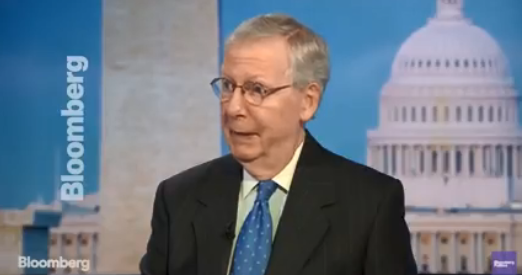
In a recent interview with Bloomberg, Senate Majority Leader Mitch McConnell all but confirmed what most Democrats including Yours Truly have always suspected, that the GOP’s ultimate plan is to gut the three key entitlement programs Medicare, Medicaid and Social Security using the argument that they are the biggest contributors to the national debt.

Asked by a Bloomberg host what the GOP plans to do about the record $779 Billion deficit, Sen McConnell responded, “Its very disturbing and its driven by the three biggest entitlement programs that are very popular, Medicare, Social Security and Medicaid. That’s 70% of what we spend every year…there’s been a bipartisan reluctance to tackle entitlement changes because of the popularity of those programs. Hopefully at some point here we will get serious about it, we haven’t been yet.” Translation? If the GOP wins both the House and Senate this November, expect drastic cuts to Medicare, Medicaid and Social Security.

While it is a fact that Medicare, Medicaid and Social Security are indeed the biggest contributors to the national debt, what Republicans conveniently leave out of the debate is that this was true even before they passed their massive tax cuts that favor the rich. As a matter of fact prior to the GOP passing the massive tax bill, the bipartisan Congressional Budget Office(CBO) warned that the tax bill would severely worsen the national debt problem. So Republicans knew their tax cuts for the rich would balloon the already high national debt, rammed them through anyway, and are now trying to shift the blame to the working poor by arguing for cuts to Medicare, Medicaid and Social Security.

Several mainstream media outlets confronted key GOP members of congress about the wisdom of pushing through the massive tax cuts knowing full well that it would worsen the national debt problem. The answer given by House Speaker Paul Ryan, a well known deficit hawk was that there was nothing to worry about because the tax cuts would spur massive economic growth which would take care of the deficit problem.

It appears now given Sen Mitch McConnell’s recent comments to Bloomberg that Speaker Ryan was lying all along. The GOP knew full well the tax cuts would create a massive national debt which they would then use as an excuse to gut the three key entitlement programs–Medicare, Medicaid and Social Security–a lifelong goal for GOP Super Donors Koch Brothers.

Bottom line it is not a surprise that the GOP is now going after Medicare, Medicaid and Social Security. The important thing is that there is a surefire way of stopping the corrupt GOP dead in their tracks–voting in midterms 2018. Simply put, Democrats must campaign heavily using the argument that the GOP wants to gut Medicare, Medicaid and Social Security, programs that have predominantly helped the poor in order to sustain their reckless tax cuts for the rich. Now that is a winning campaign message for Dems both for the House and U.S. Senate.

For those of you very happy with @Emolclause’s activism don’t shy away from the “tip jar” below on your way out. You may also Cash App

Email author at admin@grassrootsdempolitics.com

Become an Octapharma Plasma donor. Make up to $200 in one week and help save lives too! Learn More