Inside the Supreme Court’s Quiet Power Shift

The report from The New York Times lands like an accusation, not a curiosity: that the Supreme Court of the United States has not just drifted into new procedural territory, but deliberately engineered a quieter, faster, and less transparent way to wield its power. If the justices knowingly chose to bypass long-standing norms to expand the use of the “shadow docket,” then this isn’t a minor procedural evolution—it’s a fundamental shift in how the nation’s highest court operates, with real consequences for how its decisions are understood and trusted.

To understand why this lands the way it does, you have to grasp what the “shadow docket” actually is. Historically, it wasn’t controversial at all. It referred to routine, often administrative decisions—things like scheduling, brief extensions, or emergency stays in extreme circumstances. These decisions were typically fast, procedural, and not meant to set sweeping precedent. For decades, they were used sparingly and mostly in situations where time was critical, like imminent executions or urgent injunctions.

What’s changed—and what the Times story is getting at—is not the existence of the shadow docket, but its evolution. Over the past several years, especially since the late 2010s, the Court has increasingly used this fast-track mechanism to decide major, politically charged issues: immigration policy, abortion restrictions, environmental rules, executive power. And it often does so without full briefing, oral arguments, or detailed written opinions.

That’s where the perception problem starts. In the traditional “merits docket,” cases unfold slowly and publicly. Lawyers argue. Justices ask questions. Opinions are written and scrutinized. Even people who disagree with the outcome can at least see the reasoning. The shadow docket, by contrast, can feel abrupt and opaque—decisions appear, sometimes late at night, unsigned, with minimal explanation. That lack of transparency is what critics say undermines legitimacy, not just the outcomes themselves.

Now, the reporting adds a new layer: intent. If internal memos show that justices were aware they were breaking from “time-tested procedures” and did so deliberately, it reframes the shift from something organic or reactive into something strategic. A 2016 case involving federal environmental regulation is often cited as a turning point—an instance where the Court intervened early and unusually, effectively laying the groundwork for the modern use of the shadow docket.

But calling this entirely unprecedented would be overstating it. The Court has always had emergency powers, and it has occasionally used them in high-stakes ways before. The difference today is scale, frequency, and subject matter. What used to be rare is now relatively common, and what used to be technical is now often deeply political. That shift is why even some judges and legal scholars say the current moment feels different, not just in degree but in kind.

Supporters of the Court’s approach push back on the idea that this is some kind of procedural coup. They argue that the judiciary needs flexibility to act quickly, especially when lower courts issue nationwide injunctions that can halt federal policy instantly. From that perspective, the shadow docket is less about secrecy and more about necessity—an efficient tool in a system where legal conflicts move faster than ever. Some justices have even criticized the term “shadow docket” itself as misleading and politically charged.

Still, perception matters, and this is where the political dimension becomes unavoidable. The current Court’s conservative majority has been the primary user of this expanded shadow docket, and many of the outcomes have aligned with conservative legal priorities. That doesn’t automatically make the decisions illegitimate, but it does make the optics harder to separate from ideology. When major policy questions are resolved quickly, quietly, and in ways that track partisan expectations, it reinforces the belief—fair or not—that the Court is acting as a political body.

Recent criticism from within the Court itself underscores how serious this concern has become. Ketanji Brown Jackson has warned that heavy reliance on emergency rulings risks eroding transparency and weakening the authority of lower courts, describing the trend as potentially corrosive. That kind of internal dissent doesn’t just stay within legal circles—it spills into public discourse and shapes how ordinary people interpret what the Court is doing.

So when a widely read outlet like The New York Times publishes a story framed around “secret memos” and procedural bypassing, it amplifies an already fragile dynamic. For critics, it confirms suspicions that the Court is consolidating power in less visible ways. For defenders, it likely looks like another attempt to delegitimize a conservative judiciary by framing routine internal deliberations as something more sinister than they are.

The real impact on public perception is likely to be cumulative rather than immediate. The Supreme Court has long depended on a kind of institutional mystique—an image of deliberation, neutrality, and distance from politics. The more its most consequential decisions appear to come from expedited, opaque processes, the harder it becomes to sustain that image. And once that perception erodes, it doesn’t just affect how people view individual rulings—it shapes how they view the Court as an institution.

In that sense, the controversy over the shadow docket isn’t just about legal procedure. It’s about legitimacy, trust, and whether the Court is still seen as playing by a consistent set of rules. The memos, if interpreted the way the Times suggests, don’t just document a change—they symbolize it.


Senior Official At Trump’s Interior Department Accused Of Corruption

Please consider $upporting GDPolitics by scanning the QR code below or clicking on this link

The January 5, 2026 edition of MSNOW’s Rachel Maddow Show devoted a lengthy segment to corruption allegations involving Karen Budd-Falen, a powerful but little-known figure who served as the number three official at Donald Trump’s Department of the Interior and previously held senior posts there during Trump’s first term. Maddow framed the story as emblematic of a familiar pattern from the Trump years: public office intersecting uncomfortably with private financial interests, and the ethical guardrails that normally prevent that collision appearing either weakened or ignored.

Maddow opened with a sardonic observation that Budd-Falen may have been an unintended beneficiary of Trump’s dramatic weekend escalation involving Venezuela, which dominated headlines just as The New York Times was preparing a major investigative report on Budd-Falen. The international crisis effectively crowded out what might otherwise have been a front-page political scandal, buying time and quiet for a senior Interior Department official facing serious scrutiny.

At the center of the allegations is Budd-Falen’s role at Interior, where she wielded substantial influence over land use, water rights, and energy development—particularly in the West. Before and during her government service, Budd-Falen was well known as a lawyer representing ranchers, mining interests, and extractive industries, often in disputes against federal regulators and environmental protections. That background made her appointment controversial from the start, as critics argued she was now overseeing, from inside the government, policy areas that directly overlapped with her prior clients and personal interests.

According to reporting discussed on Maddow’s show, Budd-Falen and her husband own a ranch in Nevada that became strategically important to investors seeking to build a lithium processing facility nearby. Lithium, a critical mineral for electric vehicle batteries and energy storage, has been the subject of intense political and economic interest, and Interior Department approvals can make or break such projects. The investors allegedly offered the Budd-Falens $3.5 million for the ranch’s water rights—a staggering sum in itself—but the payment was reportedly contingent on the Interior Department approving the lithium plant. As Maddow summarized it, the deal appeared to hinge on a simple but troubling condition: no approval, no money.

What deepens the ethical concerns is the timeline. Maddow reported that Budd-Falen met with the investors for lunch in the Interior Department cafeteria during Trump’s first term. Not long afterward, the department gave the lithium project the green light. Even more striking, the project was reportedly fast-tracked, allowing it to bypass layers of environmental and regulatory review that similar projects typically face. Critics argue that this accelerated process reduced the chances that internal watchdogs or career civil servants would flag the apparent conflict of interest between a senior official’s personal financial stake and her department’s decision-making.

From an ethics standpoint, the issue is not merely whether Budd-Falen personally signed off on the approval, but whether her position and influence created an environment in which subordinates understood what outcome was desired. Federal ethics rules are designed to prevent even the appearance of such impropriety, precisely because public trust erodes when officials stand to gain financially from decisions made by their agencies.

At the same time, Maddow emphasized that Budd-Falen and the lithium investors deny any wrongdoing. A potential defense is that the water rights transaction was a private land deal negotiated at arm’s length, and that Interior Department approvals followed standard procedures driven by policy priorities rather than personal enrichment. Budd-Falen could also argue that she formally recused herself from decisions directly involving the project, or that career staff—not political appointees—made the ultimate determinations. Without full documentation and testimony, those claims remain unresolved, and they underscore why independent investigations, rather than television segments or partisan talking points, are essential to establishing the facts.

Still, the optics are undeniably damaging, particularly when viewed against the broader backdrop of corruption and ethics scandals that repeatedly engulfed Trump’s senior officials. From former Interior Secretary Ryan Zinke’s real estate dealings, to EPA Administrator Scott Pruitt’s resignation amid revelations of lavish perks and secret meetings with lobbyists, to Cabinet members like Tom Price and Wilbur Ross facing scrutiny over private travel and undisclosed financial ties, the Trump administration developed a reputation for blurring the line between public service and private gain. Even figures outside the Cabinet, such as Jared Kushner, drew sustained criticism for foreign financial entanglements that appeared to follow directly from their government roles. More recently, other high-profile Trump allies and officials, including Kristi Noem, have faced their own waves of controversy and ethical questions, reinforcing the sense that these were not isolated incidents but part of a recurring pattern.

Whether Karen Budd-Falen ultimately becomes another confirmed example of that pattern remains to be seen. What is clear is that the allegations strike at the heart of public trust in government: the expectation that officials act in the public interest, not their own financial self-interest. For now, Budd-Falen’s case sits in an uneasy limbo between denial and suspicion, with unanswered questions about influence, transparency, and accountability. As Maddow suggested, time—and thorough investigation—will determine whether these allegations collapse under scrutiny or become yet another entry in the long ledger of Trump-era corruption scandals.

Parler Notified FBI 50 Times About Potential Violence On January 6th

$upport via Cash App

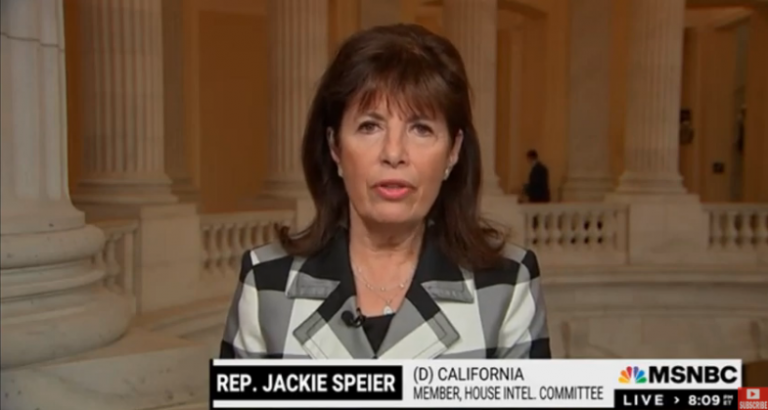
Rep Jackie Speier (D-CA) made a bombshell revelation on MSNBC’s All In show(06/15/21), that the conservative social media network Parler, sent as many as 50 emails to the FBI, trying to warn them about potential violence on January 6th. Shockingly, none of Parler’s alarming emails made it to FBI Director Chris Wray’s desk. Rep Speier is a member of the House Oversight Committee which has been investigating Parler for it’s role in the January 6th DC insurrection. The documents Parler provided the House Oversight Committee, clearly show that the conservative social media network did its part as far as notifying authorities, and that it was the FBI who dropped the ball.

Rep Speier told host Chris Hayes: “I was stunned when it became known that Parler, a conservative social media website, contacted the FBI with emails fifty times, and those fifty emails never reached the Director[Chris Wray]. One of those emails talks about ‘Congress has to hear glass breaking, and doors being kicked in, and blood being shed. This is the time to get violent. We are at war.’ Now, if Parler…thinks these are alarming and sends them to the FBI, and it doesn’t get elevated, then we’ve got a serious problem within the FBI in terms of assessing intelligence.” How some intelligence analyst at the FBI decided that this was not serious enough, either for a concrete plan of action, or to be brought to Director Wray’s attention, is certainly grounds for a congressional investigation.

Prior to this bombshell revelation by Parler, the FBI had largely been spared from the public’s criticism of the intelligence failures that led to the insurrection. Most of the blame was pinned on the Capitol Police, the military(National Guard), and to some extent the Department of Homeland Security. This Parler revelation totally changes the ball game, and redirects the focus towards the FBI.

It bears pointing out that even before the Parler bombshell, people like Sen Sheldon Whitehouse (D-RI) were already raising a lot of questions as to why the FBI was not able to stop the DC insurrection, and the bureau’s involvement in other scandals that plagued the Trump administration.

Bottom line folks, with every passing day, it becomes clearer and clearer that the January 6th DC insurrection was a totally preventable incident. All the warnings were out there for any curious person to pick up on. Why the people whose job it is to prevent such incidents from happening, either deliberately, or through negligence, ignored such clear warnings, is an issue the U.S. Congress must absolutely get to the bottom of. Congress owes this to the families who needlessly lost loved ones on that fateful day.

For those of you very happy with @Emolclause’s activism don’t shy away from the “tip jar” below on your way out. You may also Cash App

Email author at admin@grassrootsdempolitics.com

Become an Octapharma Plasma donor. Make up to $200 in one week and help save lives too! Learn More

NYT’s Maggie Haberman Ensnared In Feud Over Trump Inaugural Funds

$upport via Cash App

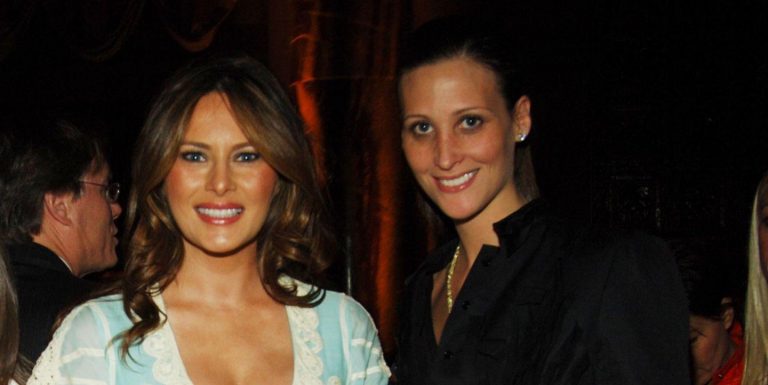
Melania Trump with Stephanie Winston Wolkoff

In case you missed it, the Trump inaugural saga has taken a new, and very interesting twist lately, with now Twitter-active Stephanie Winston Wolkoff taking a direct shot at Maggie Haberman and Ken Vogel of the New York Times(NYT), as being part of the plot to throw her under the bus.

You’ll remember that after the bombshell revelation that a staggering $40 million of Trump’s inaugural funds had mysteriously disappeared, there was an effort by Trump’s allies to pin the blame on then First Lady Melania Trump’s Senior Advisor Stephanie Winston Wolkoff. Stephanie Wolkoff talked about this effort to throw her under the bus at an appearance on MSNBC’s Rachel Maddow show on September 1, 2020.

In the interview, a visibly upset Stephanie Wolkoff told host Maddow, that then First Lady Melania Trump basically told her she had to be the fall person for the Trump inaugural scandal. Wolkoff specifically said, “Melania and the [Trump]White House had accused me of criminal activity, then publicly shamed and fired me, and made me their scapegoat. At that moment in time, that’s when I pressed record. She was no longer my friend, and she was willing to let them take me down, and she told me herself, that this is the way it has to be. She was advised by the attorneys at the White House that there was no other choice because there was a possible investigation into the presidential inauguration committee….At first I really did think maybe she would come to my aid? Maybe she would tell the truth? She turned her back, she did. She folded like a deck of cards., and I’m shocked she did it.”

This 05/23/2021 tweet however, shows that Stephanie Wolkoff is not only going after Trump and his allies in her effort to set the record straight regarding Trump’s inaugural, she’s also calling out NYT’s Maggie Haberman and Ken Vogel, as being part of the plot to destroy her. This, if proven, could turn out to be a huge scandal unto itself, given the fact that many liberals still blame the New York Times for Trump’s ascension to the White House. Specifically, many liberals believe NYT’s excessive coverage of the “email scandal”, weakened Hillary Clinton’s campaign during the final stretch of the 2016 campaign.

There’s no other way any reasonable person can interpret Stephanie Wolkoff’s tweet other than NYT’s Haberman and Vogel were doing Trump’s bidding when they wrote the referenced piece. This is especially so considering Wolkoff’s invocation of “SETUP. COVERUP. TAKEDOWN” in her tweet. For the record, accusations of “access journalism” against then White House reporter for the New York Times, Maggie Haberman, persisted throughout Trump’s presidency. Stephanie Wolkoff is not the first person drawing that inference.

Bottom line folks, Yours Truly is not accusing Maggie Haberman or Ken Vogel of any wrongdoing. By all accounts, these are serious journalists, who exhibit a high level of professionalism(my personal opinion). What Yours Truly is simply pointing out, is what any reasonable person presented with Stephanie Wolkoff’s recent tweet would conclude, and that is, Haberman and Vogel were in on the plot by Trump’s allies to throw her under the bus. It would be in everybody’s interest, especially Wolkoff who suffered greatly as a result of the Trump inaugural saga, if Haberman, Vogel or even the New York Times management, addressed this issue.

For those of you very happy with @Emolclause’s activism don’t shy away from the “tip jar” below on your way out. You may also Cash App

Email author at admin@grassrootsdempolitics.com

Become an Octapharma Plasma donor. Make up to $200 in one week and help save lives too! Learn More

What Happened At Trump & Epstein’s “Calendar Girls” Party In 1992?

$upport via Cash App👇

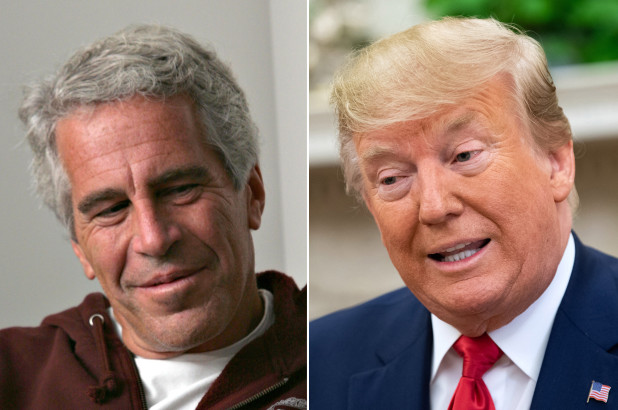
In the midst of Jeffrey Epstein’s child sex trafficking scandal and the growing questions about his ties to President Trump, a New York Times bombshell today revealed that in 1992, Trump and Epstein hosted an exclusive “Calendar Girls” party at Maralago that had 30 attendees, with Trump and Epstein being the only men.

At any other time this could have been dismissed as just another irrelevant story about Trump’s well known past. However given recent revelations in Epstein’s indictment by the Southern District of New York which portray him as someone who serially sought out under age girls for sex, this “Calendar Girls” party at Maralago takes a whole new meaning. Specifically, it is now incumbent upon the New York Times journalists who wrote this bombshell piece to go back and find out who these “Calendar Girls” were and more importantly, what Trump and Epstein did at this party.

All too often the mainstream media stumbles upon a very good story only to walk away from it without sufficient follow up. This “Calendar Girls” story is a perfect example of a consequential story that deserves a follow up.

Bottom line, given Epstein’s troubling record of molesting young girls, the public deserves to know whether the 1992 “Calendar Girls” party at Maralago was yet another scene of Epstein’s numerous crimes.

For those of you very happy with @Emolclause’s activism don’t shy away from the CashApp “tip jar” on your way out.

Email author at admin@grassrootsdempolitics.com